




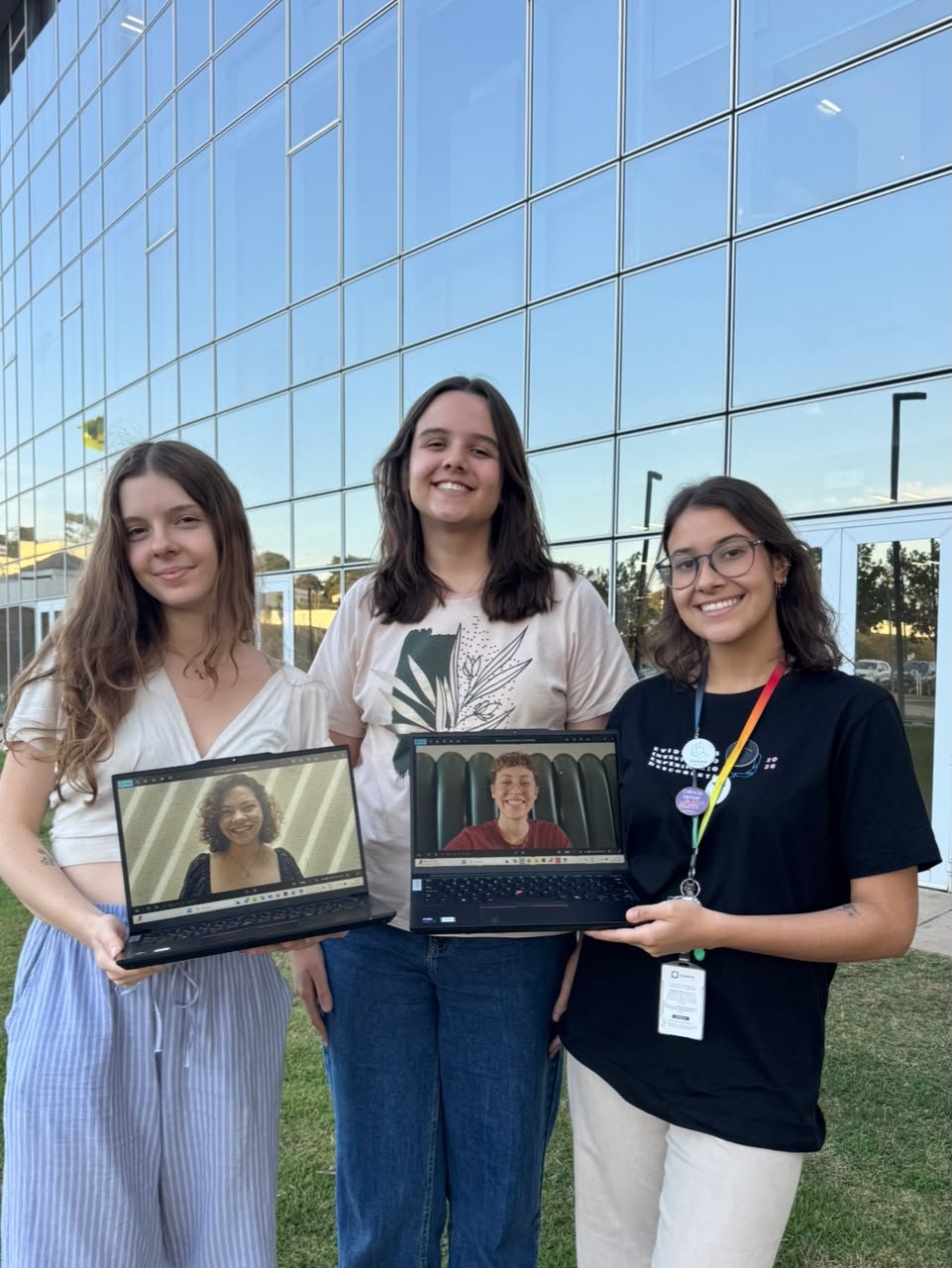
When frontier science meets the market vision, the result is the acceleration of the future. It is with this spirit that CEPID Cancerthera celebrates the conquest of the LumiNova women’s team, composed of students from the ILUM School of Science — Gisela Ceresér Kassick, Lília Helena Gavazza Pessôa, Lívia Maria Barbosa de Aragão, Mariana Melo Pereira and Samarah Luiza de Medeiros Ramos — who took first place in the Unicamp Challenge 2026, also being the winner in the category popular vote. By choosing as the basis of your business plan the patent of the AGNMS complex — an innovative formulation that unites silver ions (AG) and the anti-inflammatory nimesulide (NMS) in a topical treatment focused on optimizing the fight against skin neoplasms — young entrepreneurs have shown that the innovation generated in the laboratories of the Center is ready to transform the oncological reality.
From the bench to the market: the potential of the AGNMS patent
The path that led to recognition in this year’s Unicamp Challenge has deep roots in scientific dedication. winning technology revolves around the applicatiov of the complex AGNMS in a device developed to optimize the treatment of cutaneous neoplasms, enhancing therapeutic efficacy and offering a more targeted care for skin lesions. What began to gain public form in 2022, when the pharmacological association’s potential was highlighted, it has matured in solidity and strategic value over the years.
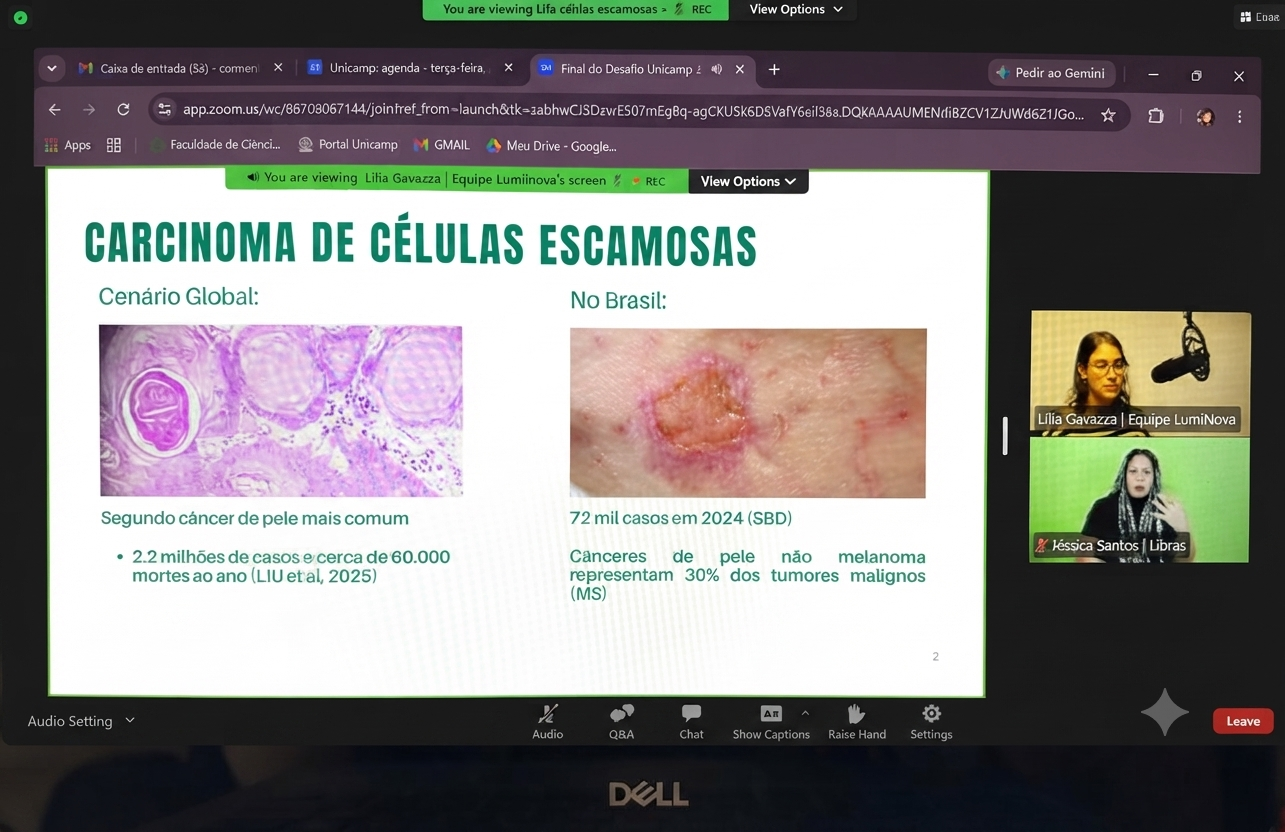
In the Unicamp Challenge ecosystem, this patent is no longer just an academic asset and has gained commercial traction. Crossing this barrier, however, required vision and rigor. As the Dra. Ana Lucia Tasca Gois Ruiz, professor in Pharmaceutical Sciences at the Faculty of Pharmaceutical Sciences of the State University of Campinas (FCF/UNICAMP), a researcher associated with Cancerthera and academic mentor of the team, one of the great merits of the process was to exercise this dual perspective: “Allow students to allow students to Think about the solutions presented in the patents both from a scientific point of view and from a business point of view”.
The practical experience of this transition proved to be transformative for the students. As you highlight Mariana Melo Pereira, a member of the winning team, “Participating in the Unicamp Challenge was an opportunity to understand that a good technology, in itself, does not guarantee that it will reach the people who need it”. Based on the support of business and business mentoring offered on the competition platform, the students translated the physical-chemical complexity of the AGNMS into a viable model, realizing the need to look beyond the bench to “also thought about the needs of patients, the feasibility of the solution, in the market, in regulation, in investments and in how we could transform such a relevant research, idealized by CancerThera researchers, into a product with a real impact, that would reach the largest number of people”, explains Pereira.
The strength of translational research and the cancer ecosystem
Success in the award is not an isolated event, but the direct reflection of a structured environment for translational research [stage that seeks to transform laboratory discoveries into practical health applications]. Integrated with CancerThera, the development of AGNMS benefits from a multidisciplinary work in which Oncology, Pharmaceutical Chemistry and technological innovation go hand in hand.
Following this route closely required immersion. According to Ruiz, who guided the group through online meetings and email exchanges, institutional support ranged from rescuing the history of patent development and sharing publications by the group of researchers linked to the study to connecting students with other members of the research front to clarify doubts about the level of technological maturity of the device. This technical rearguard ensured that the students understood the depth of what they were handling before projecting their commercial scalability.
The transforming role of mentoring and scientific entrepreneurship
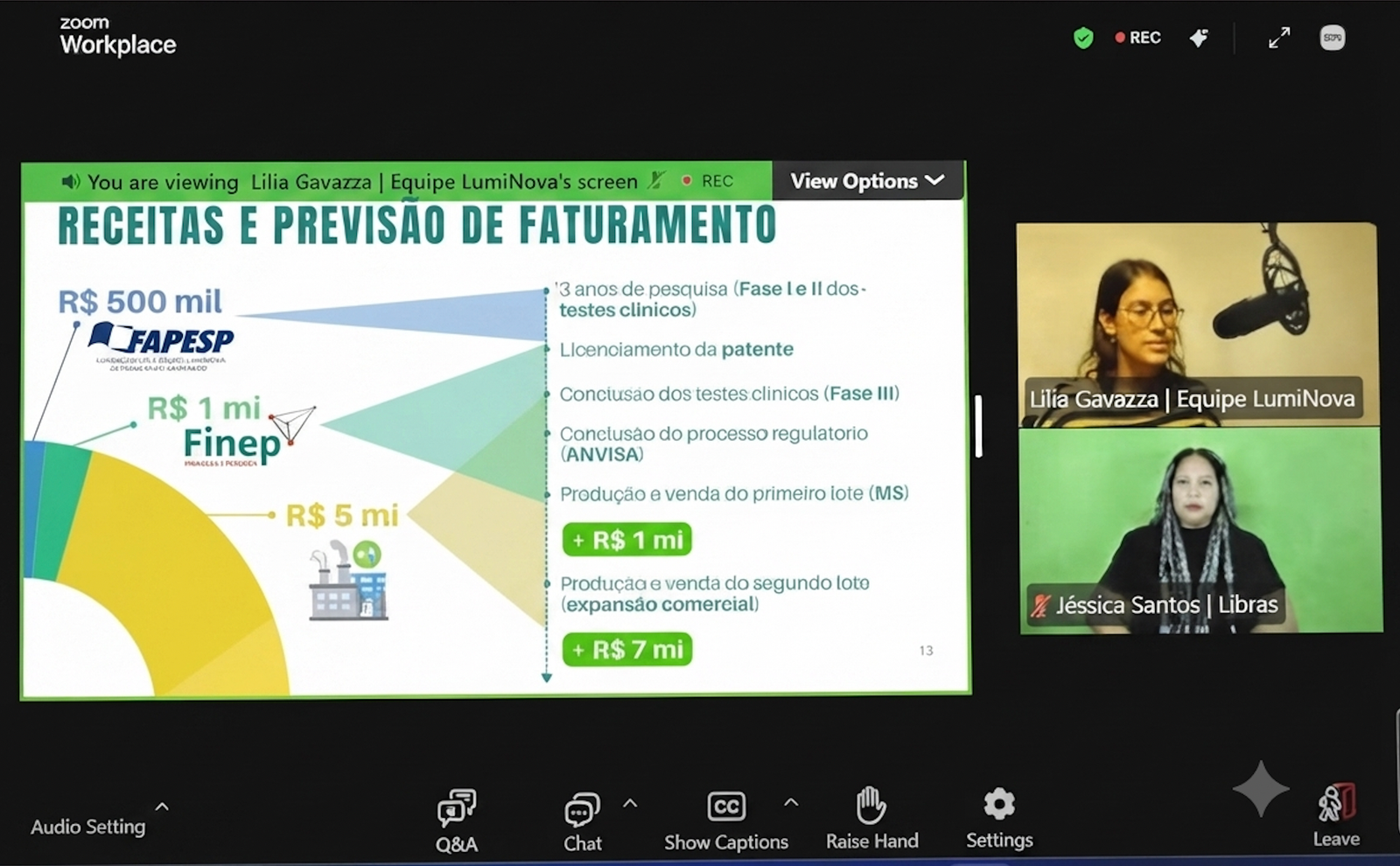
More than celebrating a patent, the victory in the Unicamp 2026 Challenge crowns the importance of talent training and the culture of innovation. The competition works as a true incubator of mentalities, in which students are challenged to look outside the walls of the academy and project the impact of their ideas on the real world.
“As the focus is on training and research, the academic day-to-day does not always provide us with time and environment to think about issues directly related to how to transform the ideas and solutions obtained from research into business models that can be transferred to society. That is why this event organized by the INOVA agency is so relevant”, assesses Ruiz.
For the students, the academic experience has gained a new dimension. Pereira points out that the process allowed to put into practice classroom learning and that, by “watching workshops and training and talking to our mentors, we even managed to anticipate concepts and ideas that we would only see later in the course”.
Practical challenges were not lacking along the way. Among the barriers overcome by the team, Ruiz highlights that “one of the main challenges was to think about how to scale the production of the device from the information obtained during the research as well as to estimate the production costs”. In addition, the discussions delved into essential fronts linked to sustainability and bioengineering, going through details such as “the stability (shelf time) of the device containing the AGNMS complex and reverse logistics, that is, at the end of use which would be the most suitable destination for the device”, explains the researcher.
Eyes in the future: the real impact on patients’ lives
Behind every innovation indicator and every successful business model, there is a humanitarian motivation. The advancement of therapeutic proposals such as the AGNMS complex aims, ultimately, to offer more effective, safe and accessible alternatives for the treatment of cancer patients facing skin cancer.
Overcoming barriers and demystifying scientific entrepreneurship is part of this journey. As the student summarizes Samarah Luiza de Medeiros Ramos, a member of the winning team, the achievement represented a turn of a personal key on the role of innovation. “Winning a challenge focused on innovation was an achievement for me, because I always felt that I didn’t fit into this environment. Today, however, I understand that innovation is, above all, to bring something good to society. When I started viewing innovation from that perspective, my outlook changed completely,” she reflects.
Ramos also highlights the pride of proposing solutions aimed at the public system: “I was able to participate in the development of a business model that proposes to bring a treatment to the SUS”. An experience that, according to her, leaves a legacy of encouragement for other students to believe in themselves. “So my message is: if you have an idea that can help someone’s life, do everything to make it a reality. Especially if you can do so in a way that is accessible to the greatest possible number of people”.
The Unicamp Challenge
Promoted annually by Inova Unicamp, the Unicamp Challenge has been consolidated as the main competition of business models based on technologies patented by the university. The initiative’s mission is to accelerate the culture of academic entrepreneurship, connecting the intellectual property generated in the campus laboratories with the market and society.
In the 2026 edition, the innovation marathon recorded expressive numbers: 324 enrolled were divided into 80 teams, bringing together participants from 54 different institutions. Among the dozens of competitors, six teams reached the final, disputing the categories of evaluation of the banking and popular vote — with the LumiNova team winning on both fronts.
The scope and strength of this edition are synthesized by Marina Silva, manager of Innovation and administration at Inova Unicamp: “Achieving the 16th edition of the Unicamp Challenge with participants from 14 Brazilian states and, for the third time in our history, bringing together representatives from the five regions of the country demonstrates the scope and relevance that the competition has achieved over the years. The audience record in the final, with more than 600 entries, which reinforces the growing interest in technological entrepreneurship and the potential of research developed at Unicamp”.
The researcher involved in the research that gave rise to the patent of the AGNMS complex were:
Carmen Silvia Passos Lima (Professor in Oncology at the Department of Internal Medicine at Unicamp)
Tuany Zambroti Cândido (Faculty of Medical Sciencies – Unicamp)
Raphael Enoque Ferraz de Paiva (Institute of Chemistry – Unicamp)
Silmara Cristina Lazarini FrajáComo (University of Araraquara – UNIARA)
Douglas Hideki Nakahata (Institute of Chemistry – Unicamp)
Nayara Aparecida Simei Aquaroni (University of Araraquara – Uniara)
Pedro Paulo Corbi (Institute of Chemistry – Unicamp)
Wilton Rogério Lustri (University of Araraquara – Uniara)
Ana Lucia Tasca Gois Ruiz (Faculty of Pharmaceutical Sciences – Unicamp)
Karin Maia Monteiro (Faculty of Pharmaceutical Sciences – Unicamp)
Joao Ernesto de Carvalho (Faculty of Pharmaceutical Sciences – Unicamp)
Camilla Abbehausen (Institute of Chemistry – Unicamp)
College and Institute involved:
Faculty of Medical Sciences – Unicamp
Institute of Chemistry – Unicamp
Faculty of Pharmaceutical Sciences – Unicamp
Partner: University of Araraquara – Uniara
Text: Xenya Bucchioni