




For two and a half days, science proved to be vivid, interactive, and fun in Campinas (SP), during the second edition of Viva Ciência, an initiative by the Exploratory Science Museum (MEC) of the University of Campinas (Unicamp) in partnership with the Municipal Department of Education (SME). The event, which took place from September 23 to 25, provided around 2,000 6th-grade elementary school students with a playful journey of discovery, transforming a public space dedicated to events—the SME Convention Center—into a large traveling museum.
According to Dr. Guilherme Stecca Marcom, physicist, professor at the Gleb Wataghin Institute of Physics at Unicamp, and director of MEC/Unicamp, the proposal was “to engage children in the universe of science, to make science part of their daily lives in a more playful way, in a way that goes beyond the classroom space.” For him, in this year’s edition, the extension of the event’s duration and the diversity of Unicamp partners ensured a richer experience for both students and facilitators.
Among these partners was CEPID CancerThera, which presented a visiting circuit divided into four stations. The children learned what cancer is, explored examples of radiation in everyday life, discovered how scientists produce and test radiopharmaceuticals for use in diagnostic and therapeutic procedures, and finally took part in an interactive activity that simulated a “fishing game.” In the activity, in an inflatable pool containing foam noodles and plastic balls, using wooden rods and magnets, the students assembled structures simulating the connection between radioisotopes, ligands, and carrier molecules, all in a fun and engaging atmosphere.

A rewarding experience
The overall assessment reinforces the relevance of the initiative. More than interactive workshops, Viva Ciência proved to be an opportunity for integration between research, school, and community. For the young visitors, it was an invitation to take a closer look at science; for the researchers, a chance to communicate their work with simplicity and enthusiasm, an enriching experience as they mediated scientific knowledge with elementary school students.
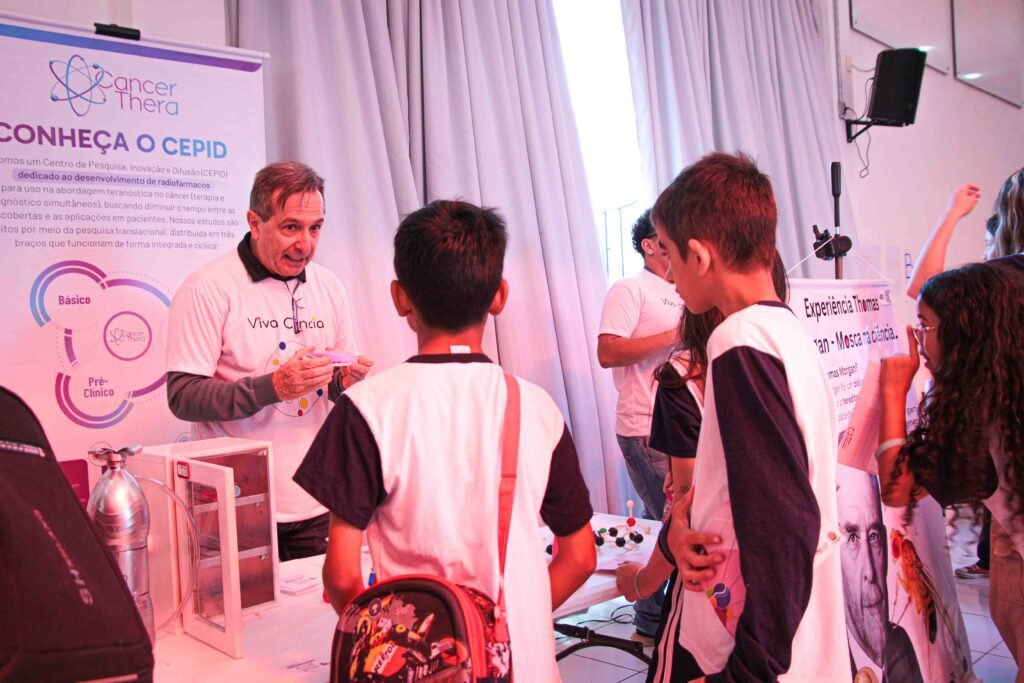
Gilberto Carlos Franchi Júnior, pharmacist and associate researcher at CancerThera, highlighted the satisfaction of engaging with young people. “I was able to communicate to them what I do in my daily life. It was very rewarding to see their eyes light up, them staying at the station, wanting to know how you connect a radioactive element to a chemical molecule. In short, it was very fun and very rewarding for me,” he says.
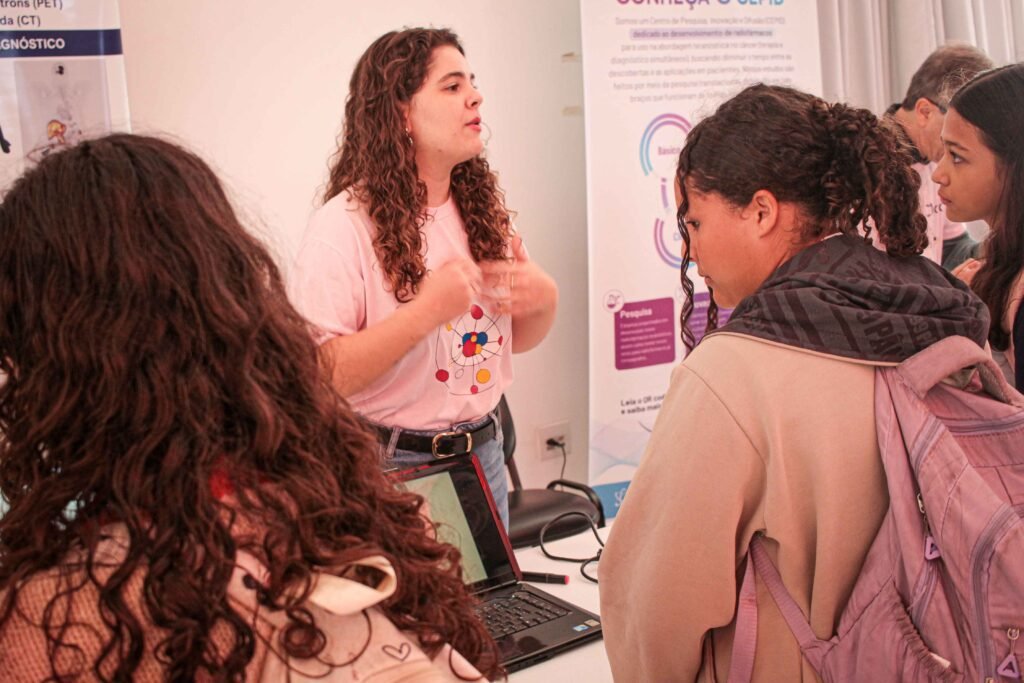
Maria Paula Dias Carneiro Miguel, chemist, master’s student at the Institute of Chemistry at Unicamp and volunteer facilitator in the CancerThera activity, emphasized the importance of direct contact with the public: “I think we managed to give a very playful presentation; they really engaged with the sounds and textures. They really enjoyed assembling the pharmaceuticals. It’s always a rewarding experience to step out of the lab a bit and show society what we are doing.”
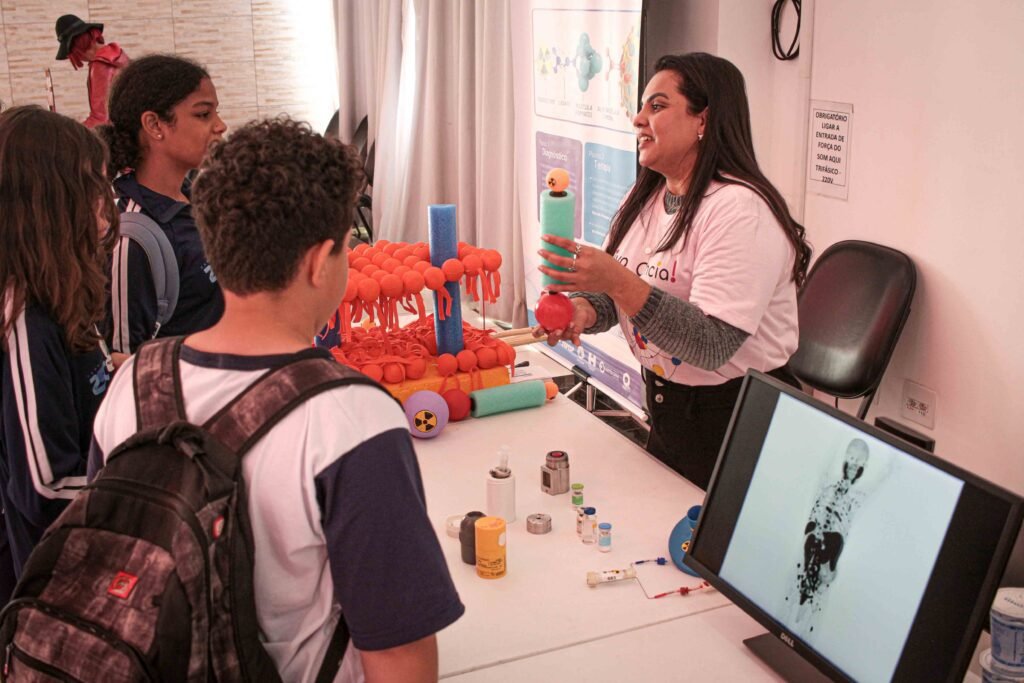
For Dr. Adrhyann Jullyanne de Sousa Portilho, biologist and postdoctoral researcher at CancerThera, involvement in the activity had both personal and professional impact. “Participating in Viva Ciência will mark my career as a researcher. Explaining technical information in a basic way to sixth-grade children, seeing their expressions as they understood how a radiopharmaceutical is made and how it can be used in the diagnosis and treatment of neoplasms… it was all very rewarding,” she states.
The event’s overall outcome was also positive for the organizers. Ma. Mariana Martins Volpato, pedagogue and advisor in the area of Participatory Institutional Strategic Planning at SME/Campinas, emphasized that the partnership strengthens both the university and public schools: “I think everyone played the role of planting a seed in the lives of our students, who leave motivated, mobilized, and curious about the world of science. So, it is a great legacy that we leave for them.”
Text and photos: Romulo Santana Osthues