




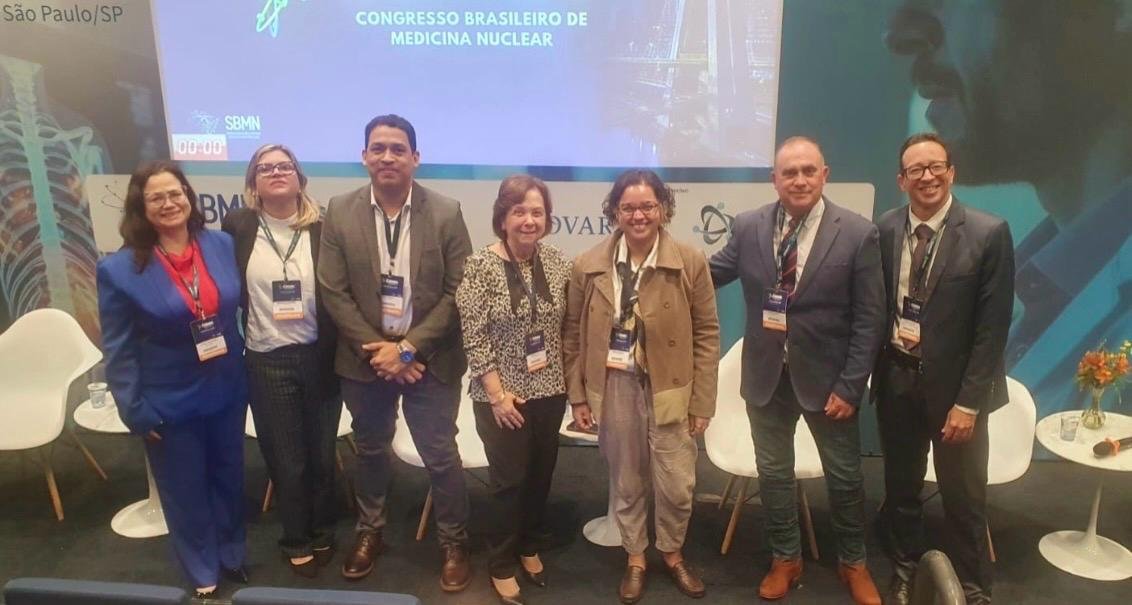

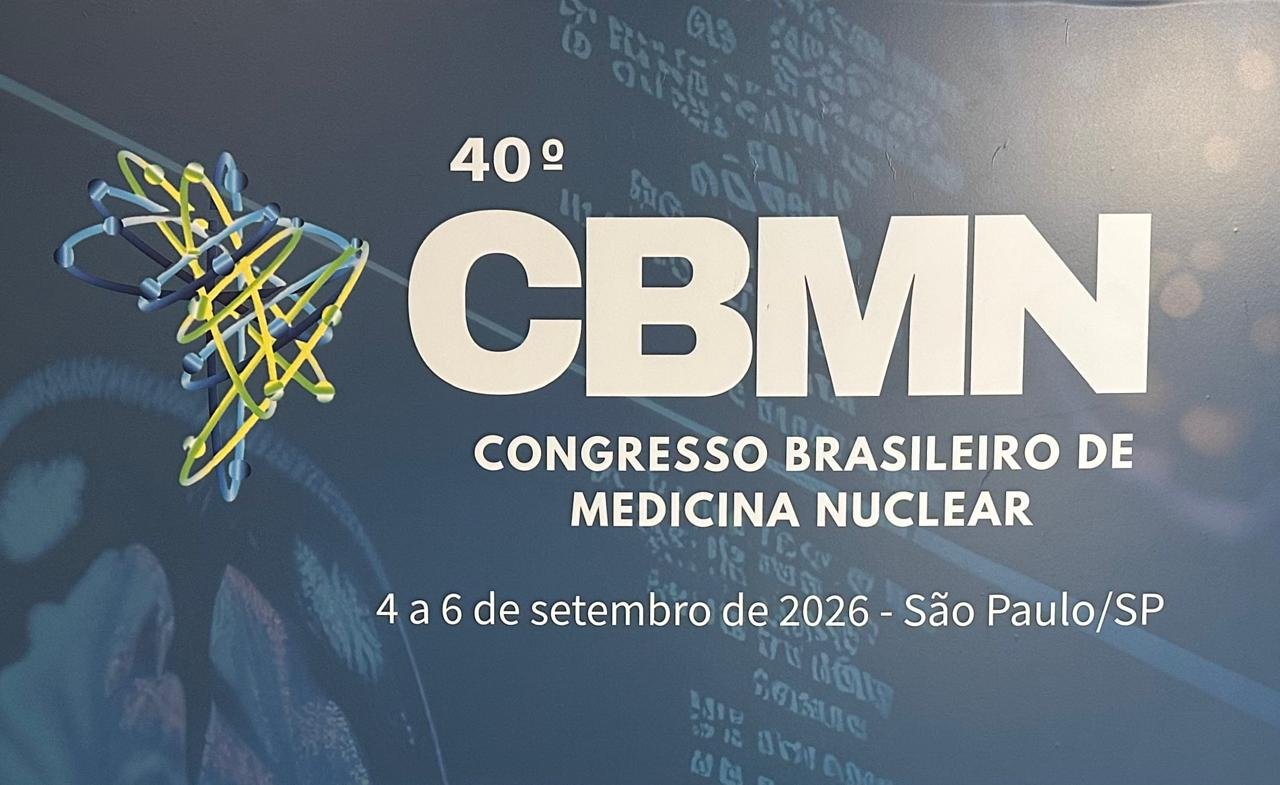
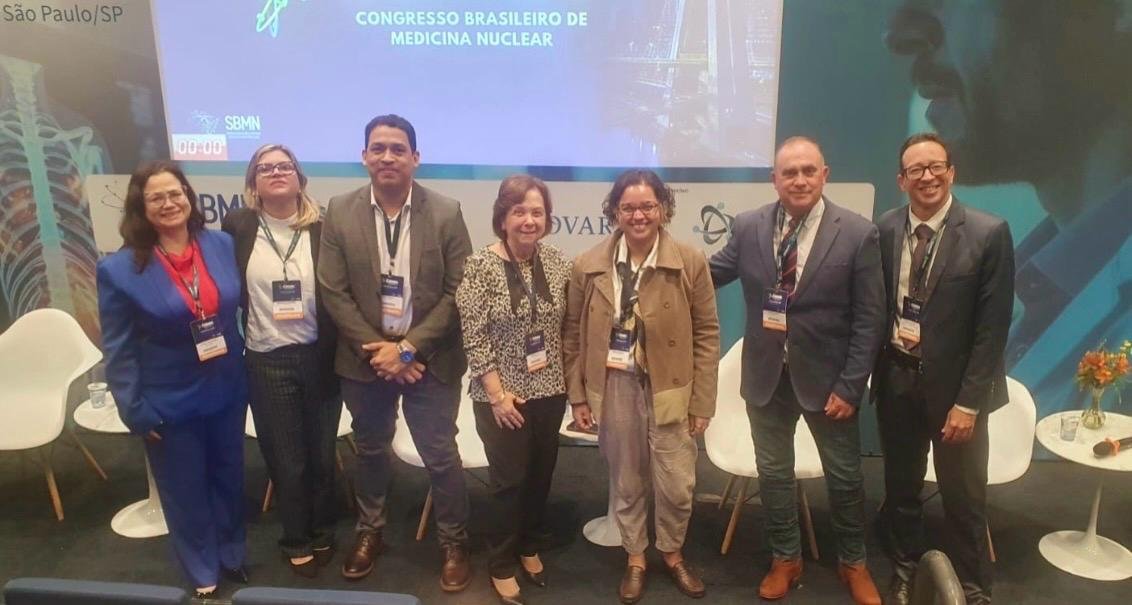
Between the 4th and 6th of September, the city of São Paulo received specialists and researchers for the 40th Brazilian Congress of Nuclear Medicine (CBMN), promoted by Brazilian Society of Nuclear Medicine (SBMN). The event brought together prominent names in the area to discuss the main innovations in radiopharmacy, diagnostic imaging and targeted oncological therapies. researchers linked to Cepid Cancerthera They integrated the scientific program to present the results of recent investigations and discuss the directions of precision medicine in the country.
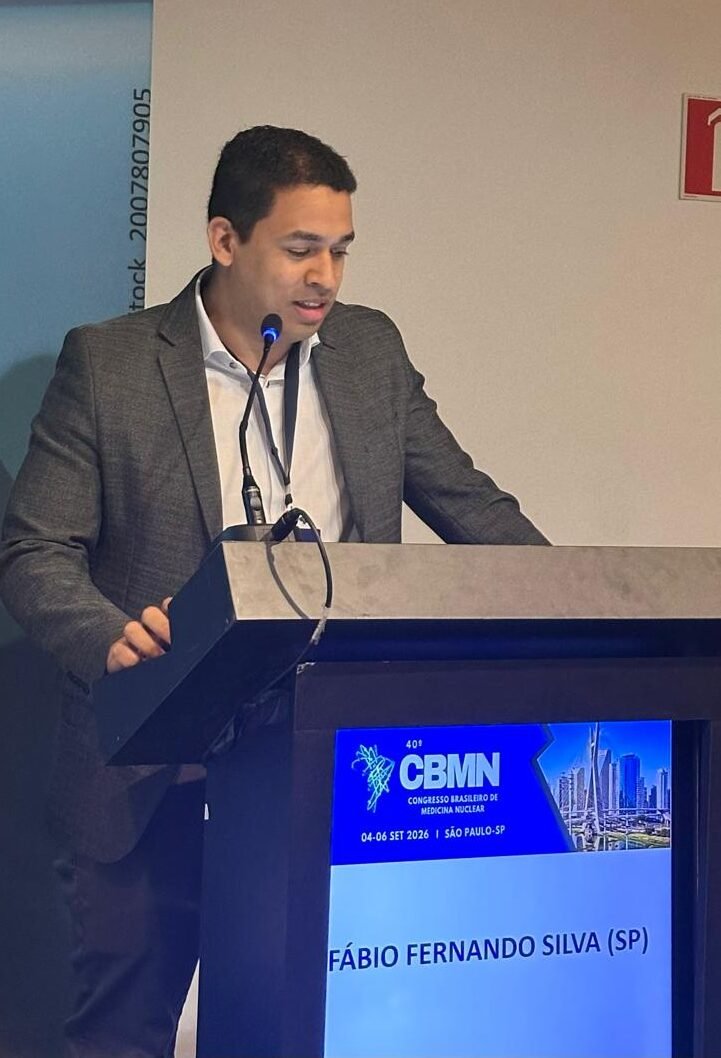
In the session dedicated to preclinical studies, the Dr. Fabio Fernando Aalves da Silva, biologist, biochemist, doctor in nuclear technology, postdoctoral fellow at the Faculty of Medical Sciences of the State University of Campinas (FCM/UNICAMP), presented the lecture ‘Development of radiotracers for biological research’. The exhibition addressed the main advances in the design of radiopharmaceuticals and radiotracers as well as the methodological perspectives for the area. According to Silva, the exchange with national and international researchers on the panel “provided a very productive discussion about the state of the art in radiochemistry and radiobiology, the opportunities and challenges that are to come, in addition to enabling important partnerships for our CEPID CancerThera”.
The researcher also highlighted the opportunity to share the debate table with researchers who consider references in the area such as Dr. Carmen Silvia Passos Lima and Dr. Roger Chammas. From this intellectual exchange, Silva emphasizes a conceptual learning that starts to guide his view of scientific work: “The main insight I had during the congress, and that I take with me, is a concept I learned: “Science is not linear, it is a spiral””. This concept, he explains, means that the construction of knowledge does not take place in a straight line, “but rather through a multidisciplinary and comprehensive trajectory, full of curves and reliefs that, sometimes, make us go back ‘a house to advance two”, he concludes.
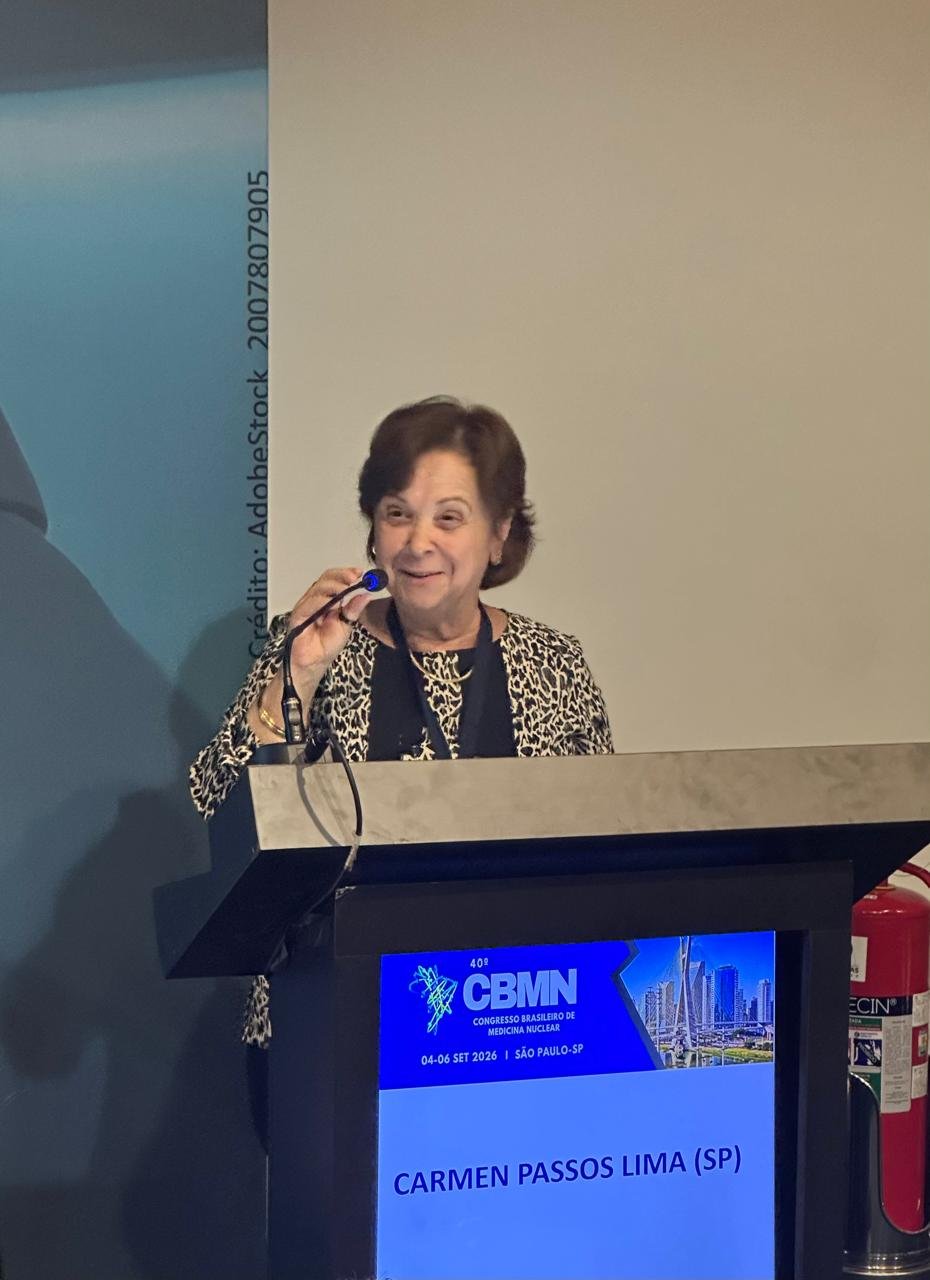
For Dr. Carmen Silvia Passos Lima, oncologist, professor at FCM/UNICAMP, main researcher and coordinator of the area of innovation at CancerThera, the congress discussions showed fundamental trends for the discovery of new oncological drugs. Among the highlights addressed in the pre-clinical research session, Lima points out “the optimization of three-dimensional (3D) cultures in spheroids and tumor organoids – a methodology that aims to reduce the dependence of experiments with the use of animals – and the development of xenotransplants of humanized animals, which make it possible to evaluate drugs whose action depends on the immune system”.
The researcher also points out that these 3D models, which simulate mini-tumors in the laboratory, are already in the validation phase at the FCM/Unicamp Cancer Genetics Laboratory (Lageca) for several projects, while complex models of xenotransplantations appear in future stages. of planning.
WORKS PRESENTED
Anti-integrine peptide modified by radiolabeled chelating as a therapeutic in glioblastoma
Authors: Juliana Carron, Gabriella Fraiji Melo, Fábio Fernando Alves da Silva, Flávio Lopes Alves, Maria Eduarda de Oliveira Amaro Santos, Vânia Pereira de Castro Rodrigues, Arif Ali, Gilberto Carlos Franchi, João Ernesto de Carvalho, Ana Lucia Tasca Gois Ruiz, Leonardo Lima Fuscaldi, Luciana Malavolta Quaglio, Carmen Silvia Passos Lima.
Text: Xenya Bucchioni