






Text and photo by: Roberta Steganha | Inova Unicamp Innovation Agency
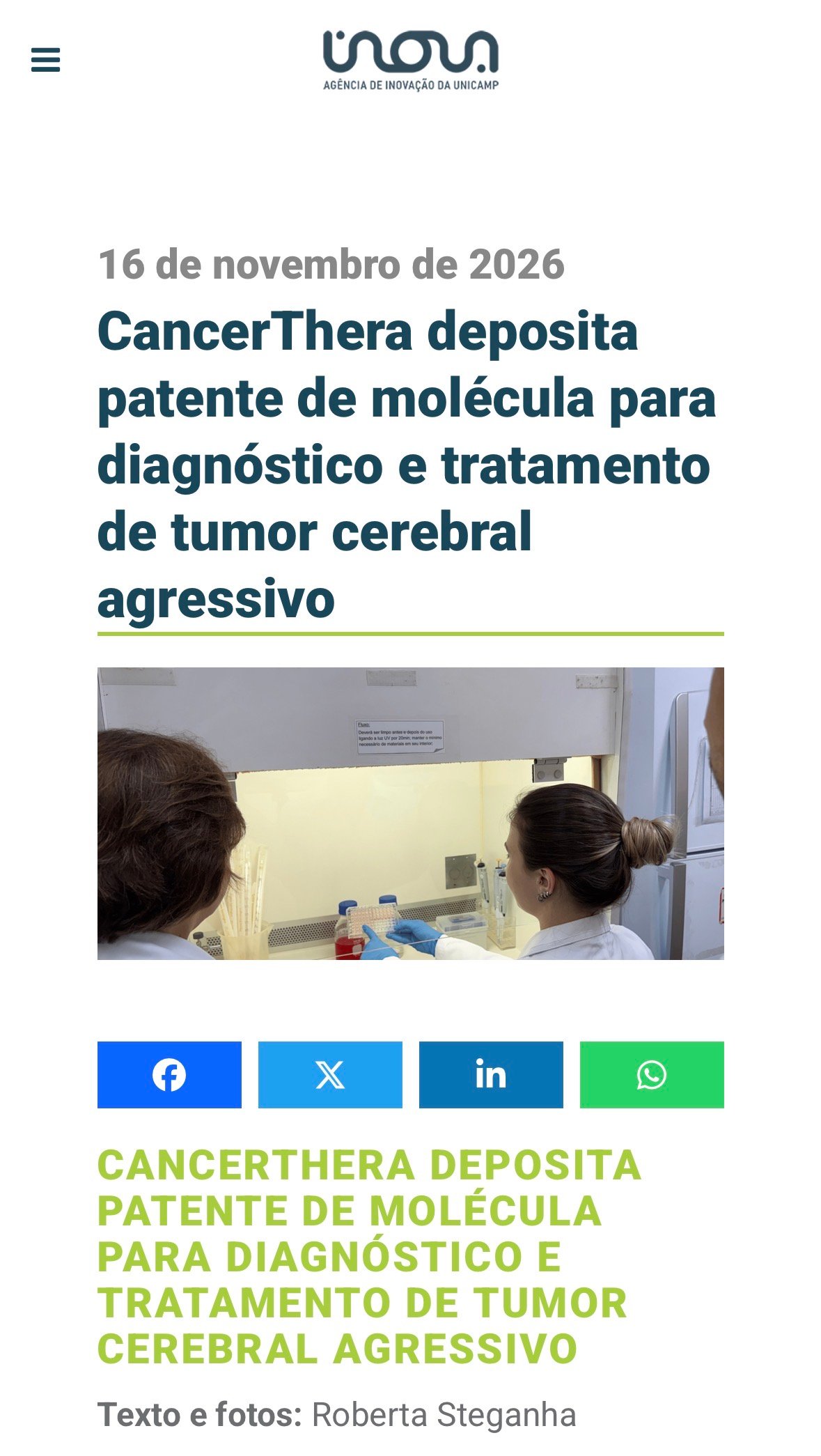
The Center for Therapeutic Innovation in Cancer (Cancerthera), linked to the Research, Innovation and Diffusion Centers Program (CEPID) of the Fundação de Amparo à Pesquisa do Estado de São Paulo (FAPESP), deposited a patent application with the support of the Inova Innovation Agency UNICAMP. The technology involves a molecule for diagnosis and treatment of patients with glioblastoma.
The unprecedented compound uses a radiolabeled peptide to recognize tumor cell structures. The research has already undergone cell tests and initial animal studies, but still needs new validations and regulatory steps before a possible clinical application.
The proposal seeks to expand the options for diagnosis and treatment of patients with glioblastoma, helping to identify the tumor with greater precision and investigate new therapeutic approaches.
Challenges in diagnosis and treatment
According to Professor Carmen Silvia Passos Lima, one of those responsible for the study, glioblastoma is a rapidly progressing central nervous system tumor, which gives its patients an average survival of 12 to 14 months.
Treatment includes surgery, radiotherapy and chemotherapy. “However, complete removal of the tumor by surgery can compromise healthy tissues that are important for cognition and motricity functions”, explains Lima.
Chemotherapy also faces obstacles, such as the blood-brain barrier, which limits the passage of substances from the blood to the brain. “Unfortunately, most of the chemotherapeutics available on the market do not apply to these patients,” says the professor at the Faculty of Medical Sciences (FCM) at Unicamp.
Another challenge is to follow the evolution of the disease after the start of treatment. “Alterations caused by radiotherapy and chemotherapy can make it difficult to evaluate the progression of the tumor and the evaluation of the therapeutic response”, points out Lima.
Molecule to recognize the tumor
The investigation arose from a clinical need and from a collaboration with Professor Luciana Malavolta Quaglio, from the Faculty of Medical Sciences of Santa Casa de São Paulo (FCMSCSP).
‘From so much to see these patients with these difficulties of follow-up, we went after a solution. We asked Professor Luciana if she had any peptides directed to glioblastoma cells and she did. So we started the study’, says Lima.
The molecule, of the peptide type, was radiolabeled with gallium-68, radioisotope used in positron emission tomography (PET) exams. “We developed a peptide-type molecule that has an affinity with these receptors. Then it was radiolabeled with Gallium-68, allowing its identification by means of positron emission tomography and, thus, the identification of the tumor mass”, explains Malavolta Quaglio.
First tests and results
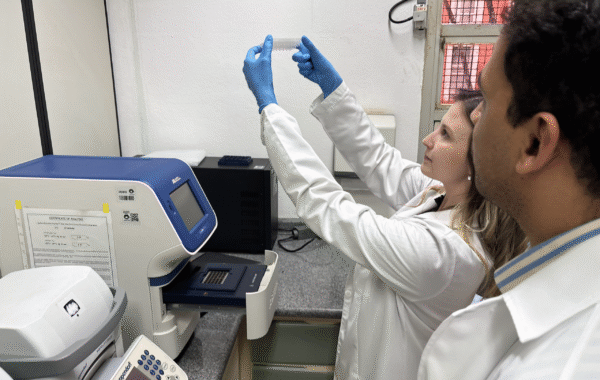
The Santa Casa team synthesized the molecule, which was later sent to the Laboratory of Cancer Genetics (Lageca), at Unicamp, as part of the activities of CancerThera, where researchers Juliana Carron and Fábio Fernando Alves da Silva conducted the tests on tumor cells and animals.
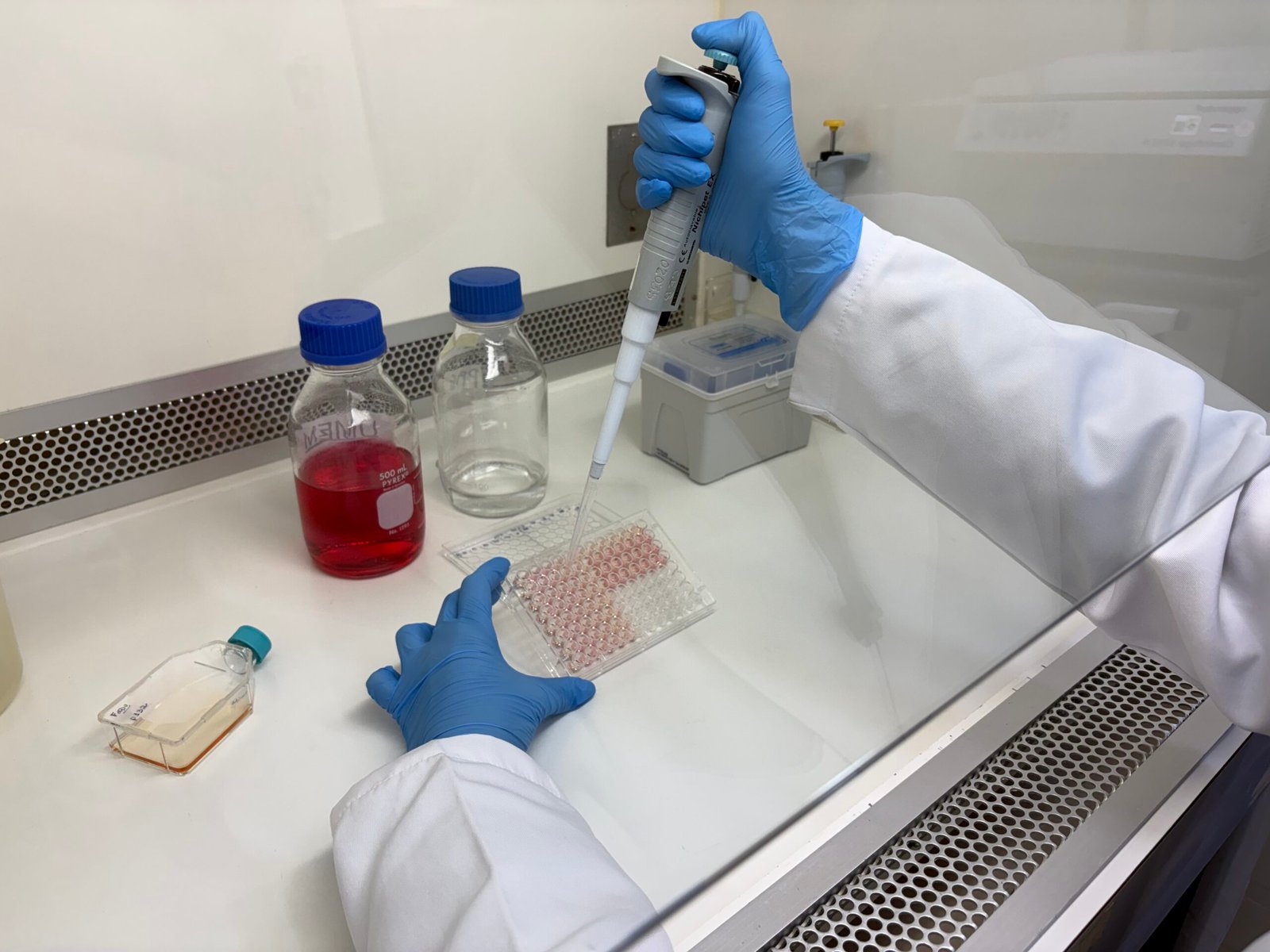
The experiments evaluated cytotoxicity, cell death, proliferation and migration. Under the conditions tested, the molecule did not cause cell death or change the proliferation. “We observed that it did not kill the cells, did not interfere with their proliferation”, reveals Carron.
They also observed a possible reduction in cell migration, in addition to the binding of the molecule to the gallium-68 and its internalization by the cells. The result on migration still requires research and does not allow the conclusion that the compound will reduce metastases. “We still need to do more studies, but it could reduce the chance of tumor progression”, emphasizes Carron.
Combine Diagnosis and Treatment: Therapeutic
The compound brings together a peptide, spacer and a chelator called dota, which allows to incorporate radionuclides such as gallium-68, used in PET exams, and lutetio-177, used in therapeutic applications. “This gallium-/lutécio pair is known as a therapeutic pair”, explains Silva.
The tests indicated chemical stability in plasma, high radiochemical purity, cell binding and brain tissue range in mice. “The validations in vitro and in vivo of this potential radiopharmaceutical are the great asset of this research”, highlights the researcher.
The proposal is to use the gallium-68 to locate the tumor by means of imaging and lutetio-177 to transport therapeutic radiation to the tumor cells.
The strategy can be relevant for glioblastoma, considering the infiltration of the tumor in the brain tissue and the challenges to follow its evolution and the response to treatment. However, the diagnostic and therapeutic potential of the molecule still needs to be confirmed in the next stages of the research.
Next steps
The research continues with studies in vivo In orthotopic xenotransplant models, with tumor established directly in the brain. The team intends to test the molecule with lutetium-177 and automate radiomarking, seeking speed, precision and adaptation to the good manufacturing practices required in the development of radiopharmaceuticals.
According to Silva, the development of a new drug can take about ten years. Partnerships with radiopharmaceutical producers can support validations and production escalation. “There is still, in fact, a lot to be done, but we have an excellent starting point, we have a great molecule that undoubtedly has a huge potential to reach patients someday”, he highlights.
Carron points out that the research was developed entirely with public resources. “This patent is gratifying because it is a first step to ensure that the results of technology can actually turn into innovation for society”, he reflects.
For Malavolta, the results can attract companies interested in the development and transfer of technology to the industrial sector. “The results are very promising, and with the deposit of the patent application, this will open doors for us to partner with the industry, so that we can see our technology in the clinical application”, he says.
The project also contributes to the training of highly trained professionals and brings students closer to scientific research by integrating different areas of knowledge. For medical student Gabriella Fraiji Melo, participation marked the beginning of her trajectory. “It was the opportunity to take the first steps in the research by working on a theme with the potential to transform the lives of patients and their families”, he recalls.
If the next steps confirm the potential of the molecule, it could represent a new possibility of diagnosis and treatment. ‘Of course, we always aim to cure the patient, but when it is not possible, then we seek to prolong survival and improve the quality of life. We need it and therefore we are looking for a more effective therapy for these patients’, concludes Lima
(…)
Read the original text in full on this link.