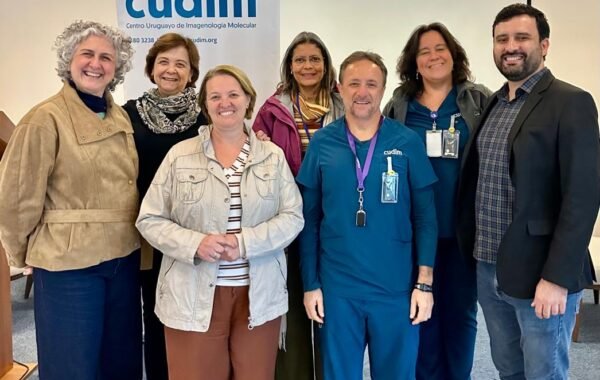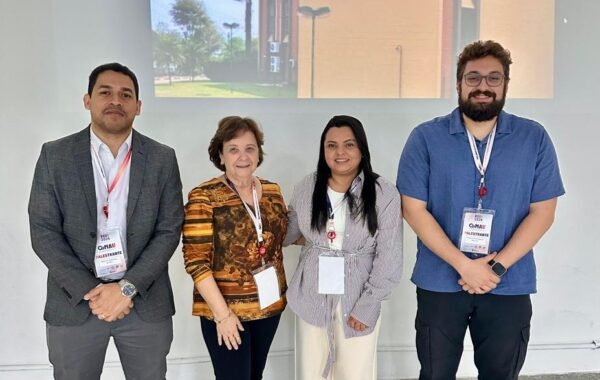





With a significant in-person audience and a diverse scientific program, the 2nd Julho Verde Symposium – Head and Neck Cancer was held on July 19 at the Amphitheater of the Institute of Otorhinolaryngology & Head and Neck Surgery of the University of Campinas (IOU/Unicamp), bringing together specialists, students, and representatives from various Brazilian healthcare institutions.
With registrations fully booked—more than 140 in-person participants—and an environment of learning and cooperation among different specialties, the symposium reaffirmed its importance in the national scientific calendar of discussions on this type of cancer. “The event fulfilled its role very satisfactorily,” evaluates Dr. Carmen Silvia Passos Lima, oncologist, hematologist, professor at FCM/Unicamp, principal investigator at CancerThera, and member of the event’s organizing committee.
The symposium was promoted by the Faculty of Medical Sciences of Unicamp, through the Graduate Program in Oncology, in partnership with IOU/Unicamp and CEPID CancerThera. “Considering the highly specialized profile of the event and its in-person format, the number of participants was significant. What is most impressive, however, is that this can be considered one of the largest events exclusively dedicated to head and neck cancer in the interior of the state of São Paulo,” says Dr. Lígia Traldi Macedo, oncologist and associate researcher at CancerThera, who shared leadership in organizing the event with Lima and Prof. Dr. Carlos Takahiro Chone, oncologist, professor at FCM/Unicamp, and associate researcher at CancerThera.
Interinstitutional collaboration and solidarity
By integrating into the global awareness campaign on head and neck cancer, the symposium reaffirms Unicamp’s commitment to multidisciplinary training and social responsibility in addressing the disease. It stood out not only for the number of participants but also for the diversity of its scientific program, with representation from multiple specialties. “The exchange of experiences among them made it possible to identify common challenges and reinforce the importance of coordinated action among different areas in the diagnosis, treatment, and rehabilitation of patients with head and neck tumors,” says Macedo.
The program covered topics such as thyroid, oropharyngeal, and nasopharyngeal tumors, early-stage laryngeal cancer, and HPV-induced tumors, and also included discussions on multidisciplinary support and research developed at CancerThera on the use of radiopharmaceuticals within the theranostic model. “Special mention should also be made of the block of lectures and discussion on support for patients with head and neck cancer, conducted by an oncologist, a psychologist, and speech therapists,” says Lima.
Speakers included representatives from centers of excellence such as Unicamp, the National Cancer Institute (Inca), Hospital Sírio Libanês, Rede D’Or, Hospital Albert Einstein, PUC-Campinas, Santa Casa de São Paulo, and Oncovida Cuiabá. The program ranged from basic concepts for undergraduate students to updates and therapeutic controversies, reflecting the symposium’s mission of integrating education, research, and care.
In addition, as part of the Corrente do Bem FCM campaign, participants were invited to donate 1 kg of food, destined for families in situations of social vulnerability, reinforcing the university’s role in community care.
PHOTO GALLERY | 2nd Julho Verde Symposium – Head and Neck Cancer

Late diagnosis in Brazil
A study conducted by Inca and published in January this year in the journal The Lancet Regional Health – Americas analyzed more than 145,000 cases of head and neck cancer and revealed that about 80% of these tumors in Brazil are diagnosed at an advanced stage (III or IV)—when the chances of cure drop drastically. Tumors such as hypopharyngeal (91.3%) and oropharyngeal (86.6%) cancers lead the statistics of late diagnoses.
The research, which included data collected between 2000 and 2017, also showed that educational level and age directly influence staging: individuals with lower levels of education are 17% more likely to receive a late diagnosis, and the younger the patient, the greater the probability of already presenting the disease at an advanced stage.
These data reinforce the severity of head and neck cancers in the country, which are among the most incident in Brazil and affect regions such as the oral cavity, larynx, and pharynx. The study highlights inequality in access to diagnosis and treatment—especially in areas of the Northern region—and points to risk factors such as smoking, alcohol consumption, and low educational level.
Text: Romulo Santana Osthues | Photos: Romulo Santana Osthues, Carmen Silvia Passos Lima, Lígia Traldi Macedo e Juliana Carron