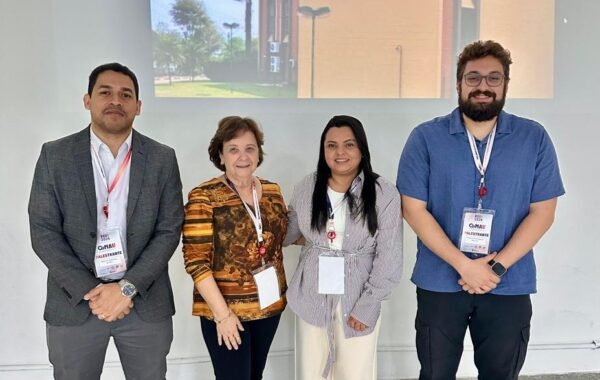





We would like to sincerely thank you for taking a bit of your day to listen to us talk about a topic we love: the theranostic approach in cancer. There are many of us at CEPID CancerThera dedicated to research and the development of technologies and products that can be applied to this increasingly promising model of care related to simultaneous therapy and diagnosis for cancer patients.
So, for those of you who would like to learn more about the world of radiopharmaceuticals and the theranostic approach in cancer, we have prepared the content below. In addition to information we have already shared during the educational and outreach activities you participated in, you will find videos, illustrations, and other complementary materials in this post.
What is the theranostic model in cancer?
This Nuclear Medicine approach combines therapy and diagnosis into a single procedure for the care of oncology patients. This model uses special radiopharmaceuticals to identify and destroy tumor cells in a safe, precise, and personalized way.
What are radiopharmaceuticals and what are they used for?
Radiopharmaceuticals are made up of radioactive isotopes (radioisotopes) linked to molecules that target specific cells, tissues, or organs in the human body, as they contain targets to which the radiopharmaceuticals bind—certain types of proteins on the surface of tumors can serve as these targets. Radiopharmaceuticals are used to diagnose through imaging and to treat various types of tumors, such as prostate, bone, and neuroendocrine tumors. The image below illustrates how radiopharmaceuticals are structured (radioisotope > ligand > molecule) and their affinity for the tumor.

Which tumors are most frequently treated with theranostic radiopharmaceuticals?
– Prostate tumors: PSMA-18F and lutetium-177 radiopharmaceuticals.
– Thyroid tumors: iodine-131 radiopharmaceutical.
– Bone tumors: samarium-153 radiopharmaceutical.
– Neuroendocrine tumors: gallium-68 dota and lutetium-177 radiopharmaceuticals.
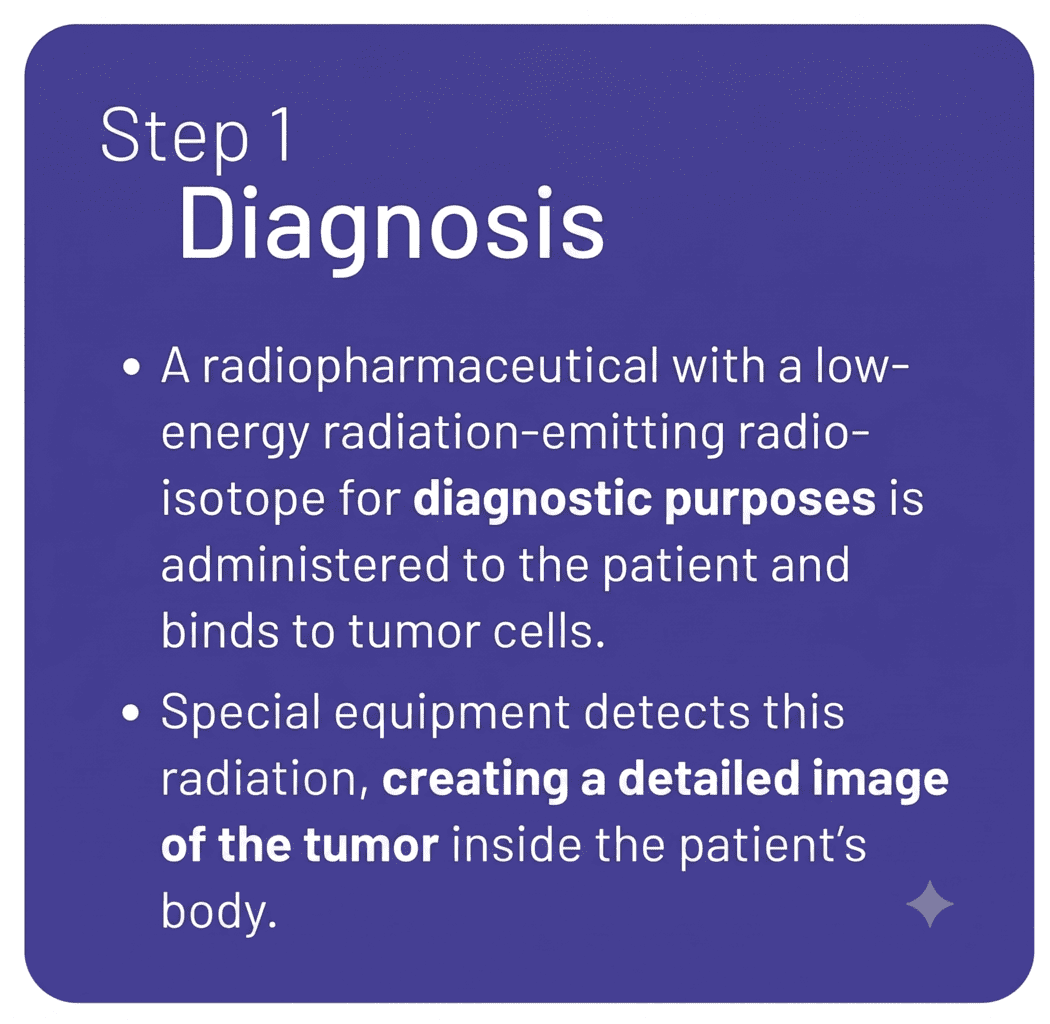
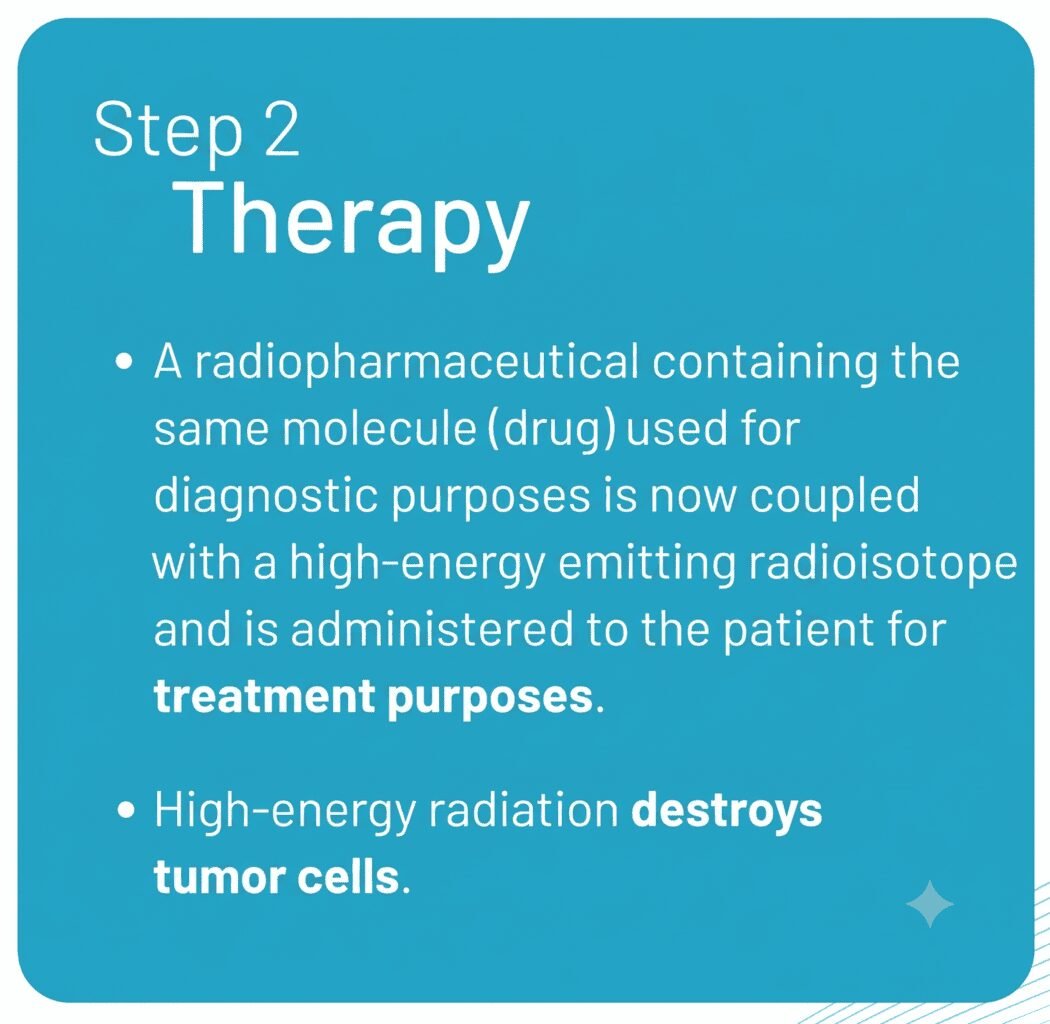
How are radiopharmaceuticals used in the theranostic approach to cancer? In two steps.
Should I be afraid of radiation used in Nuclear Medicine?
NO! The way nuclear energy and radiation are used in theranostics is very safe. Nevertheless, due to the radiation emitted, their handling and application in humans require special care. To give you an idea of how careful professionals who work with radiopharmaceuticals are, watch the video below. In it, you will see a report by TV Unicamp, produced at the Nuclear Medicine Service of the Hospital de Clínicas at Unicamp, about the handling and disposal of radioactive waste used in diagnosis and treatment.
What is CEPID CancerThera and what does it do?
CEPID CancerThera is a Research, Innovation, and Dissemination Center, funded primarily by the São Paulo Research Foundation (FAPESP). Our full name is Center for Theranostic Innovation in Cancer, and we are based at the University of Campinas (Unicamp), with the participation of the School of Medical Sciences of Santa Casa de São Paulo (FCMSCSP) and the Institute of Chemistry of São Carlos at the University of São Paulo (IQSC/USP).
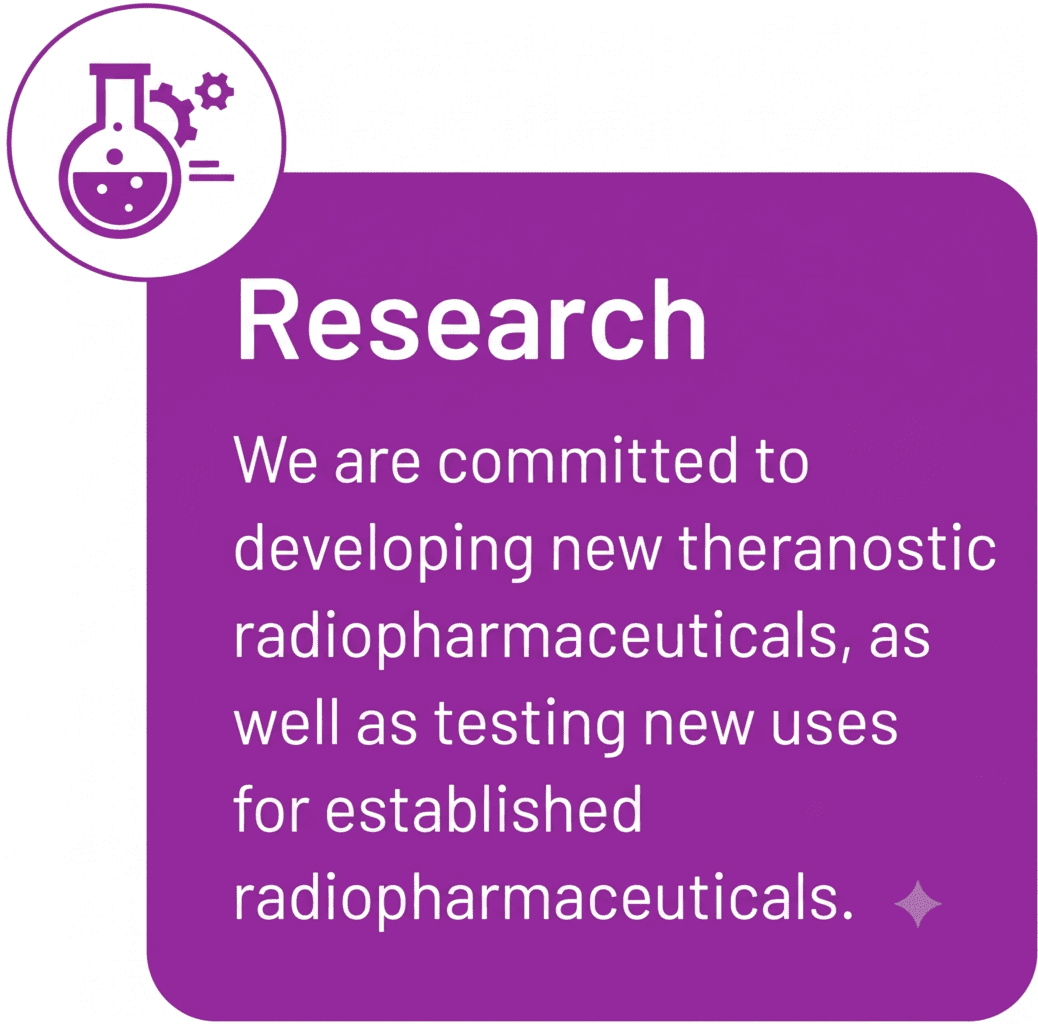
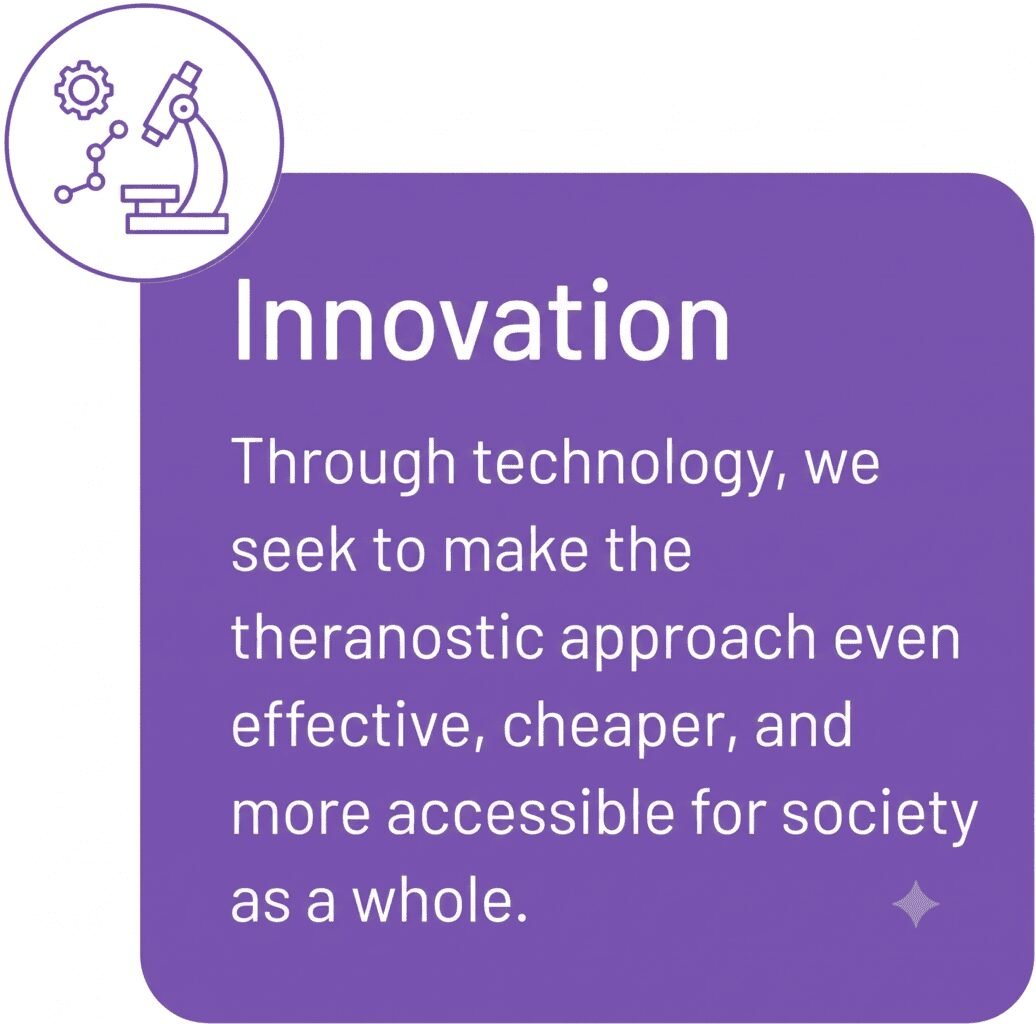
Our research center is committed to developing new theranostic radiopharmaceuticals, as well as testing new uses for already established radiopharmaceuticals. Through technological innovation, we aim to make the theranostic model more effective, accessible, and affordable for society. In addition, the dissemination of scientific knowledge is one of our goals, aiming to educate the population about cancer prevention and to combat misinformation.
How does CEPID CancerThera conduct its scientific studies?
We adopt an approach called “translational research” to shorten the time between scientific discoveries and their application in patients. Our studies are divided into three main research branches, which operate in an integrated and cyclical manner:
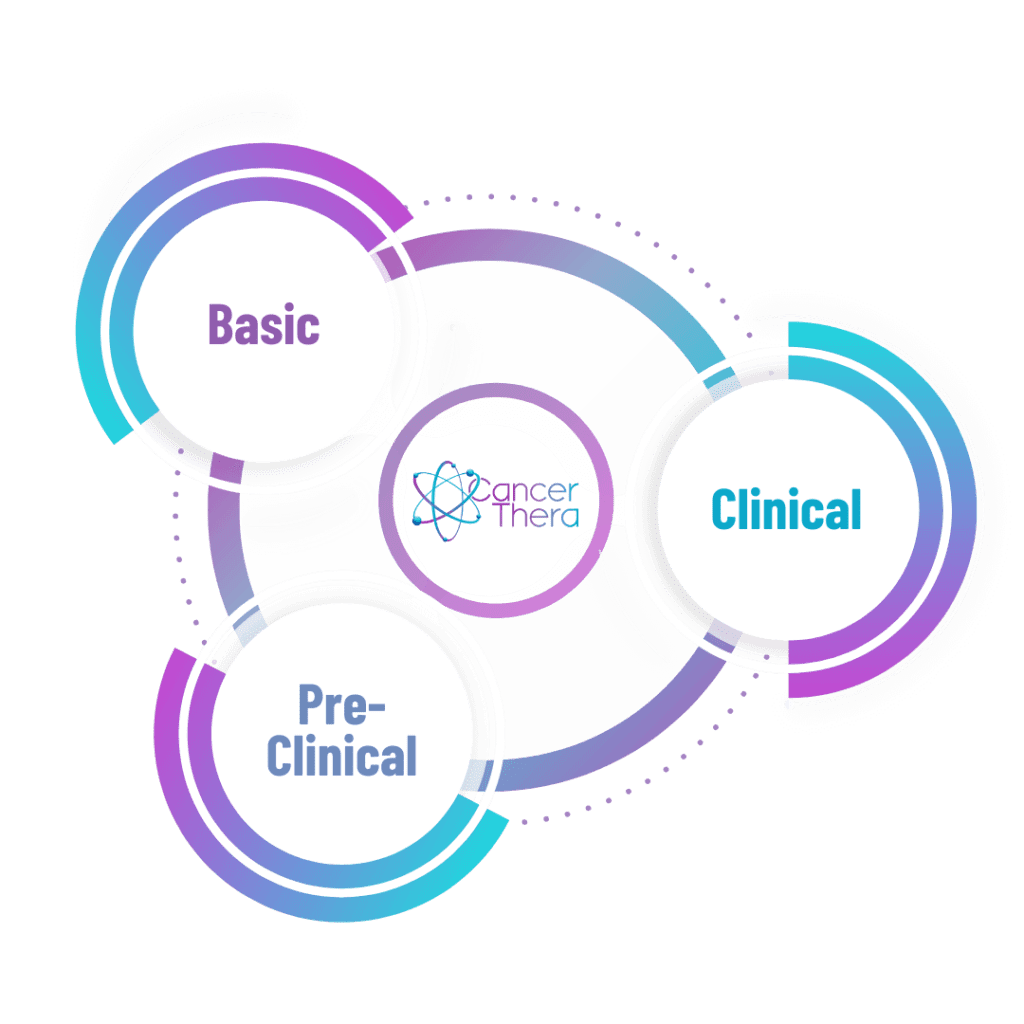

We study how cancer works, identify new targets for treatment, and develop metallopharmaceuticals and radiopharmaceuticals for diagnosis and therapy. We also explore new uses for known radiopharmaceuticals.
We evaluate the safety and efficacy of newly created radiopharmaceuticals by testing them in tumor cells and animals, conducting toxicity studies, and determining their suitability for future applications in humans.
We apply in humans the new radiopharmaceuticals created in the basic stage and tested in the preclinical stage, evaluating their efficacy, safety, and possible side effects. This stage is conducted with rigorous technical and ethical criteria to ensure patient well-being.
The results of our research can benefit many people who suffer from cancer, including patients with tumors as well as their families and friends. In this sense, we are committed to building a promising future to support these individuals, and many institutional partners believe in what we do. So much so that we have even become the subject of a video documentary!
The episode “New Perspectives Against Cancer,” the eleventh of the third season of the series Ciência Para Todos, presents the research of CEPID CancerThera in the development of theranostic radiopharmaceuticals. The series, a partnership between FAPESP and Canal Futura, aims to disseminate advances in Brazilian science in a way that is accessible to the public. The content is available on YouTube, on the FAPESP website, and in the series catalog on Globoplay.
The nuclear medicine physicians and professors from the School of Medical Sciences at Unicamp, Elba C. S. C. Etchebehere and Celso Dario Ramos, both principal investigators at CancerThera, were interviewed by the Canal Futura team. In addition, Edson Nóbrega, a businessman, shared his testimony as one of the patients currently benefiting from the research developed at the center.
Watch the episode to learn how theranostics is a promising model in the care of cancer patients:
We are very happy to know that you are interested in what we do and made it to the final paragraph of this post! If you still have any questions, just write to us at this address: imprensa@cancerthera.org.br.
We will be very pleased to talk to you whenever you wish!