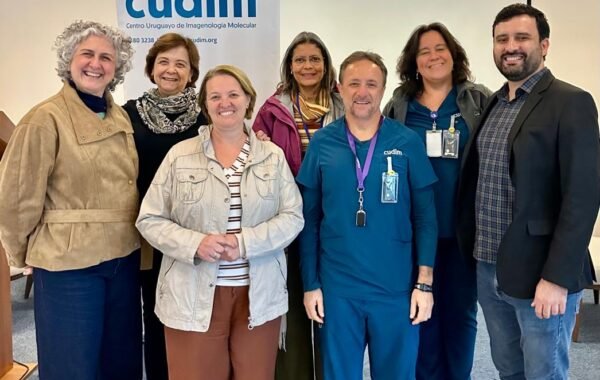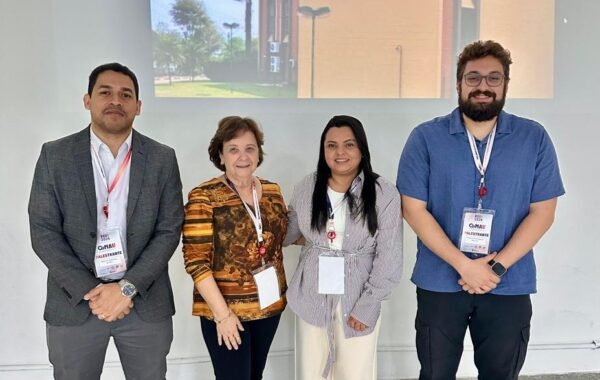




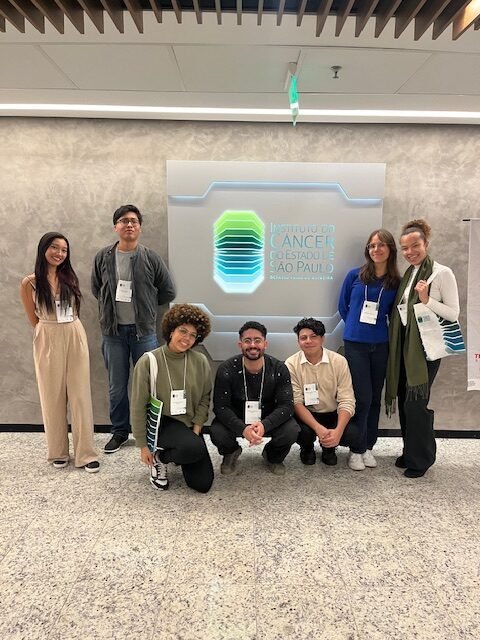

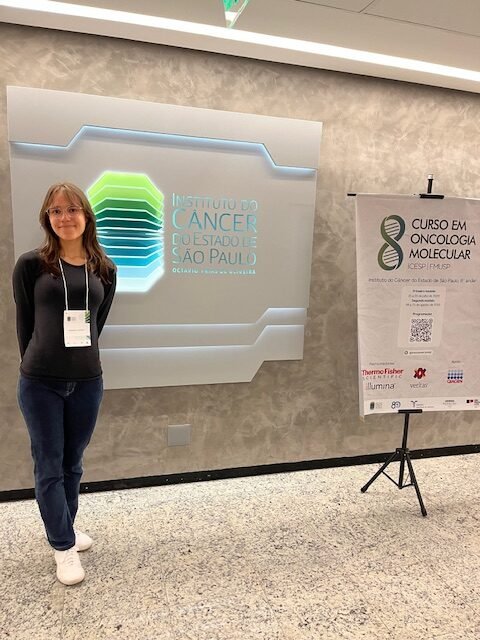
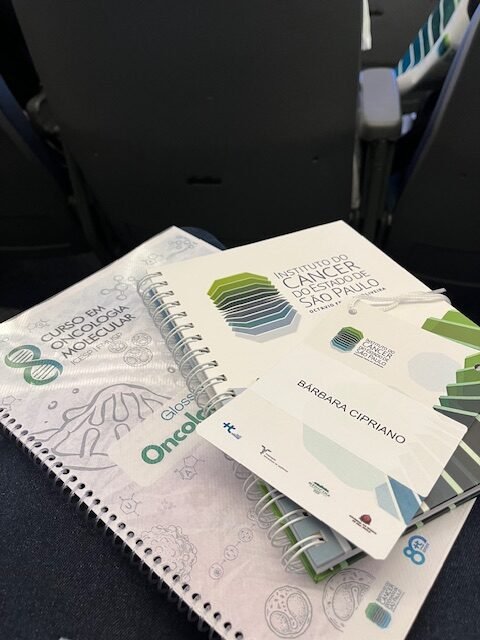
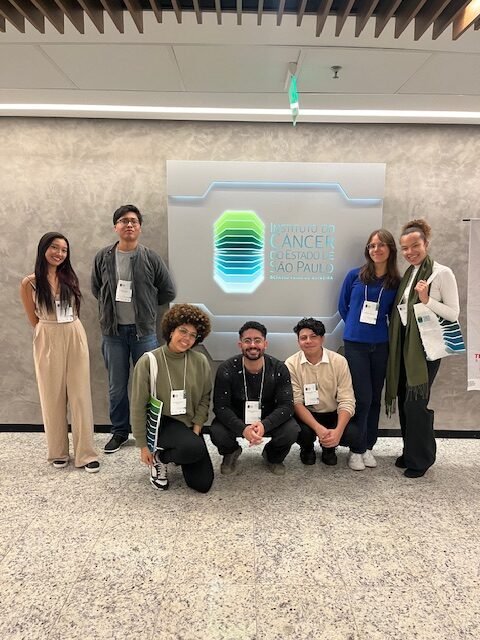
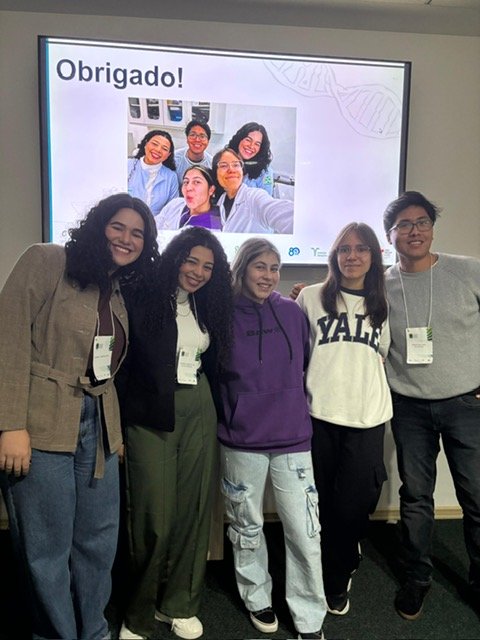
Bárbara Zanette Cipriano, an undergraduate Biomedicine student at the Pontifical Catholic University of Campinas and an undergraduate research student affiliated with CEPID CancerThera, participated in the 8th edition of the Molecular Oncology Course, promoted by the Cancer Institute of the State of São Paulo (Icesp) in partnership with the School of Medicine of the University of São Paulo (FMUSP). The initiative, held from July 21 to August 1, brought together undergraduate students and recently graduated professionals in Biological Sciences and Health-related fields for a theoretical and practical immersion in the most recent advances in the sector.
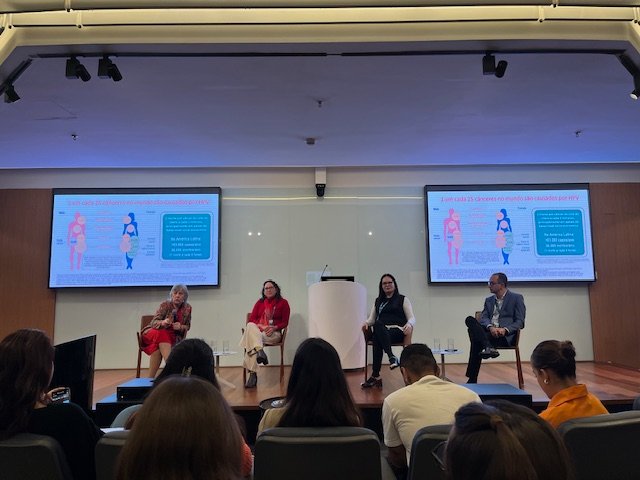
The course, organized by the Center for Translational Research in Oncology (CTO), included lectures, debates, short courses, and laboratory activities, providing participants with direct contact with specialists and with the work carried out at one of the country’s leading reference institutions. “Among our objectives is to disseminate the activities being conducted at the institute by our graduate students, as well as by our collaborators and faculty members, so that we can spread the knowledge produced here to undergraduate students from different regions of the country,” explains Dr. Luisa Lina Villa, professor at FMUSP and head of the Cancer Innovation Laboratory at CTO/Icesp.
Cipriano is supervised by Dr. José Barreto Carvalheira, an oncologist, professor at the School of Medical Sciences of the State University of Campinas, and principal investigator at CancerThera. For the project’s co-supervisor, Dr. Maria Carolina Santos Mendes, a nutritionist and associate researcher at the same research center, the student’s participation was a significant achievement: “Bárbara’s presence in the course encourages exchange between our institutions, something of great relevance for CancerThera. In addition, it provides the opportunity to share knowledge with a research group that is a reference both nationally and internationally, fostering the development of our students.”
A robust study program
The first module of the course focused on fundamental topics in cancer biology, such as cell death, the cell cycle, carcinogenesis, and genetic and molecular mechanisms of tumor progression. The role of the tumor microenvironment, cell communication via extracellular vesicles, and aspects of cancer immunology were also explored. In the therapeutic field, the content ranged from chemotherapy, radiotherapy, and immunotherapy to innovative strategies such as oncolytic therapy and CAR-T cells, in addition to topics such as tumor resistance, biomarkers, liquid biopsy, the use of omics tools, and artificial intelligence applied to diagnosis.
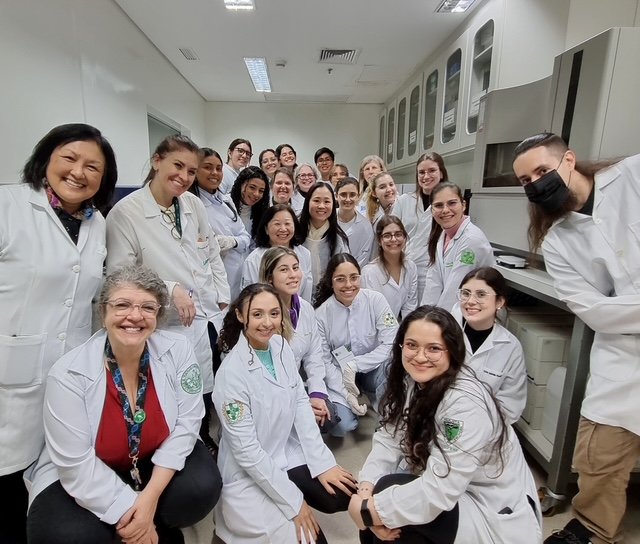
The second module, in turn, focused on laboratory practice, allowing students to apply state-of-the-art techniques used in molecular biology research. These included nucleic acid extraction and analysis, conventional and real-time PCR, gel electrophoresis, DNA sequencing using the Sanger method, cDNA synthesis, and microarray. Students also participated in academic presentations and clinical case discussions, consolidating the integration between theory and practice and experiencing a setting close to the daily routine of translational research in Oncology.
Reflecting on her experience, Cipriano highlights: “Throughout the course, I gained an in-depth understanding of the application of methodologies in molecular biology, with an emphasis on oncology research, which are already being applied in my research project. The program was essential for connecting theoretical knowledge to its practical application, allowing me to use new technological tools and understand their impact on oncological diagnosis and treatment.”
Another point she emphasized was the update on the directions of research and clinical practice. “The discussions on molecular analyses for faster diagnosis and personalized therapies were extremely relevant, aligning with the most recent innovations in the field. I believe this experience was very valuable for my professional training, as it consolidated and expanded my knowledge in a field of growing relevance,” Cipriano states.
Text: Romulo Santana Osthues with information from Icesp | Photos: Personal archive and Vinícius Marques Rocha (Icesp)