



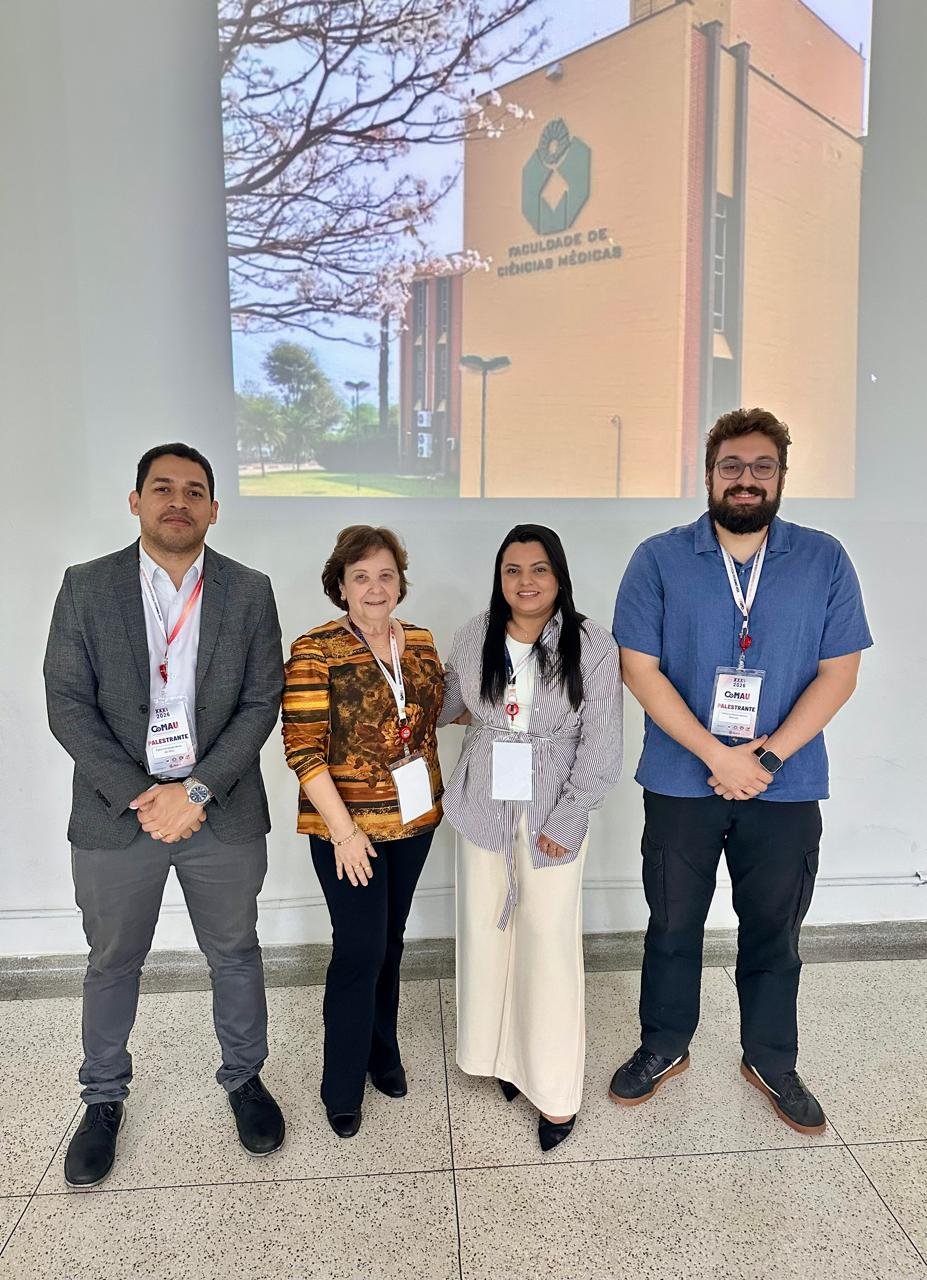
Imagine being able to see a tumor accurately and, with the same technology, diagnose and fight the disease by delivering a sure dose of radiation or medication only to diseased cells, saving the body’s healthy tissues. What seemed like science fiction a few years ago today shapes one of the most promising frontiers of medicine: theranostics – the theme of the special module presented by researchers from the CEPID CancerThera at the XXXV Academic Medical Congress of the State University of Campinas (COMAU 2026), held between August 7th and 8th at the Faculty of Medical Sciences (FCM) of the State University of Campinas (Unicamp).
Right target in the fight against cancer
Oncology is currently experiencing a period of rapid evolution, with generalized treatment models giving way to precision medicine — a therapeutic approach that tailors medical care based on the specific genetic and molecular characteristics of each patient and their tumor. Within this ecosystem, theranostics—a term combining “therapy” and “diagnostics” — represent an unprecedented technological milestone in Nuclear Medicine, a medical specialty that uses safe radioactive substances to diagnose and treat diseases.
In order to present in a didactic way the concept of therapeutics and its applications in scientific development, especially to the students of the medical course, the module “Therapeutics in Oncology: beneficial effects of radiation” it was structured in four linked lectures, unraveling the route that goes from the laboratory bench to the imminence of the clinical application.
The opening began with Dr. Adrhyann Jullyanne de Souza Portilho, biologist and post-doctoral researcher in clinical medicine at FCM/Unicam , who gave the lecture “Cancer Theranostics: concepts and applications”, introducing the main terms of the area and the therapists already commercially available.
When reflecting on the experience at the congress, the researcher highlights the enriching experience of being able to share knowledge about the use of radiopharmaceuticals in the diagnosis and treatment of cancer patients. “Awakening the students’ curiosity at CoMAU and realizing their interest throughout the presentation was undoubtedly one of the most memorable moments, because disseminating this knowledge to the next generation of health professionals is a fundamental part of our work”, she says.
From basic chemistry to preclinical tests
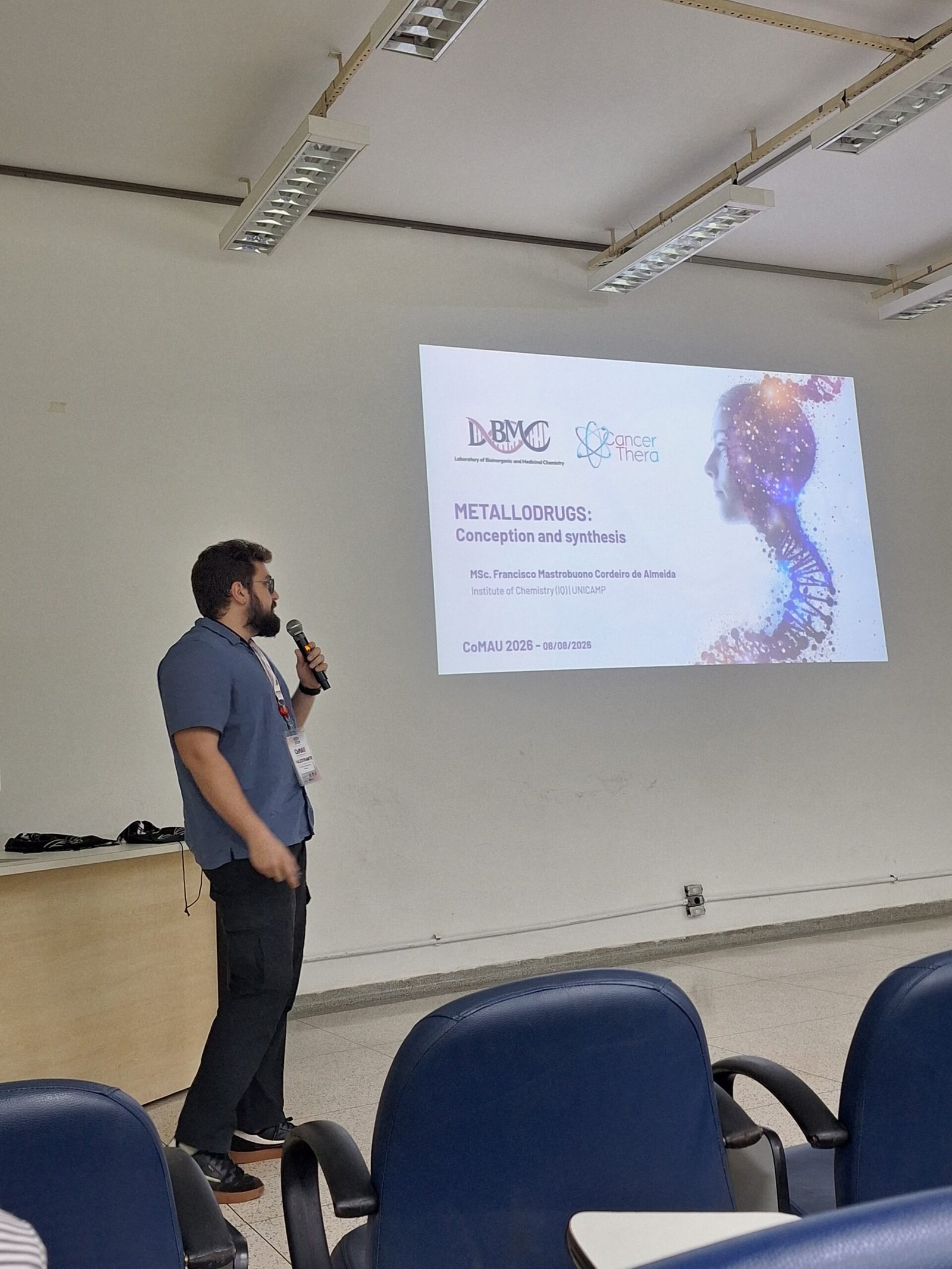
For precision therapy to work in the human body, molecular engineering requires a rigorous multidisciplinary gear. the second stage of the module presented the conception and synthesis of new compounds with the lecture “Metalopharmaceuticals: conception and synthesis’, presented by Ms. Francisco Mastrobuono Cordeiro de Almeida, PhD student in chemistry at the Institute of Chemistry at Unicamp, who detailed how professionals in the field idealize and develop new molecules and radiopharmaceuticals.
As the researcher explains, the biggest challenge of this action lies in the complexity behind the design of new compounds, since this demands to find the ideal balance at the junction of a metal — such as platinum or palladium, which have favorable geometries for the interaction with DNA — with an adequate and compatible binder. In practice, basic research moves in the field of unpredictability: synthesizing a new molecule requires a strong basis in the literature, although biological success and the control of toxicities can only be fully measured step by step.
For Almeida, participating in the congress was an opportunity to expose to students that pharmaceutical innovation is built in a multidisciplinary way: “It was great to show students, for example, that a large part of the development of new drugs does not come only from Medicine, it comes from Chemists, from Physicists, Biomedical, Biologists”.
Subsequently, the module taught by CancerThera researchers deepened the structural bases of this gear through the evaluations in vitro and in vivo [testes laboratoriais realizados em células e, posteriormente, em modelos biológicos vivos para comprovar eficácia e segurança], with the lecture “Radiopharmaceuticals: Preclinical Assessments”, led by the Dr. Fabio Fernando Alves da Silva, biologist, biochemist, doctor in Nuclear Technology and post-doctorate at FCM/UNICAMP.
Regarding the work presented, Silva emphasizes the opportunity to share the preclinical research developed at CancerThera, addressing fundamental steps for the characterization and validation of new radiopharmaceuticals. “I chose to highlight the fundamental concepts of radiation, molecular and therapeutic image, as well as explain the in vitro and in vivo necessary for the development of radiopharmaceuticals, such as biodistribution studies and the evaluation of their diagnostic and therapeutic potential”, he explains.
In his assessment of the event, the researcher points out that meetings like CoMAU are essential to bring students closer to scientific research and new technologies applied to medicine, promoting contact with areas such as statistics, chemistry and biological sciences. For Silva, these initiatives “shows how basic, preclinical and clinical research complement each other in the construction of a translational science, aimed at patients”.
Fighting the most challenging tumors
Dr. Carmen Silvia Passos Lima — an oncologist, professor at FCM/Unicamp, and principal investigator and innovation coordinator at CancerThera — concluded the module. Her lecture, “Anti-Integrin in Glioblastoma,” synthesized the journey outlined in previous presentations by demonstrating preliminary results from the development of a radiopharmaceutical with theranostic potential — combining an anti-integrin peptide, a DOTA chelator, and gallium-68 — aimed at combating glioblastoma, a highly aggressive primary brain tumor.
According to Lima, the main objective was to illustrate the students, in an accessible way, how all stages are connected in translational practice. “Together, it was presented in the module, in a simplified way, part of what is developed in research in CancerThera and the presentation of the promising results of the therapeutic potential for glioblastoma ended up closing it with “golden keys”, she evaluates. From different areas and the time dedicated to the development of a radiopharmaceutical for a single target made a strong impact and surprise in the audience.
For the researcher, exposing real projects to future doctors fosters a more improved clinical insight into prescriptions and procedures, as well as being an impetus to attract young people to work in scientific research. The reflection of this approach could already be measured immediately after the end of the activities: “It is worth mentioning that it seems that this actually happens, as countless students came to us at the end of the module and this week asking for guidance to carry out scientific initiation in the area”, celebrates Lima.
Text: Xenya Bucchioni