



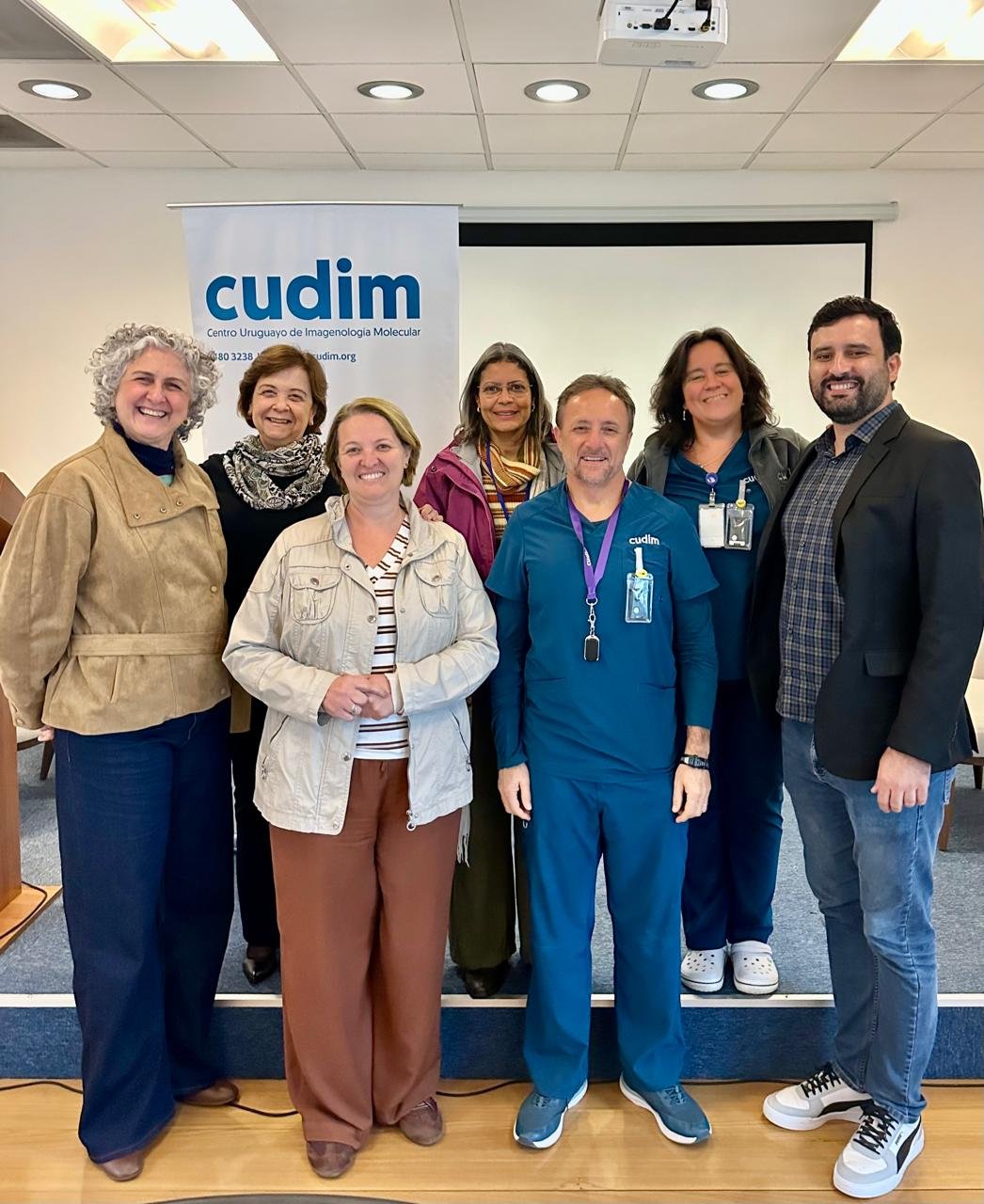
Giving practical life to an international cooperation agreement requires immersion, technical alignment and, above all, the direct encounter between researchers who share the same vision of the future for oncology. continuing the institutional partnership signed in February between CEPID CancerThera in the Uruguayan Center for Molecular Imaging (Cudim), a brazilian delegation made a new visit to Montevideo between the 27th and 29th of July.
Beyond simply strengthening ties, the delegation crossed the border to transform the memorandum of intent into a concrete work plan. The mission’s primary objective was to advance multicenter clinical trials, preclinical studies, theranostics [an approach combining diagnostic imaging and targeted tumor treatment into a single strategy], and educational cooperation.
An intense agenda of dialogue and translational science
With official reception led by Alarico Rodriguez — physician, specialist in health systems and evaluation of sanitary technologies and general director of CUDIM — and by Dr. Eduardo Osvaldo Savio Quevedo — radiopharmaceutical, technical director of radiopharmacy and associate professor at the center — The work agenda of Brazilian researchers on Uruguayan soil was designed to cover all stages of oncological development.
The program included in-depth practical immersions and complex case discussions. How does the Dr. Carmen Silvia Passos Lima, oncologist and hematologist, professor at the Faculty of Medical Sciences at the State University of Campinas (FCM/UNICAMP) and main researcher and coordinator of the innovation area at CancerThera, the uruguayan center serves as an international quality and safety reference for pre-clinical evaluations and clinics with radiopharmaceuticals. “The learning acquired, particularly in the quality assessments of the tests and procedures used by them, which dialogue directly with our investigations, will be of great value for the development of research in CancerThera”, she evaluates.
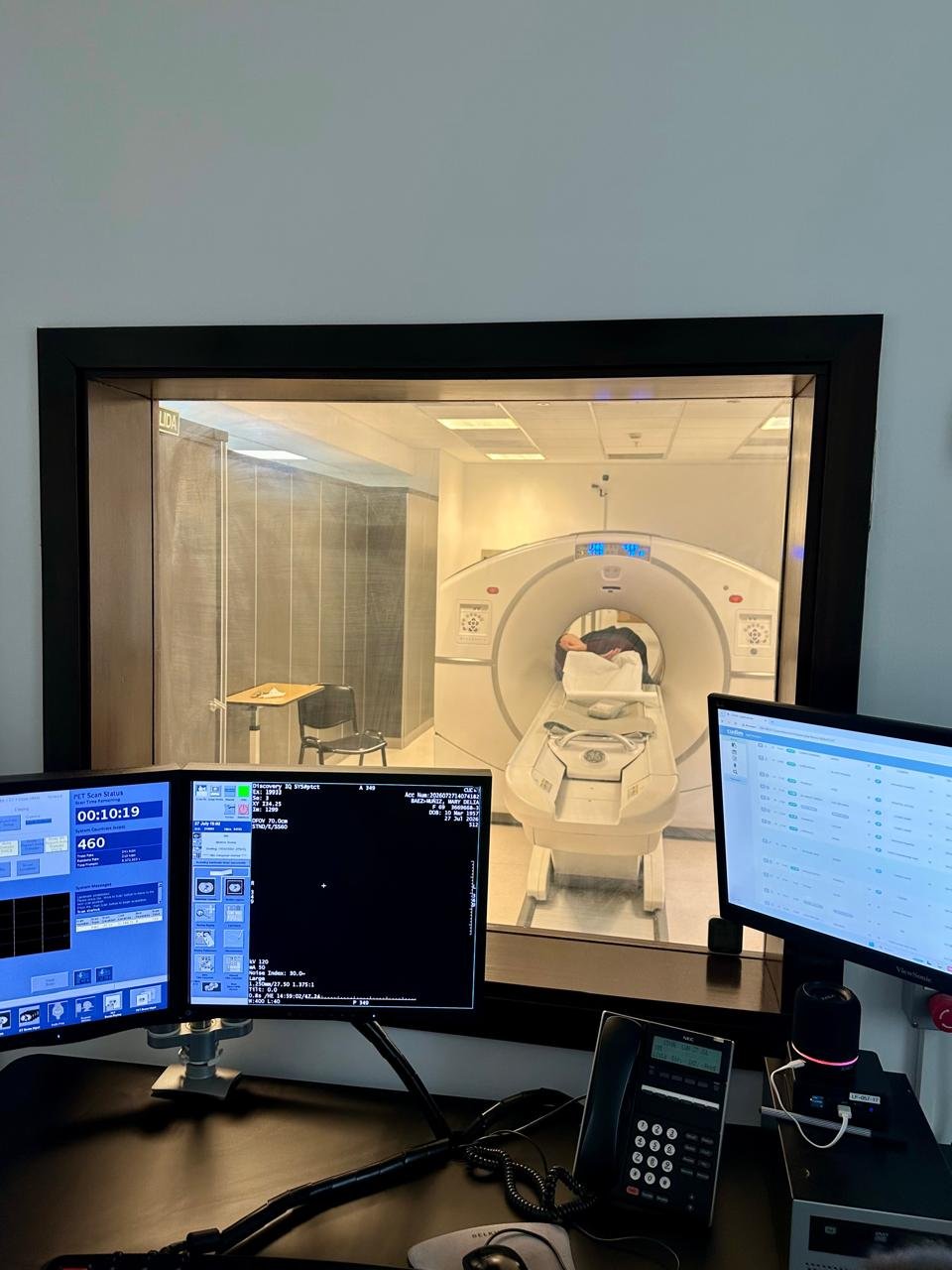
During the days of collaborative work, the Brazilian delegation joined local teams to discuss the improvement of radiopharmaceuticals — radioactive compounds used to detect and destroy tumor cells in a highly targeted manner — and new approaches to molecular imaging.
As highlighted by Dr. Leonardo Lima Fuscaldi, radiopharmaceutical, associate Researcher at CancerThera and professor at the Faculty of Medical Sciences of Santa Casa de São Paulo (FCMSCSP), the union of efforts accelerates the pace of discoveries: “I believe that when different research groups work together, knowledge advances faster. Visit to Cudim, we were able to exchange experiments on the development and application of radiopharmaceuticals aimed at tumors, which are medicines capable of locating and/or treating tumors in a very specific way”.
In practice, the integration between research centers generates new perspectives for cancer care. As Fuscaldi explains, “this means that we will be able to accelerate the development of these technologies of ours and that this can improve the diagnosis by molecular imaging and make treatments by radionuclide therapy, using radiopharmaceuticals, more directed to the characteristics of each patient. All this collaboration between researchers has this main purpose”.
Education, exchange and perspectives
In addition to laboratory exchange, the mission consolidated decisive steps for the formation of new talents and the integration of academic staff. In the evaluation of the Dr. Maria Elvira Pizzigatti Correa, dental surgeon and postdoctoral student in executive management of the research in CancerThera, the integration goes beyond the laboratory bench. According to the researcher, “this inter-institutional synergy optimizes the full research and education cycle within the theranostic model, enabling the exchange of graduate students and bilateral participation in knowledge dissemination projects”. A work, evaluates Correa, that “paving the path of both institutions as international references in the personalized treatment of cancer”.
In line with this vision, Lima reinforces that researchers from the two institutions will act reciprocally in courses offered by both institutions. The cooperation gained immediate operational developments: visits by graduate students and researchers from CancerThera to Cudim were agreed with personalized programs, and the insertion of CUIM researchers is already underway as supervisors in the Graduate Program in Oncology at FCM/UNICAMP, strengthening the joint scientific production and the internationalization of postgraduate studies.
The narrowing of borders will also materialize in an international congress dedicated to Theranostics in Oncology, to be hosted at Unicamp next year and structured in collaboration with Cudim. In addition, proposals for pre-clinical and clinical projects were presented by the brazilian delegation and had receptivity by the uruguayan teams.
As Fuscaldi summarizes, reinforcing the value of the international experience for researchers in training and the approach of highly qualified teams in complementary areas, “in science, no one advances alone, and partnerships like this are fundamental to transform quality research into real benefits for society”.
Text: Xenya Bucchioni