



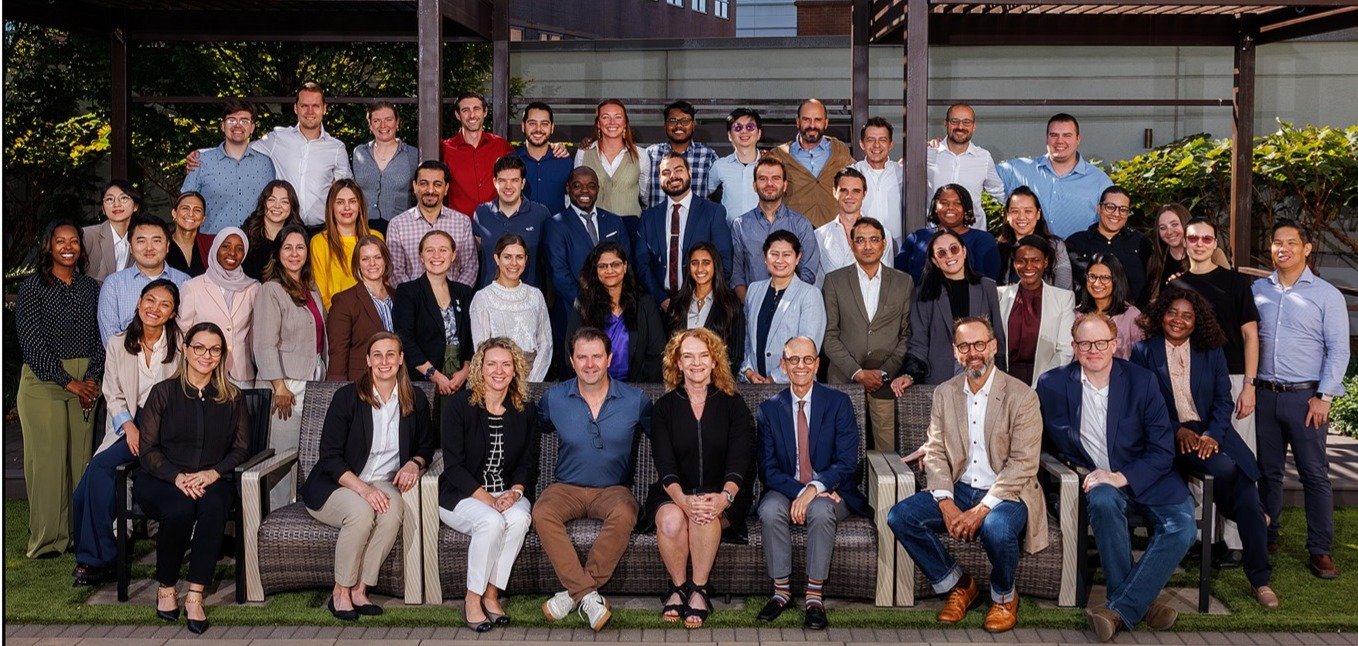

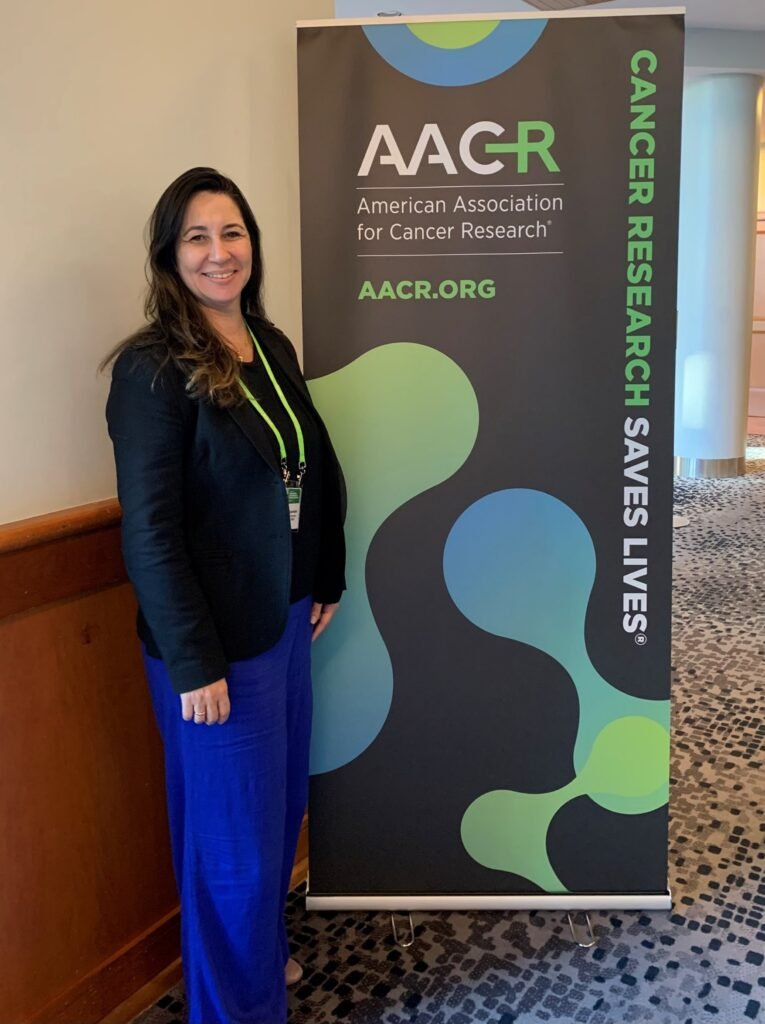
Dr. Renata Erbert Contriciani, a biologist and PhD researcher at the Laboratory of Molecular Oncology of the School of Medical Sciences at the University of Campinas (FCM/Unicamp), affiliated with CEPID CancerThera, participated in the Translational Cancer Research for Basic Scientists Workshop, organized by the American Association for Cancer Research (AACR), held in Boston, United States, from October 5 to 10, 2025.
Aimed at scientists working at the interface between basic and clinical research, the event brought together international experts and provided an immersion into the stages that connect laboratory research findings to effective treatments for cancer patients.
“I had the opportunity to deepen my knowledge in the field of translational cancer research, a fundamental step in connecting basic discoveries with clinical applications that directly benefit patients,” says Contriciani, who is currently conducting studies on clinical aspects, tumor genomics, and tumor uptake of radiopharmaceuticals in patients with gastric cancer. Previously, the researcher had already developed doctoral research in the areas of Molecular and Morphofunctional Biology.
The researcher is supervised by Dr. José Barreto Carvalheira, an oncologist, professor at FCM/Unicamp, and principal investigator at CEPID CancerThera, and co-supervised by Dr. Maria Carolina Santos Mendes, a nutritionist and associate researcher at the same center.
For Mendes, Contriciani’s presence at the workshop is an important milestone in her training, as the event offers a privileged environment for scientific exchange, international collaborations, and updates on trends in oncology research: “Renata’s participation represented a unique opportunity to disseminate the research developed at the center, presenting its results to a qualified international audience and increasing CancerThera’s visibility as a reference in translational science,” she says.
Dialogues and relevant visits
The workshop opened with a lecture by Dr. William G. Kaelin Jr., a physician awarded the 2019 Nobel Prize in Physiology or Medicine, who discussed how cells sense and adapt to oxygen availability—an essential mechanism for understanding tumor growth and the development of new therapies.
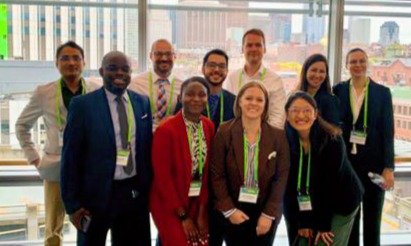
The program covered topics ranging from fundamentals of cancer biology and clinical trial design to targeted therapies, immunotherapy, and ethics in clinical research. According to Contriciani, the discussions reinforced the need for more integrated and humanized science. “Success in translational research depends not only on scientific knowledge, but also on ethics, collaboration among multidisciplinary teams, and active patient involvement,” she emphasizes.
During the event, participants had direct contact with oncologists leading clinical trials at leading institutions, such as Massachusetts General Hospital and the Dana-Farber Cancer Institute. Among them were Dr. Jeffrey Clark, an oncologist specializing in gastrointestinal neoplasms, and Dr. Candace Haddox, an oncologist and researcher in sarcomas and bone tumors.
“The presence of a patient participating in a phase 1 clinical trial brought a vivid account of the importance of these studies for real advances in cancer therapy. The visit to Massachusetts General Hospital and the Dana-Farber Cancer Institute reinforced direct contact with clinical practice and the application of the concepts learned,” says Contriciani.
Text: Romulo Santana Osthues | Photos: Prsonal Archive