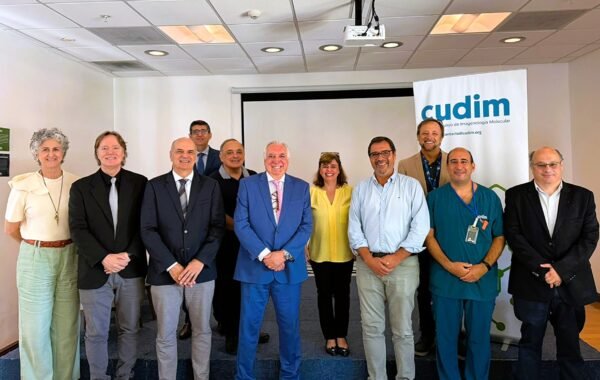





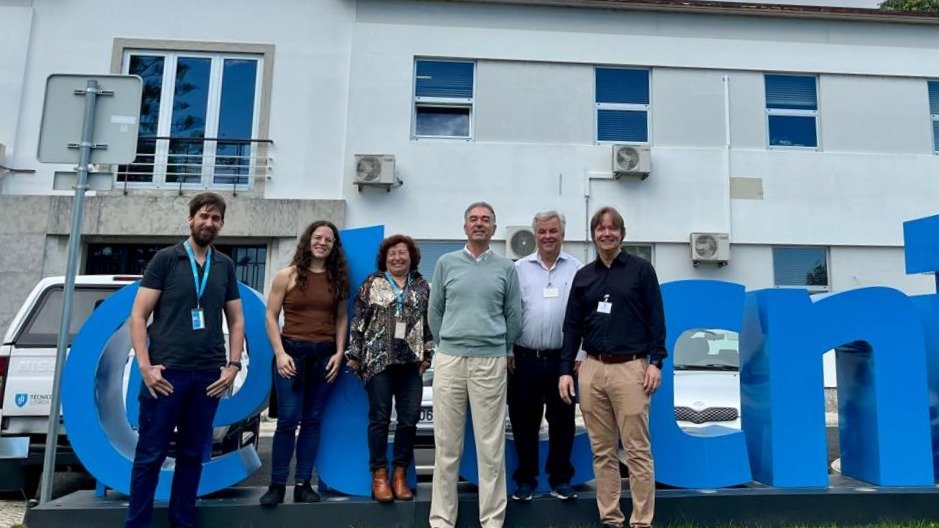

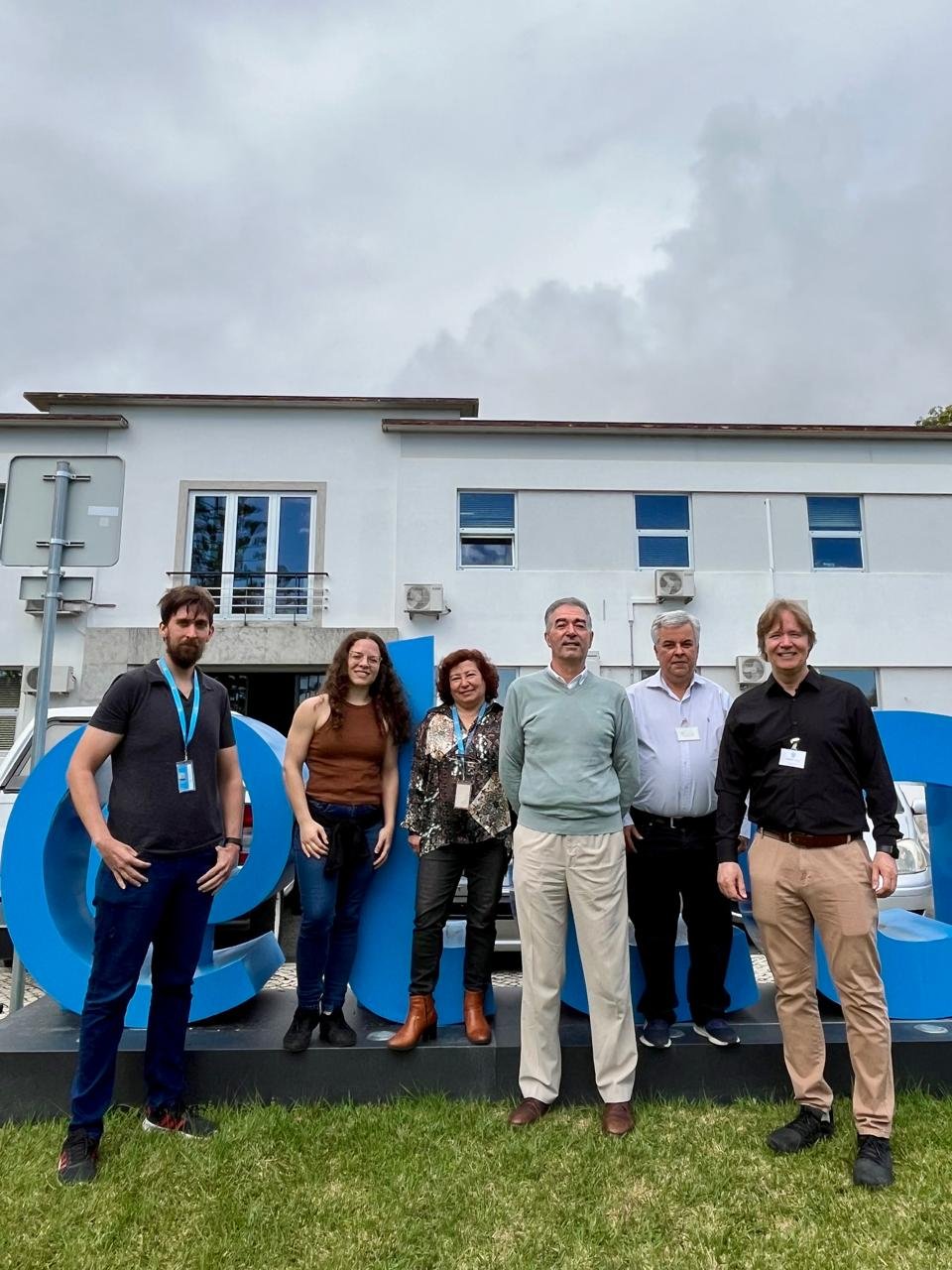
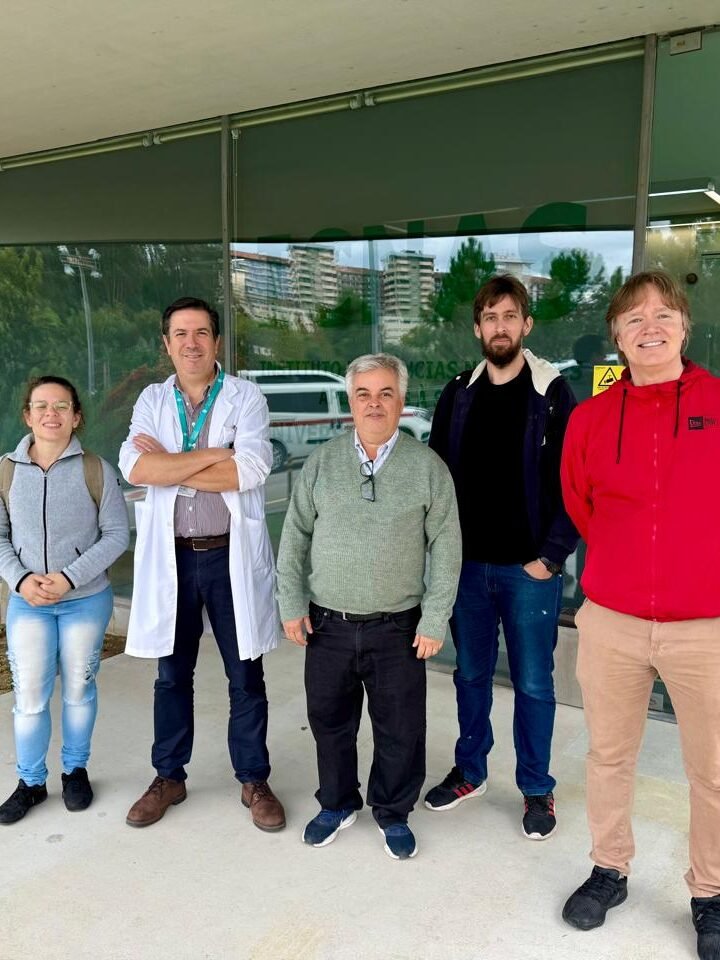
Over a ten-day period in Portugal, researchers from CEPID CancerThera carried out a scientific immersion at the Center for Nuclear Sciences and Technologies (C²TN) of Instituto Superior Técnico, in Lisbon, and also made a technical visit to the Institute of Nuclear Sciences Applied to Health (ICNAS), in Coimbra.
The intensive agenda, which took place between October 24 and November 3, strengthened strategic partnerships, opened new avenues for cooperation, and further brought Brazilian research closer to leading European platforms for innovation in radiopharmaceuticals.
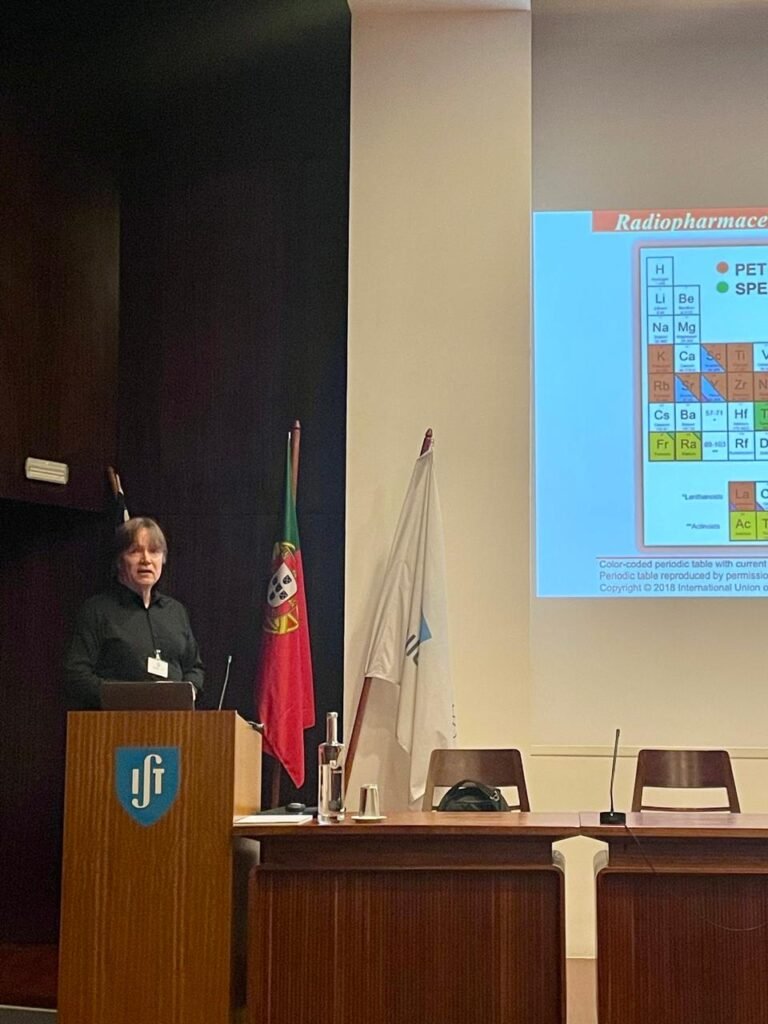
The presence of Dr. Victor Marcelo Deflon — chemist, professor at the São Carlos Institute of Chemistry (IQSC) of the University of São Paulo (USP), and principal investigator at CancerThera — coincided with his participation as a guest speaker at the C²TN Academy, where he presented the seminar “From the laboratory to the clinic: the multi-area mission of CEPID CancerThera in the development of theranostics”.
Addressing researchers, students, and professionals in the field, he explained how the integration of Chemistry, Biology, Pharmacy, Physics, and Nuclear Medicine accelerates the development of radiopharmaceuticals for cancer diagnosis and treatment under the theranostic model.
A long-standing partnership and expanded cooperation
During the seminar, Deflon highlighted recent advances in the design of new bifunctional chelators and ligands aimed at ensuring radionuclide stability and enabling their coupling to specific biomolecules. “There is a broad field for us to move forward together by aligning the scientific interests of both institutions,” he noted when commenting on collaboration prospects with C²TN, particularly in the development of radiopharmaceuticals with high tumor specificity.
The partnership with C²TN is not new. “The support of Instituto Superior Técnico has been fundamental in the training of our researchers through sandwich doctoral and postdoctoral fellowships,” Deflon emphasized, thanking the institution for its continued cooperation and hospitality.
Another member of the delegation, Dr. Fábio Luiz Navarro Marques — chemist, researcher at the USP School of Medicine, and associate researcher at CEPID CancerThera — also carried out a comprehensive assessment of the technological and scientific capabilities of the visited centers. He noted that C²TN, with its long trajectory and history of operating a nuclear reactor, has consolidated expertise in radioisotopes such as technetium-99m, gallium-67, indium-111, and lutetium-177. ICNAS, a newer institution, was designed to house cyclotrons dedicated to research, production, and applications of radioisotopes such as carbon-11, fluorine-18, gallium-68, and zirconium-89.
According to Marques, “both institutions have excellent laboratories and relevant research lines, and their activities can be considered complementary.” This complementarity, he adds, reinforces the potential for cooperation with CancerThera, particularly in Radiochemistry, Radiopharmacy, and translational research.
He recalled that collaboration with C²TN has lasted for approximately eight years, enabling student exchanges and joint publications, while ICNAS is emerging as a new strategic partner. “Each institution has distinct characteristics, and having them as partners will certainly be a differential for the progress of research conducted at CancerThera,” he stated.

Joint educational initiatives
Deflon and Marques have increasingly established themselves as references in offering strategic educational activities aimed at advancing the theranostic model in Brazil. Their synergy marked two important training initiatives in 2025.
On June 9 and 10, during the 48th Annual Meeting of the Brazilian Chemical Society, the researchers jointly conducted the course “Radioisotopes in the development of drugs and metallodrugs: theoretical aspects and applications”, aimed at training professionals interested in understanding the full cycle of radiopharmaceutical development and clinical use. Their integrated teaching approach reinforced a technical training proposal aligned with emerging needs in the field.
In October, on the 23rd, shortly before departing for Portugal, both resumed their collaboration by teaching the course “Fundamentals of Chemistry and Radiochemistry applied to the development of radiopharmaceuticals” during the 28th Chemistry Week of IQSC/USP, expanding discussions to regulatory aspects, therapeutic protocols, and innovations in production and quality control. On the same occasion, Deflon delivered a lecture followed by a visit to the laboratory he coordinates, entitled “The chemistry that heals: coordination compounds and the design of theranostic radiopharmaceuticals”.
The next joint activity is scheduled for the 3rd CancerThera Congress, to be held on March 12–13, 2026. The researchers will offer a pre-event course on the afternoon of March 11, entitled “Mastering radionuclides: chemical principles for applications in Nuclear Medicine”.
Text: Romulo Santana Osthues | Photos: Personal archive