





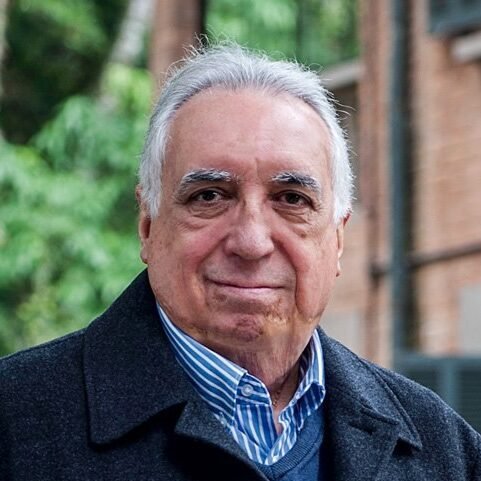

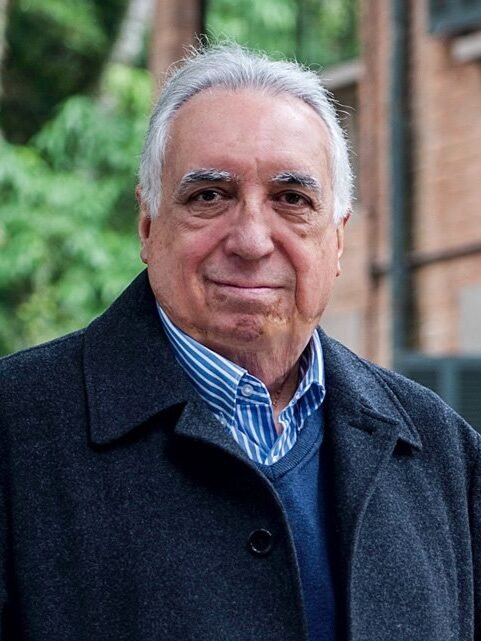
At an Extraordinary General Assembly held on June 10, onco-hematologist Dr. Carmino Antonio de Souza was elected a Full Member of the São Paulo Academy of Medicine. A professor at the School of Medical Sciences of the State University of Campinas (FCM/Unicamp) and a principal investigator at CancerThera, a CEPID supported by FAPESP, Souza was elected on his first candidacy, taking Chair No. 52. “It is an immense joy, an honor, and a great responsibility to be elected by my peers to occupy a chair that will forever be associated with my name,” he said. His induction ceremony is scheduled for October 7.
“This chair was previously occupied by three colleagues, one of whom was particularly close to me: Professor Pinotti. An incredible coincidence,” noted the newly elected member. The seat previously belonged to Dr. José Aristódemo Pinotti (1934–2009), a gynecologist and obstetrician specializing in gynecological and breast cancers. Pinotti served as a professor at FCM/Unicamp and rector of the university, in addition to holding prominent public positions, including Secretary of Education and Secretary of Health for the State of São Paulo, as well as Federal Congressman.
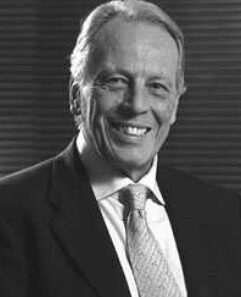
The patron of the chair was Dr. Raul Carlos Briquet (1887–1953), a distinguished obstetrician and full professor at the University of São Paulo. In addition to establishing a school of obstetrics in the State of São Paulo and promoting nursing education, he played a pioneering role in Brazil by introducing higher education in Social Psychology. Dr. Enio Buffolo (1941–2025), another former occupant of the chair mentioned by Souza, was a renowned cardiovascular surgeon trained at the Paulista School of Medicine and an international pioneer of off-pump coronary artery bypass surgery. Throughout his career, he operated on approximately 35,000 patients.
Reflecting on the institution he now joins, Souza emphasized the excellence and diversity of its members: “This is an institution that brings together physicians from all specialties, from many institutions, and nearly all of them have distinguished careers in education, science, or medicine itself.” Referring to the institution’s pillars—“ethics, knowledge, and respect”—he also expressed his commitment to active participation: “I intend to contribute as actively as possible to further strengthen both this recognition and the institution itself.”
Recognition of a Distinguished Professional Career
With more than five decades of professional experience, Carmino Antonio de Souza combines medical practice, scientific research, and public administration. “I dedicated my life to two of the most important fields within medicine, one of which was hematology, hemotherapy, and cellular therapy,” he explained. At Unicamp, his work was instrumental in advancing these specialties. “I am extremely proud to have been one of the founders of the Unicamp Blood Center and one of the creators of the Blood Network established by the Government of the State of São Paulo and later expanded nationwide,” he said. He was also responsible for conceiving the university’s bone marrow transplantation unit, noting that the service remains “fully operational and continuously active since its creation.”
Within professional associations, the researcher held leadership positions for many years. Recalling the merger process that led to the creation of the current Brazilian Association of Hematology, Hemotherapy and Cellular Therapy (ABHH), he described his involvement with the organization, where he served as the first elected president for a four-year term and as scientific director for more than six years. His engagement also extended to the Federal and Regional Medical Councils and the Brazilian Medical Association.
Internationally, Souza is an active member of the American Society of Hematology (ASH) and the European Hematology Association (EHA), and he is one of the founders of the Italian-Brazilian Hematology Association (AIBE).
In addition to his academic and professional association activities, in October 2024 he was appointed by Governor Tarcísio de Freitas as Vice President of the São Paulo Research Foundation (FAPESP) for a three-year term. He currently also serves as Chairman of the Board of Trustees of the Butantan Foundation.
The second major dimension of the new academician’s career developed in state and municipal health administration, a path shaped, in his words, “by the circumstances that life presents.” Souza served as São Paulo State Secretary of Health from 1993 to 1994 and as Municipal Secretary of Health of Campinas from 2013 to 2020. Speaking about his years dedicated to Campinas, he expressed particular affection for the city, describing it as “the city I chose to live in, the city where I raised my children and where my grandchildren live.”
In 2022, the physician shared the leadership of the Extraordinary Secretariat for Science, Technology, and Innovation in Health of the State of São Paulo. According to official records, the department was created by then-Governor Rodrigo Garcia with the mission of “understanding and planning the post-pandemic future of the health industry.”
Reflecting on his governmental experience, the specialist maintains a constructive perspective on the challenges he faced. “This work in public administration, which was somewhat accidental, was extremely important in helping me develop tremendous professional and personal maturity.” According to him, the daily interactions and coordination required at the highest levels of government expanded his network within the state’s scientific community, a factor that indirectly contributed to his recent election to the Academy. “I became acquainted with many academicians whom I met during the election process for this honorable position at the São Paulo Academy of Medicine,” he concluded.
Text: Romulo Santana Osthues | Photos: Personal archive and São Paulo Academy of Medicine