




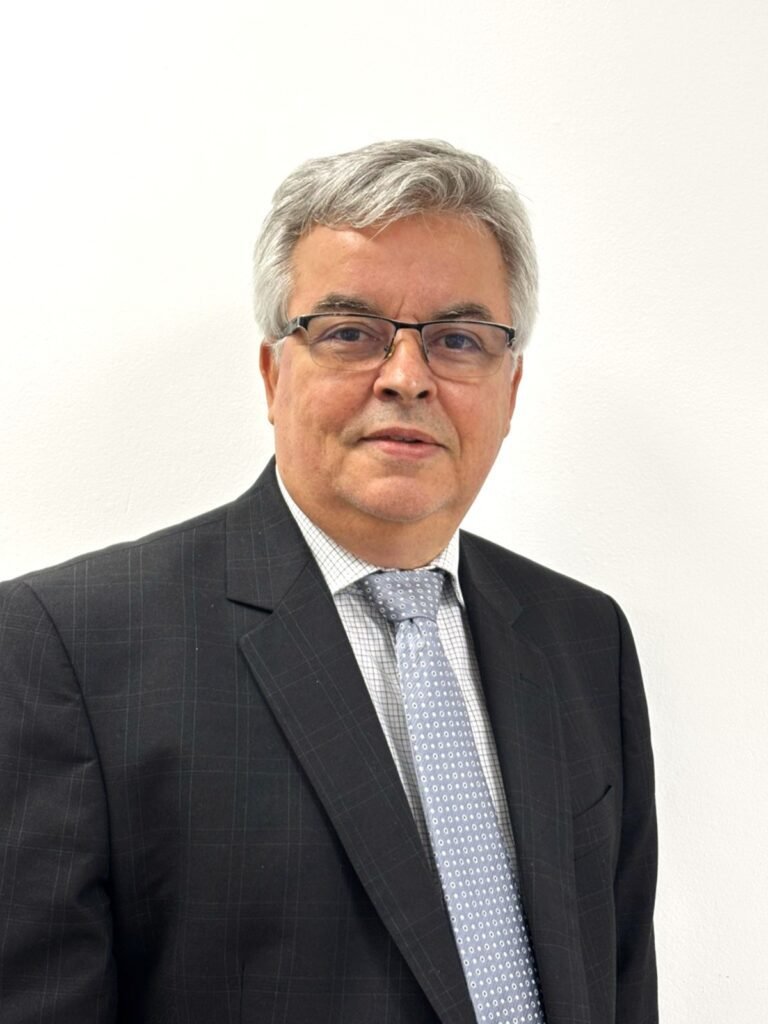
The Brazilian Society of Nuclear Biosciences (SBBN) begins a new institutional cycle with the inauguration of its president for the 2026–2028 term: Dr. Fabio Luiz Navarro Marques, a radiochemist at the School of Medicine of the University of São Paulo (FMUSP), where he works as a researcher and advisor in the Graduate Program in Oncology.
An associated researcher at CEPID CancerThera, Marques assumes leadership of the society with an agenda focused on integrating education, research, and scientific and technological applications, as well as strengthening the strategic role of Nuclear Biosciences in Brazil. His appointment marks a moment of consolidation and projection for SBBN, which celebrates its 30th anniversary in 2026.
Perspectives of the new administration
The new administration aims to expand articulation among different sectors, recognizing the multidisciplinary nature of the field, which involves professionals from Biology, Biomedicine, Pharmacy, Physics, Chemistry, and Medicine, most of whom are active in teaching and research institutions.
The training of qualified human resources and the expansion of professional activity in radioisotopes, radiotracers, and radiopharmaceuticals are central pillars: “Naturally, the number of professionals working in the field will increase, such as in radiopharmaceutical production units using cyclotrons or in radiopharmaceutical companies that produce lyophilized kits or operate in centralized radiopharmacy,” emphasizes Marques.
From an environmental standpoint, a key action will be educating professionals on the proper handling and disposal of radioactive materials, as well as chemical and biological products used in research and other applications.
Another strategic axis is strengthening dialogue across fields, including non-ionizing radiation (such as lasers, photonics, and mechanical vibrations). The goal is to foster connections across diverse research fronts, integrating diagnostic and therapeutic approaches. “At our 2026 congress, we will have roundtables discussing neuroimaging processes using radiopharmaceuticals and others addressing studies on the use of vibratory platforms in autism treatment,” the new president explains.
“We believe that scientific societies must ‘move beyond themselves’—that is, stop participating only in their own conferences—and engage with and contribute to other areas of scientific research,” he states. Collaboration with the Federation of Experimental Biology Societies (FeSBE) is highlighted as a model for openness and interdisciplinary exchange.
Marques advocates for greater synergy between the scientific community and regulatory agencies as a key condition for sector advancement. “We believe that Brazilian nuclear science will gain strength when regulatory institutions and scientific societies move in sync, aligning discourse and actions,” he notes.
In this context, institutions such as the National Nuclear Safety Authority (ANSN) and the National Nuclear Energy Commission (CNEN) play a central role in enabling the expansion of research centers and the production of radioisotopes in Brazil. ANSN is responsible for licensing and oversight of institutions working with radioactive materials, while CNEN oversees the implementation of the Brazilian nuclear program.
The new president also highlights the need to expand national scientific infrastructure. Currently, radioisotope research is concentrated in a limited number of institutions, which restricts broader development. CancerThera emerges as a relevant example of multicenter articulation and innovation. “Unicamp stands out with the implementation of CancerThera, bringing together coordinated research groups for the development of radiopharmaceuticals,” he observes, emphasizing the potential of the integrated and translational research model.
Beyond scientific strengthening, the new administration intends to intensify dialogue with policymakers to enhance the strategic recognition of Nuclear Biosciences. “There is a basic research area that must be expanded and strengthened if we want to achieve independence and leadership internationally in the use of radiation to understand biological processes, diagnose diseases, and develop drugs,” he states.
In the healthcare field, SBBN’s policy engagement has already shown concrete impact. Through the work of Vice-President Dr. Ana Cláudia Camargo Miranda, a pharmacist and researcher at FMUSP, the society contributed to the development of Bill 2,167/2025, aimed at establishing a national policy for Nuclear Medicine, in collaboration with governmental bodies and scientific societies. According to Marques, such initiatives demonstrate the field’s ability to directly contribute to the advancement of Brazil’s healthcare system and access to innovative diagnostic and therapeutic technologies.
SBBN Board (2026–2028)
President — Dr. Fabio Luiz Navarro Marques | Professor and researcher affiliated with CEPID CancerThera, working in the development of radiopharmaceuticals and Nuclear Biosciences applications with a translational focus.
Vice-President — Dr. Ana Cláudia Camargo Miranda | Professor and researcher in Nuclear Medicine, with expertise in radiopharmacy, regulation, and public policy for the nuclear health sector.
Secretary — Dr. Fábio Fernando Alves da Silva | Researcher in Radiopharmacy and Radiochemistry, with experience in the production and development of radioisotopes and radiotracers.
Treasurer — Dr. Aryel Heitor Ferreira | Professor and researcher in Nanomaterials, Radiopharmacy, and Nuclear Biosciences, working on nanosystems for medical applications.
Text: Romulo Santana Osthues | Photo: Personal archive