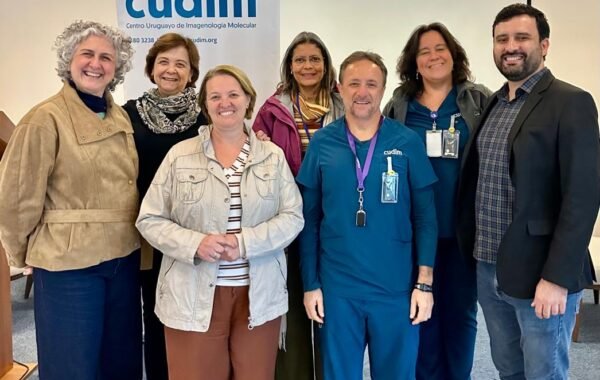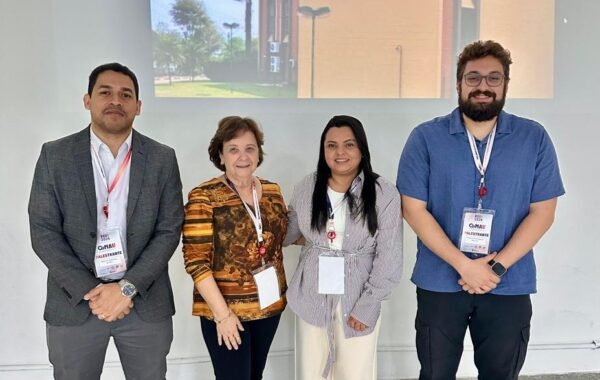




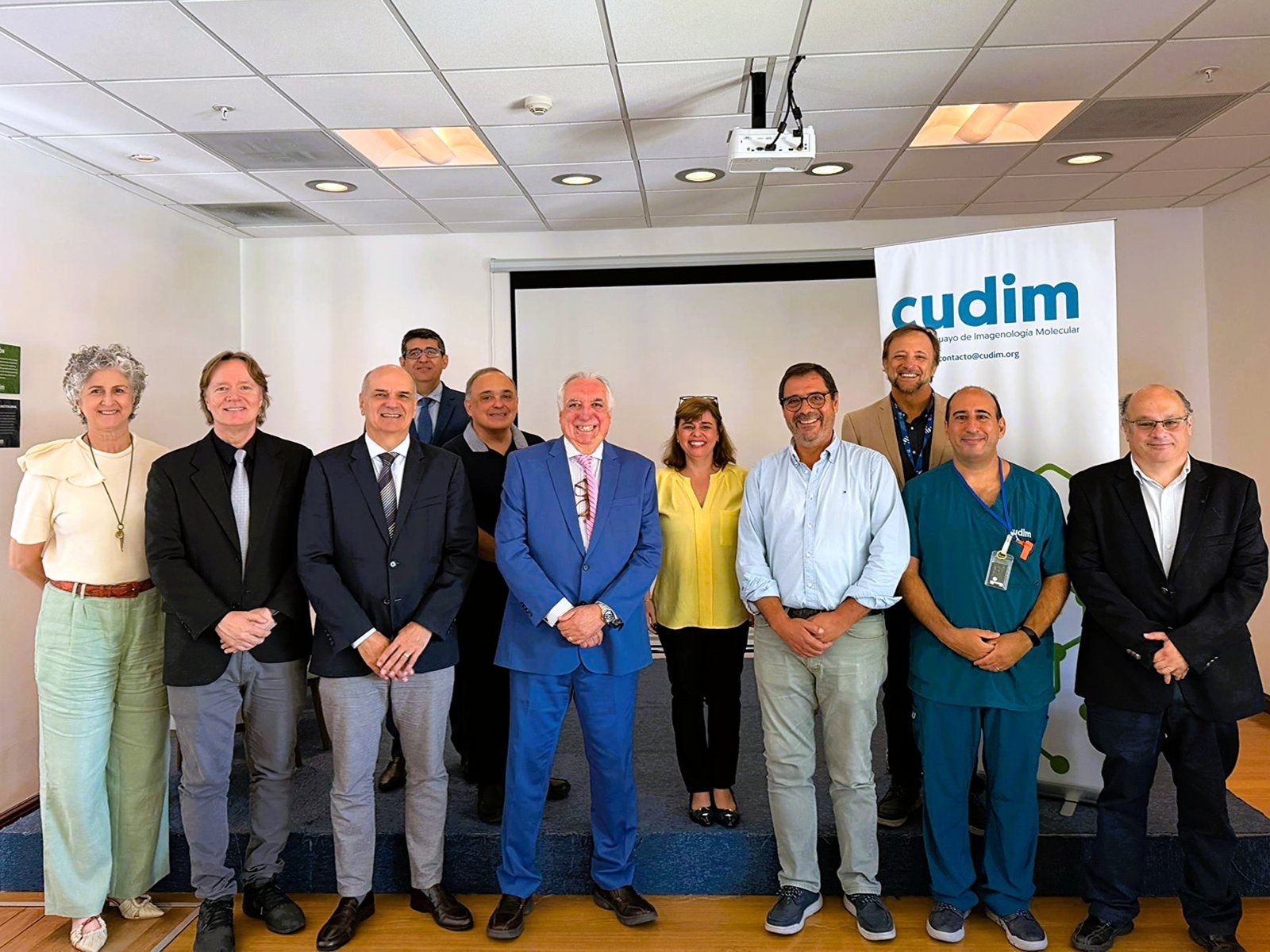

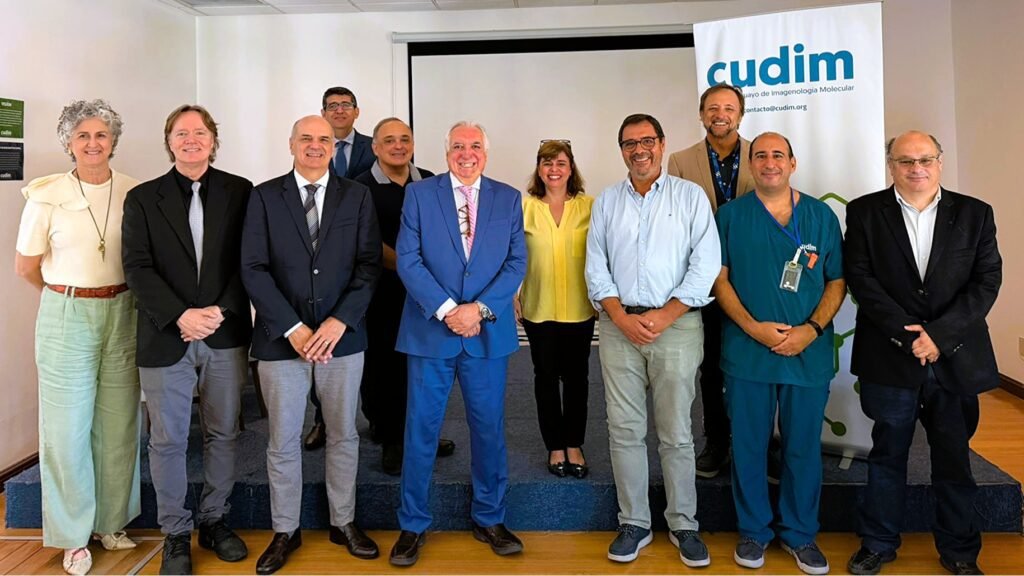
The search for more effective and accessible cancer treatments in Latin America gained strategic momentum in February 2026. A delegation of researchers from CEPID CancerThera carried out an immersive visit to Montevideo, Uruguay, on 26–27 to learn about the facilities and establish partnerships with researchers from the Uruguayan Center for Molecular Imaging (CUDIM).
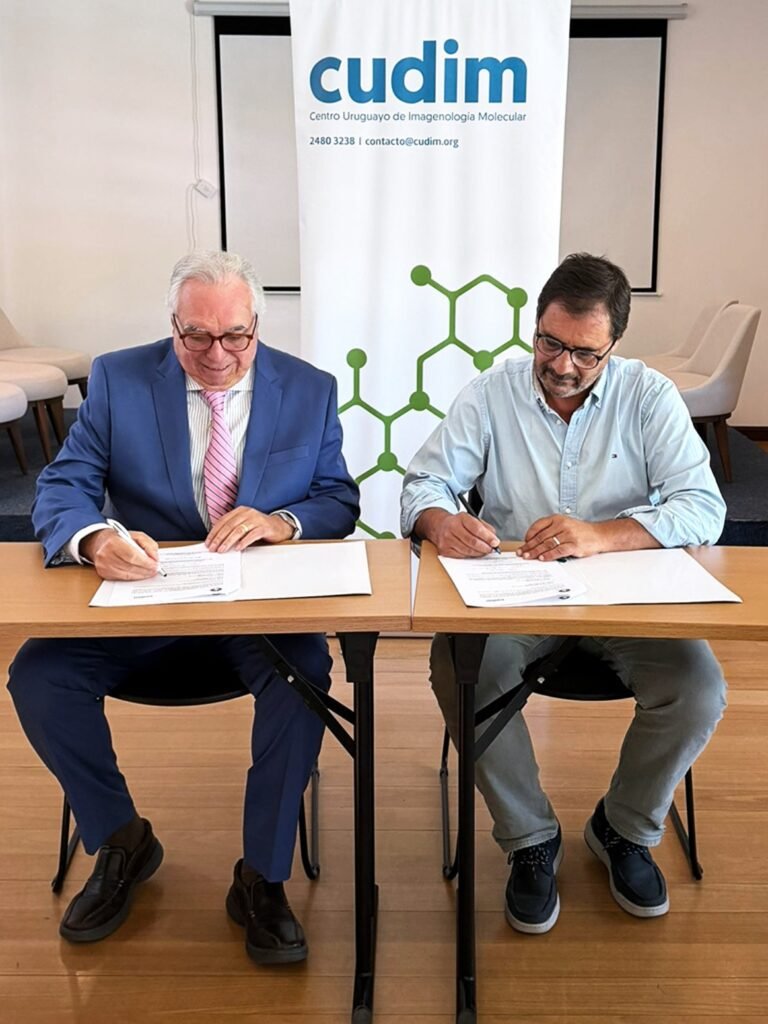
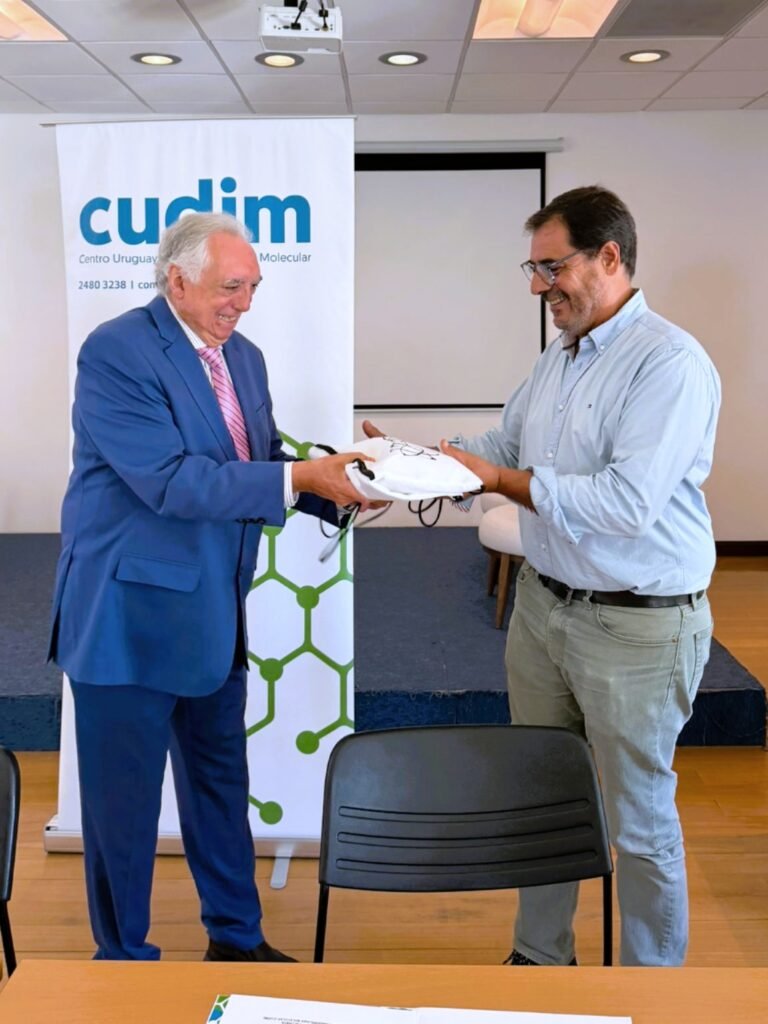
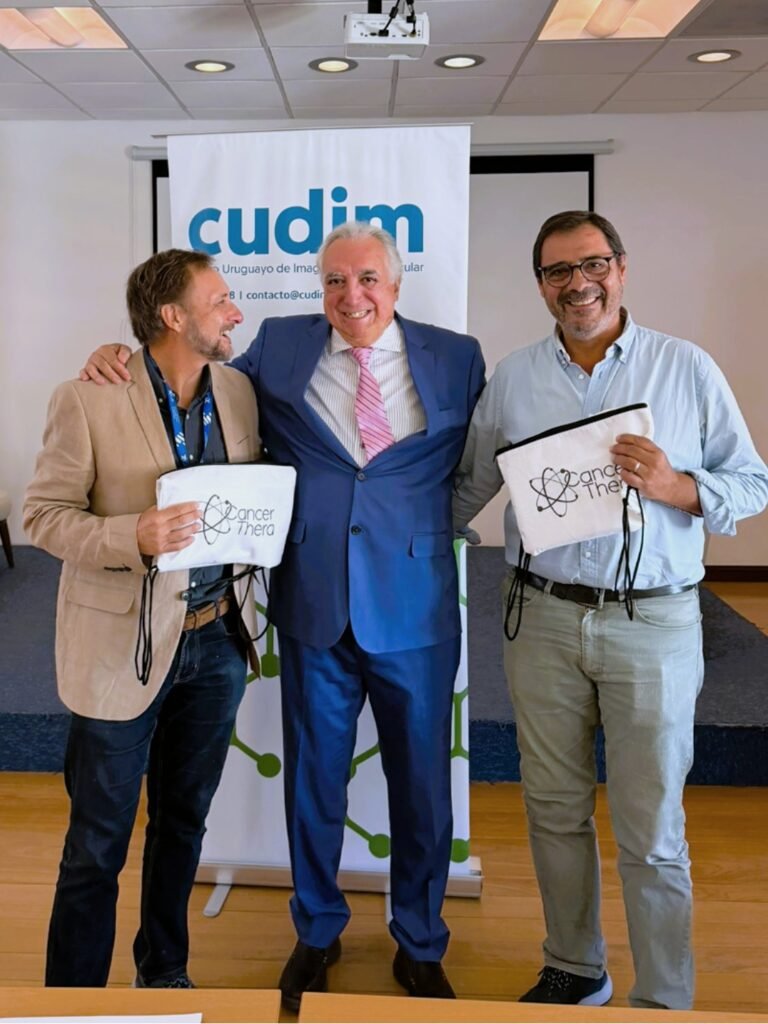
The central milestone of the meeting was the signing of a memorandum of understanding between the University of Campinas (Unicamp), home of CancerThera, and the Uruguayan research center, sealing a scientific, technological, and clinical cooperation.
Institutional integration
The strengthening of ties began with the participation of Dr. Eduardo Osvaldo Savio Quevedo —a radiopharmacist, technical director of Radiopharmacy, and associate professor at CUDIM— as a member of CancerThera’s international advisory board, a position that allowed him to follow the project’s design and early implementation stages.
“Bringing together such a broad range of research groups united by a common goal—advancing access to theranostics for the benefit of patients, combining innovation and access with personalized treatments. Groups with strong trajectories, very diverse backgrounds, and from different institutions forming part of CancerThera already constituted a highly attractive proposal,” the researcher recalls about the moment he was invited to join the advisory board.
In November 2025, he participated in the 2nd CancerThera Workshop and closely followed presentations of the results achieved during the first two and a half years of the Brazilian research center. “Interacting in person with group leaders and young trainees allowed me to assess both strengths and areas for improvement. Together, the idea emerged to build a CancerThera–CUDIM agenda, which evolved smoothly during December and January,” he explains.
This synergy is also highlighted by the director of CancerThera, Dr. Carmino Antonio de Souza, an onco-hematologist and professor at the Unicamp School of Medical Sciences. He sees CUDIM as a model of excellence that CancerThera seeks to establish in Brazil. “What we want for our center internationally is more or less the idea of CUDIM: a large workspace with laboratories, production facilities, and a strong connection with the healthcare sector,” he says.
The visit coincided with CUDIM’s 15th anniversary celebrations, attended by the President of Uruguay, Yamandú Orsi, as well as presentations by the Minister of Public Health, Cristina Lustemberg, and the Minister of Industry, Energy and Mining, Fernanda Cardona. During the event, the institution’s recent designation as the first Collaborating Centre of the International Atomic Energy Agency (IAEA) in Latin America in its field was highlighted. “It is a key partner for our relationships here in Latin America. I am very pleased to expand our scope of work,” Souza noted.
“The new alliance represents a fundamental step in CUDIM’s international expansion strategy for the coming years, strengthening the recognition granted by the IAEA,” said Dr. Alarico Rodríguez, physician, health systems specialist, and Director General of CUDIM. “The relevance of CancerThera, its scientific trajectory, and the scale of the projects we can develop together create significant opportunities to strengthen collaborative research, the development of radiopharmaceuticals, and the generation of knowledge in the field of theranostics,” he added.
Complementarity: the strength of the partnership
The key differentiator of this agreement is how the two institutions complement each other. While CUDIM has highly agile infrastructure for the development of radiopharmaceuticals—including two cyclotrons and access to innovative isotopes such as Terbium-161 and Actinium-225—CancerThera provides a broad environment for testing and validation.
“They are a model for our future Radiochemistry and Radiobiology laboratory,” said Dr. Celso Dario Ramos, nuclear physician, professor at Unicamp’s School of Medical Sciences, and vice-director of CancerThera. “What we have to offer is the ability to test the radiopharmaceuticals they produce, study them in different types of cancer, and try to establish their real clinical utility. The volume of patients we have at the Unicamp Clinical Hospital is ideal for this,” he added.
For Dr. Luciana Malavolta Quaglio, radiochemist, professor at the Santa Casa of São Paulo School of Medical Sciences, and principal investigator at CancerThera, the immersion visit was highly productive from a translational research perspective. “Being able to closely observe the integrated infrastructure for production, quality control, molecular imaging, and clinical application provided very concrete perspectives,” she stated.
According to her, visits to other institutions associated with CUDIM revealed a highly synergistic and complementary ecosystem capable of structuring projects ranging from molecular target identification and validation to the clinical application of potential radiopharmaceuticals, fostering collaborative networks with shared knowledge and infrastructure.
Practical goals and talent development
The working agenda has already defined immediate actions. Eduardo Savio explained that logistical cooperation will begin with the sharing of peptides and later move toward joint clinical trials. “CancerThera already has a protocol approved by the Unicamp Research Ethics Committee and CUDIM has the radiopharmaceutical. We will explore the paths to implement this complementarity,” he said.
Academic mobility will be another key pillar. Dr. Victor Marcelo Deflon, radiochemist, professor at the University of São Paulo’s Institute of Chemistry in São Carlos, and principal investigator at CancerThera, foresees exchange programs for undergraduate and graduate students between the two countries. “There is a very real possibility of our students going there to conduct radiolabeling, stability, biodistribution, and tumor uptake studies. This will allow us to develop joint work in radiopharmaceutical development, particularly metallopharmaceuticals for Nuclear Medicine,” he said.
“Just as we want to send our researchers to CUDIM, Uruguayan students will be very welcome in our laboratories in Brazil,” added Dr. Maria Elvira Pizzigatti Corrêa. “Experiencing different research infrastructures and methods broadens students’ training horizons, allowing them to exchange experiences and paving the way for long-term scientific cooperation,” she said.
The expectation is that Uruguayan expertise will help strengthen research lines in Brazil. For Dr. Pedro Paulo Corbi, chemist, professor at the Unicamp Institute of Chemistry, and principal investigator and innovation manager at CancerThera, the moment is decisive. “We still have much to build within our research center, particularly in Radiochemistry and Radiopharmacy. With this collaboration with CUDIM and the scientific and technological knowledge they have, we have a very promising future in this area,” he said. He concluded: “There was a clear understanding of scientific and technological cooperation that will be fundamental in the coming years.”
Text: Romulo Santana Osthues | Photos: CUDIM Communication Office and Maria Elvira Pizzigatti Corrêa