



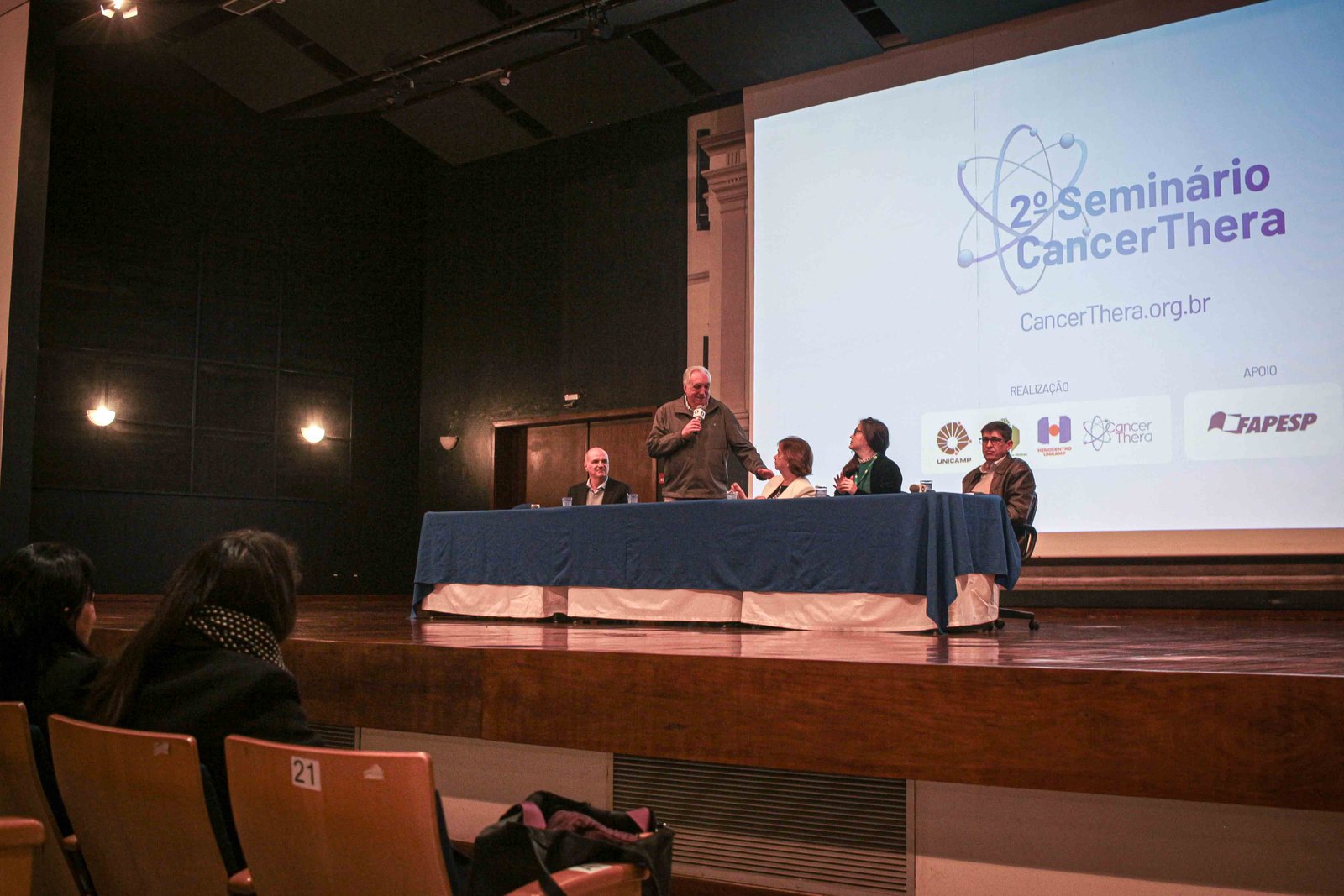

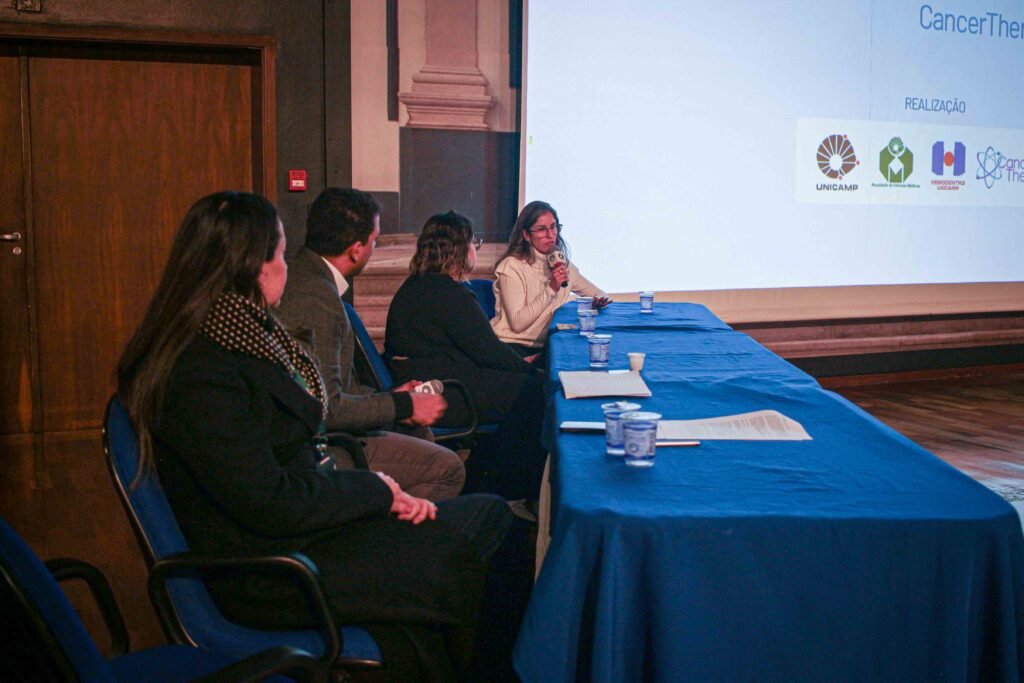
What separates a promising laboratory discovery from an effective solution for cancer patients? This was the central theme of the 2nd CancerThera Seminar – “From discovery to clinical impact: strategies and challenges of translational innovation in Oncology” –, held on June 25 at the Faculty of Medical Sciences of the University of Campinas (FCM/Unicamp).
Organized by CEPID CancerThera and the Professional Master’s Program in Oncology at FCM/Unicamp, the event brought together researchers and specialists to discuss how science can overcome ethical, methodological, and technological barriers to reach clinical practice. More than 120 participants attended. We interviewed some of its organizers and speakers about the key topics discussed during the event.
Science through the lens of rigor
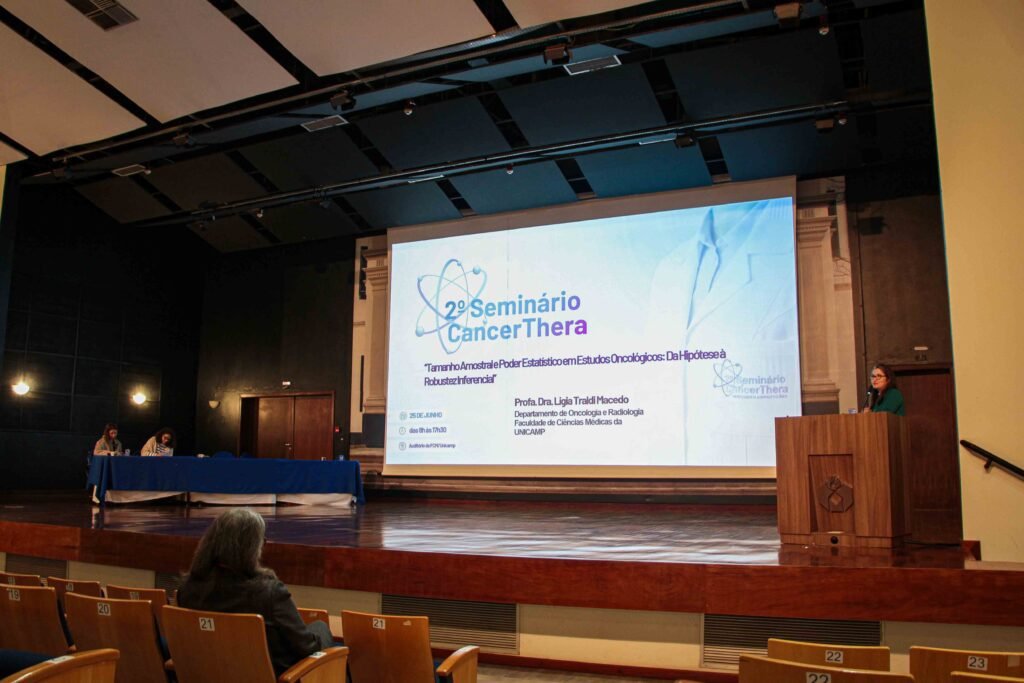
The need to strengthen scientific integrity was one of the key points discussed during the seminar. In her lecture, clinical oncologist and CancerThera associate researcher Dr. Lígia Traldi Macedo raised an important concern by presenting the profile of “Oncovictor”: a professional who bases decisions on intuition.
“‘Oncovictor’ was created precisely to illustrate the importance of following a solid scientific methodology and the principles of good clinical practice, preventing emotion or intuition from overriding evidence. We live in an era in which information circulates rapidly, often without proper contextualization. In this scenario, methodological rigor becomes indispensable,” says Macedo, who is also a professor at FCM/Unicamp.
According to the researcher, everything begins in academic training, when future professionals learn that “methodology is not a bureaucratic stage of research, but the tool that ensures the reliability of results,” she explains. Following this reasoning, she emphasizes the central role of statistics, which, instead of being treated as an “isolated” analysis of results at the end of a project, should be a pillar from the study’s conception. “Statistics should be present from the formulation of the research question, through study design, sample size calculation, and definition of analytical methods, all the way to result interpretation,” she argues.
Far from being merely an academic requirement, methodological rigor is also one of the essential foundations for the viability of translational research. It is this structure that allows science to move safely from bench to bedside.

Translational practice: from docking to the patient
CancerThera works precisely on translating this theory into clinical practice. As explained by medical oncologist and hematologist Dr. Carmen Silvia Passos Lima, professor at FCM/Unicamp, principal investigator, and coordinator of the Innovation area at CancerThera, the workflow requires a multidisciplinary framework combining Chemistry, Physics, Biology, and Medicine.
“We investigate numerous drugs with potential activity against tumors. We identify therapeutic targets through computational prediction and docking [molecular modeling to predict interactions between molecules], evaluate efficacy in vitro [in controlled experiments outside living organisms, such as cell cultures] and in vivo [in living biological models], and, once tolerable toxicity is confirmed, move forward to clinical studies,” explains Lima.
The researcher emphasizes that the success of this process depends on a collaborative network. “Professionals from different fields work in an integrated way: chemists and physicists synthesize drugs and radiopharmaceuticals with potential antitumor action, biologists, biochemists, and pharmacists evaluate efficacy and safety, and medical oncologists and dermatologists conduct clinical studies, all with rigorous statistical support, among others,” she explains.
To complete this translational cycle, connection with the market is essential. Therefore, CancerThera maintains a strategic collaboration with Unicamp’s Innovation Agency, which supports the intellectual protection of discoveries made at the center. According to the professor, this institutional support enables technology transfer to private pharmaceutical industries or the development of startups to complement discoveries with funding from public research agencies.
This integrative vision is shared by Dr. Maria Carolina Mendes, nutritionist, associate researcher, and postdoctoral fellow in Research Management – Innovation and Technology Transfer at CancerThera. For her, although the Brazilian ecosystem is still maturing, the research center has taken fundamental steps. “CEPID CancerThera was conceived with a distinctive proposal by integrating basic and clinical science researchers around a common objective: transforming scientific discoveries into solutions for Oncology. More than transferring technology at the end of research, we need to build a culture of innovation that accompanies the entire trajectory of scientific production,” says Mendes.
The horizon of innovation
For this culture of innovation to flourish, Mendes highlights that change must occur within academia itself. “Innovation is a process that must be incorporated from the project’s conception. There is still a perception that innovation management processes are bureaucratic and only occur after research is completed, when in reality they should be part of the scientific strategy from the beginning,” she points out.
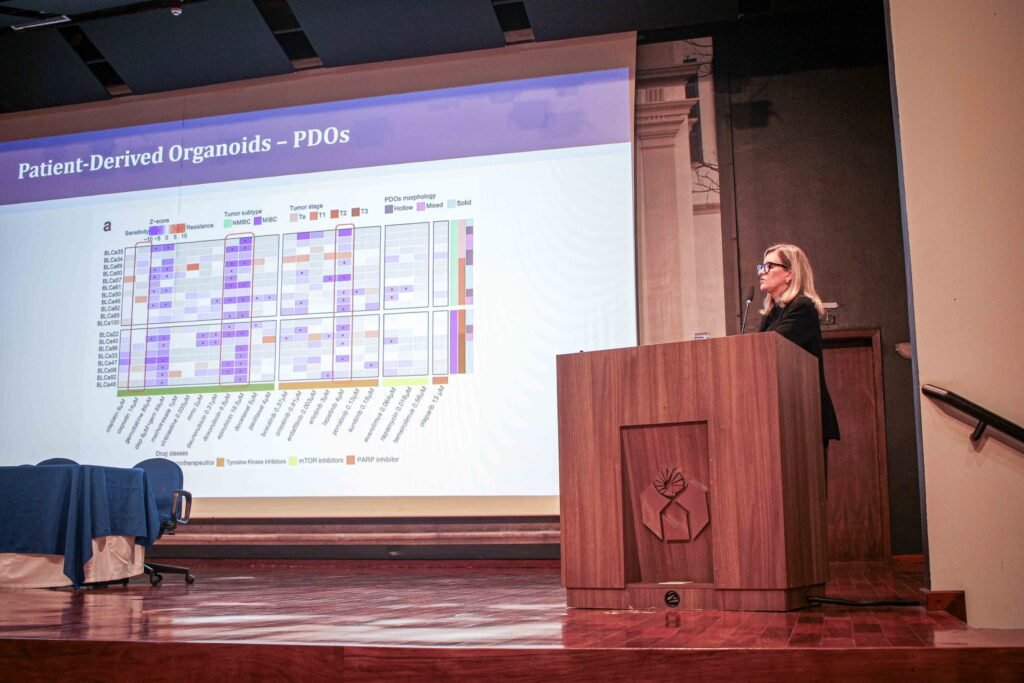
The need for a strategic management vision goes hand in hand with the search for technological innovations that enable new experimental approaches. On this topic, Dr. Márcia Cominetti, biologist and full professor in the Department of Gerontology at the Federal University of São Carlos, highlights that “3D culture, for example, represents one of the most relevant advances in Translational Oncology in recent decades, as it reproduces the three-dimensional architecture of the tumor, with its oxygen and nutrient gradients and the presence of the tumor microenvironment, something that 2D culture cannot capture.” This improvement enhances drug screening and understanding of resistance mechanisms, reducing false positives.
More than a simple innovation, this approach exemplifies a fundamental principle of scientific practice: complementarity. As Cominetti points out, 3D culture adds to the repertoire of established tools, such as 2D and in vivo models, rather than replacing them. This perspective helps demystify the idea that innovation necessarily means discarding technical legacy.
In Translational Oncology, the adoption of new technologies actually acts as an additional layer of precision, refining existing knowledge without invalidating prior understanding.
This integrative vision is fundamental to reducing resistance to adopting new practices, allowing innovation to be seen as an ally. However, the full transition of an innovation into clinical routine is gradual and marked by barriers science is still working to overcome.
Regarding 3D culture, Cominetti highlights current challenges: “We are still far from the complete consolidation of these models. The most serious challenge is the absence of functional vasculature and immune system components, which limits prediction of responses to immunotherapies. In addition, the lack of standardization among laboratories and the high cost of advanced technologies such as tumor-on-a-chip [microfluidic device that mimics the environment, structure, and function of human tumors on chips] still restrict large-scale use.”
Beyond the bench: the challenge of entrepreneurship in healthcare
The seminar also sought to demystify the figure of the scientist-entrepreneur. According to Dr. Pedro Paulo Corbi, chemist, professor at Unicamp’s Institute of Chemistry, principal investigator, and Innovation area manager at CancerThera, the central objective is to bring research closer to real-world application.
“It is extremely important that developed products reach a high level of readiness, making it to the market and, fundamentally, to patients. We seek to encourage entrepreneurship among young scientists, creating opportunities to bring scientific products to those who need them,” he says.
This transition, however, requires a new mindset. For Dr. Luana Raposo, pharmacist specialized in Health Innovation Management at Butantan Institute and CEO of ImunoTera, researchers must redirect their focus.
“This is an important shift in perspective: moving from the question ‘what did I discover?’ to ‘what relevant problem am I solving?’ In this process, researchers begin dealing with aspects that are often not part of traditional academic training, such as market, strategy, intellectual property, regulation, and fundraising.”
Beyond strategic vision, overcoming regulatory obstacles in Brazil requires resilience, collaboration, persistence, and adaptability, according to Raposo.
“One important lesson is to consider regulatory aspects from the beginning of solution development, not only when the product is ready. Another key point is recognizing that partnership-building is essential,” she notes, emphasizing that in healthcare, no one advances alone.
“Universities, hospitals, research centers, and investors must play complementary roles to accelerate innovation,” she reinforces.
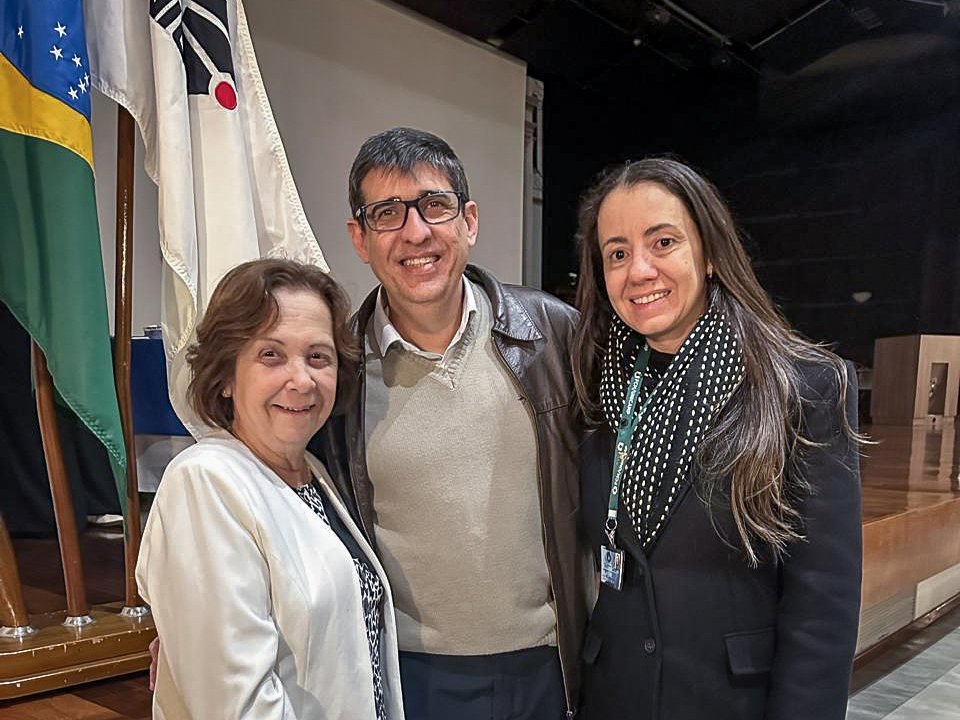
Event organizers: Carmen Silvia Passos Lima; Pedro Paulo Corbi; and Maria Carolina Mendes.
Text: Xenya Bucchioni | Photos: Romulo Santana Osthues