



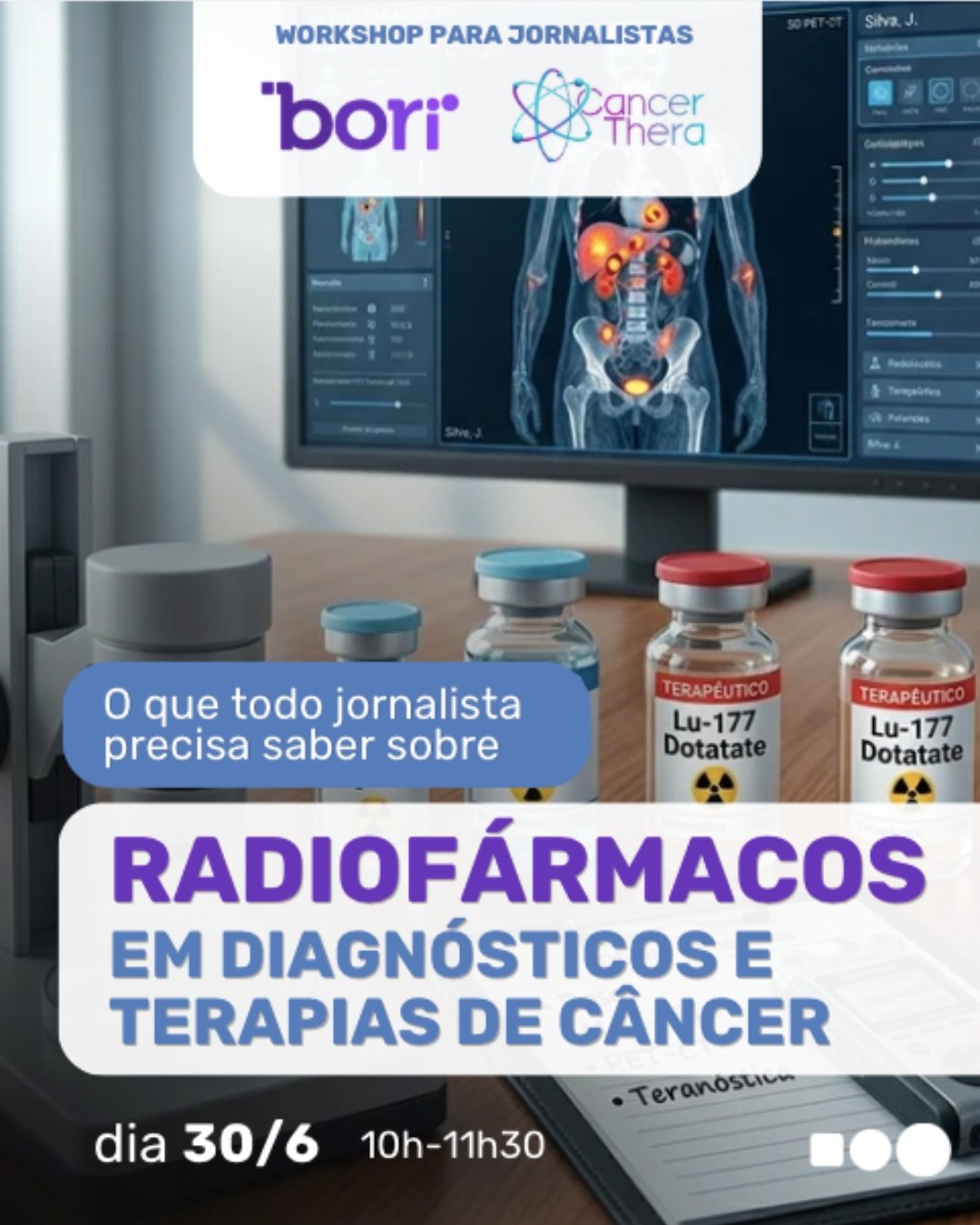

The fight against misinformation and the strengthening of scientific journalism inevitably involves the approximation between those who produce science and those who communicate it. With this aim, the Cepid Cancerthera, in partnership with Agência Bori, held the Workshop on June 30th “What every journalist needs to know about radiopharmaceuticals in cancer diagnoses and therapies”.
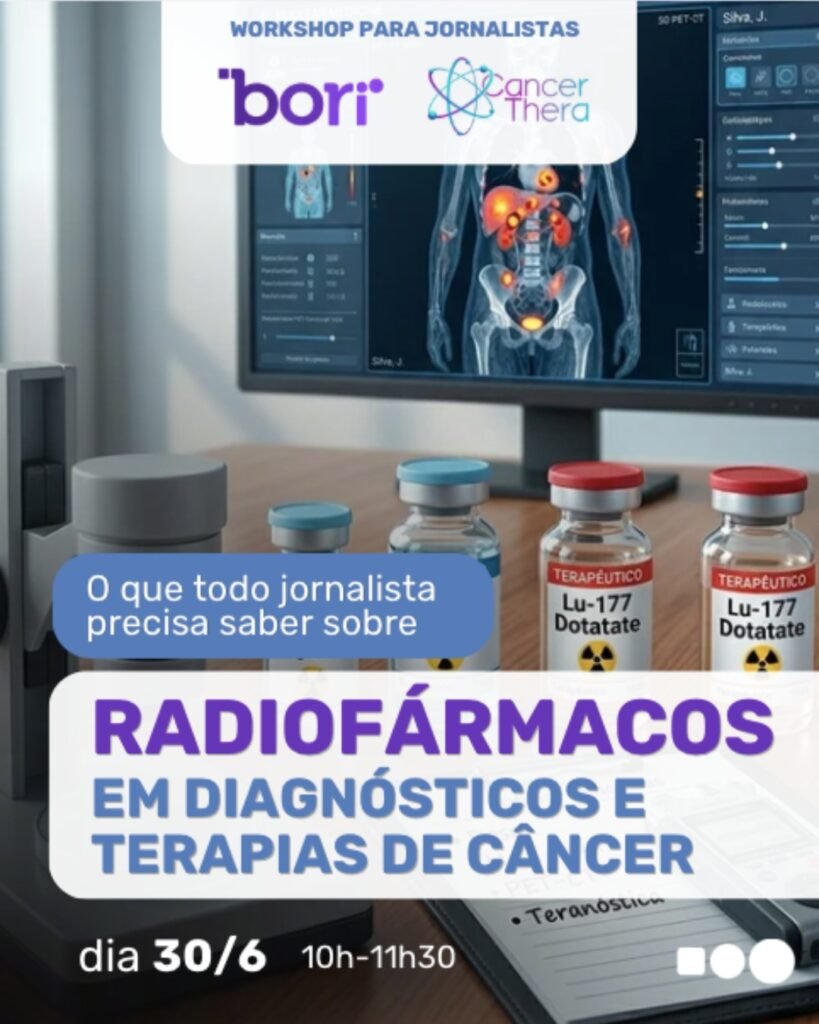
The event, held online, promoted a morning of immersion over one of the most promising areas of current oncology. To Ana Paula Morales, Master in Pharmacology, co-founder and director of Agência Bori, the adhesion of professionals highlights the relevance of the initiative: “The workshop showed how there is a real demand from journalists for qualified exchange spaces with researchers who are working on the frontier of knowledge. 29 participants and representatives of vehicles from all five regions of Brazil — including the national, regional and specialized press —, which reinforces the importance of expanding these connections”.
Vision of the future and social commitment
The opening was led by Dr. Carmino Antonio de Souza, onco-hematologist, professor at the Faculty of Medical Sciences at the State University of Campinas (FCM/UNICAMP), principal researcher and director at CancerThera, who outlined a critical overview of the incidence and epidemiological challenges of cancer in Brazil. Subsequently, the Dr. Celso Dario Ramos, nuclear doctor, professor at FCM/UNICAMP and deputy director of the Center, explored the new development pathways of radiopharmaceuticals for cancer diagnosis and treatment.
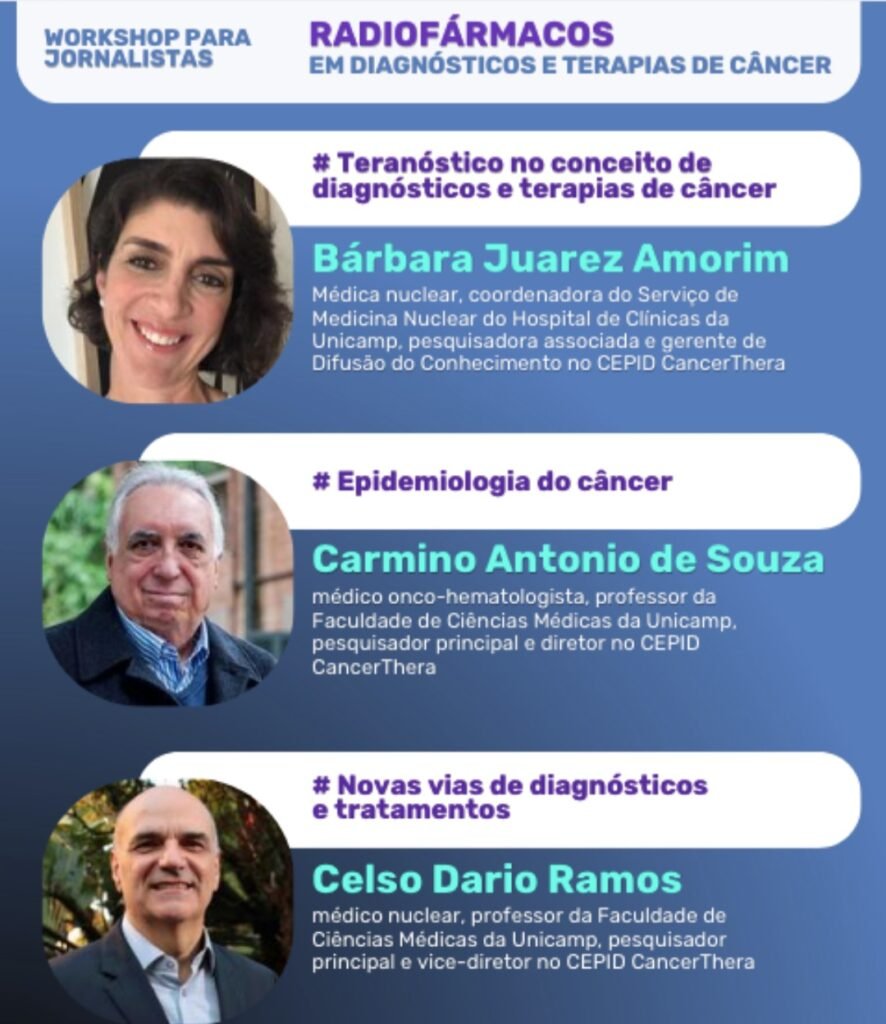
The panel was completed by Dr. Bárbara Juarez Amorim, nuclear doctor, coordinator of the Nuclear Medicine Service of the Hospital de Clínicas da Unicamp and associated researcher and manager for the dissemination of knowledge in Cancerthera, who detailed the concept of “theranostic” — the integration between diagnosis and therapy in the same nuclear medicine strategy. According to the researcher, this diffusion is an institutional priority: “Therapeutics is the center of the research we have developed, and it is still a little known term, often even within the academic environment. They are safe”, she says.
Amorim also highlights that the theatology is one of the pillars of precision medicine, acting as a targeted therapy capable of destroying tumor cells in an extremely accurate way, without affecting healthy tissues and organs around it, a technique that already presents consolidated results in cases such as prostate cancer and tumors neuroendocrine.
In Souza’s assessment, the event touched on a critical point in public health. “I believe that the first and most important message is that coping with cancer is the greatest challenge that humanity lives in the present and will live in the future. Longevity, combined with the lifestyle habits we adopt, are factors that will prevent the number of cases from decreasing, no matter what we do”, the researcher points out.
Science without mysteries
The initiative arose from the need to translate complex concepts, such as the role of radiopharmaceuticals — substances that are able to accurately diagnose and treat tumors. The approximation between communicators and scientists was also guided with the aim of demystifying the area, especially the stigma surrounding nuclear medicine. According to Ramos, the term usually causes strangeness or unjustified fear in the lay public. “Nuclear Medicine, although it draws attention, sometimes scares it for not making it clear what the specialty does. And what we do is study how molecules are distributed throughout the body”, he explains.
About unfounded fear in relation to radiation, Ramos is assertive: “Like any substance, in inadequate doses, it is harmful. However, in controlled and adequate doses, it is a powerful and essentially beneficial tool for the patient”.
The value of scientific literacy
In addition to the technical exhibition, the workshop also functioned as an open dialogue space and exchanges on the difficulties of daily science coverage. the Dr. Moura Leite Netto, journalist and director of Sensu Consultoria de Comunicação, an agency specializing in science, health and education, highlighted the value of the immersion provided by the event: “Although precision medicine is a topic present in the media, therapeutics is still little known outside specialized circles. CancerThera significantly expanded my view on the diversity of radioisotopes that have been studied, and it was an opportunity to deepen a highly promising topic that, in my assessment, still receives less attention from the press than it deserves”.
For the journalist, who has a long trajectory in covering topics related to health and science, this direct contact is an antidote against misinformation. “The routine of science journalism is dynamic, and professionals are not always able to dedicate themselves exclusively to the area. Initiatives like this contribute to high-quality professional updating, broaden one’s repertoire, and help contextualize findings that might otherwise often be misinterpreted”, he notes.
The success of the initiative reaffirms the importance of strengthening these relationships. After all, as Morales points out, “the direct contact between journalists and researchers makes it possible to deepen debates, clarify doubts and offer a more complete view on areas that are advancing rapidly”.
Text: Xenya Bucchioni