





Two distinct medical challenges — malignant tumors and bacterial infections — frequently intersect in the clinical course of cancer patients, requiring treatments that do not always align with one another. Seeking to unify solutions, researchers from the CEPID CancerThera developed a precise molecular engineering approach that yielded a promising result.
This is the Ag-2TU complex, a new molecule composed of the metal silver and the nitrogenous base thiouracil, which demonstrated dual functionality in laboratory studies using cell lines: activity against breast adenocarcinoma (MCF-7 cells) — the most common type of tumor developing in breast tissue —and against bacteria such as Staphylococcus aureus, which causes a wide range of infections, from mild to severe, including skin boils and infections affecting the heart. Another complex investigated, named Ag-2,4DTU, did not show significant antitumor activity and exhibited no antibacterial activity.

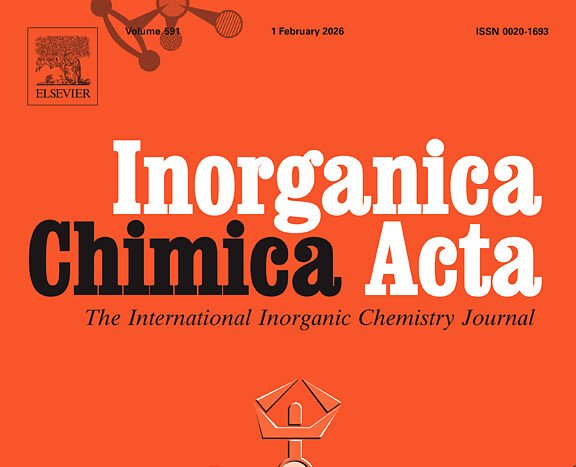
Entitled “Synthesis, structural characterization and biological evaluation of silver(I) complexes with 2-thiouracil and 2,4-dithiouracil”, the study — published in the scientific journal Inorganica Chimica Acta (Volume 590, January 26, 2026) — describes the synthesis and biological evaluation of these new metallopharmaceuticals, which combine silver (the metal identified by the symbol Ag) with molecules known as “ligands” (in this case, thiouracil derivatives, from which 2TU and 2,4DTU originate). The role of these molecules as ligands is essential for conferring new biological properties (such as antiproliferative activity) and stability to the new metallopharmaceuticals.
The study involved researchers from the Institute of Chemistry (IQ) and the School of Pharmaceutical Sciences (FCF) of the University of Campinas (Unicamp), in partnership with teams from the Aeronautics Institute of Technology, the University of Araraquara (Uniara), the Donostia International Physics Center (Spain), and the University of Vienna (Austria).
| Medicinal metallopharmaceuticals |
| Metallopharmaceuticals are medicines that contain a metal in their molecular structure, acting as the “active ingredient” against disease. Metals are not an absolute novelty in Medicine. In the early 19th century, silver wires were used for surgical sutures due to their antiseptic properties. In the 1960s, silver sulfadiazine began to be used to treat bacterial skin infections associated with burns. The challenge of using metallopharmaceuticals in Medicine is that many metals are toxic or the body develops resistance to them. Medicinal inorganic chemistry seeks to “tame” these metals by binding them to organic molecules (ligands) that function as carriers, delivering the metal to the site of disease with greater safety and efficacy for the patient. |
Precision in molecular engineering
Chemist and master’s student Francisco Mastrobuono-Cordeiro, lead author of the study and a fellow affiliated with CEPID CancerThera, explains the novelty of the discovery. Until now, the scientific literature had not reported the exclusive combination of silver with these specific ligands (2-thiouracil and 2,4-dithiouracil) without the aid of additional auxiliary molecules. It is as if the researchers found two pieces that had never been directly fitted together before — silver and these specific ligands — and discovered that they form a stable and functional structure.
In laboratory in vitro tests — i.e., using cell cultures — the Ag-2TU complex stood out for its activity against breast cancer cells. It exhibited a Selectivity Index (SI) of 7.2. In simple terms, this means that the molecule is seven times more toxic to cancer cells than to healthy human skin cells (keratinocytes), which were used as a comparison in the in vitro study. This high selectivity demonstrated by Ag-2TU represents the most sought-after goal of chemotherapy: to find a drug that destroys the tumor without causing devastating damage to the rest of the patient’s body.


How Ag-2TU works
In addition to attacking breast tumor cells, Ag-2TU proved capable of inhibiting bacterial growth. Besides the previously mentioned Staphylococcus aureus, the following bacteria were evaluated: Bacillus cereus, Escherichia coli, and Pseudomonas aeruginosa. Silver has historically been used to treat burns and wounds due to its antibacterial action; however, its incorporation into antitumor drugs offers a strategic advantage.
Mastrobuono-Cordeiro emphasizes that although Ag-2TU does not surpass the efficacy of silver sulfadiazine — which holds a special status among antibacterial metallopharmaceuticals and is present in well-established topical ointments — the new complex offers a valuable alternative: “Our idea is not to replace silver sulfadiazine, but to find another treatment option.” The presence of this “dual action” is crucial in the cancer context, as bacterial infections are a serious and common complication in patients immunosuppressed by chemotherapy.
The mechanism of action of the molecule may be considered the most intriguing finding of the study. Most metal-based chemotherapeutic agents, such as the well-known cisplatin, act by binding to the DNA of tumor cells, preventing them from replicating. However, tests conducted by Mastrobuono-Cordeiro and his team showed that the new silver complexes (both Ag-2TU and Ag-2,4DTU) do not primarily target DNA.
For Dr. Pedro Paulo Corbi, chemist, professor at IQ/Unicamp, and principal investigator at CancerThera, this result is excellent news. “The fact that the Ag-2TU compound likely does not have DNA as its main target may be interesting, because it opens up the possibility of combining medications,” explains Corbi, who is one of the study’s coordinators and Mastrobuono-Cordeiro’s advisor.
“With different drugs, you can block tumor cell proliferation through different pathways, resulting in a combination that is more effective,” Corbi adds, suggesting that the future of treatment may lie in the convergence of different strategies to interrupt tumor activity.
In other words, imagine the tumor as a factory operating at full capacity. Traditional treatment, such as cisplatin, works by shutting down the central computer that sends production orders (DNA). The risk is that the factory may eventually restart the system and resume operations (cisplatin resistance).
The new silver compound, however, acts differently: it blocks the delivery of electrical power to the machines. By using both together, factory shutdown becomes much more effective — even if the computer system is restored, the assembly line cannot function without power.
Silver in Oncology
“Currently, in the specialized literature, there is no reference to any silver-based drug used clinically for cancer treatment,” Corbi points out. What dominates the market are platinum compounds and, more recently, palladium—both metals—used in chemotherapy against various cancers.
The research conducted by Corbi, Mastrobuono-Cordeiro, and colleagues suggests that silver has the potential to move beyond topical dressings and enter solid tumor therapies as a coadjuvant — specifically alongside drugs that act on DNA. “Recent results obtained from laboratory-based cell studies demonstrate that silver does indeed have potential application in chemotherapy, especially in the treatment of skin cancer,” concludes the professor, who has led successful basic and preclinical research in this area for more than a decade.
The path for Ag-2TU to reach pharmacies is still long. The next steps involve in vivo testing (in animal models) to assess the compound’s toxicity and safety in a complete organism. In addition, scientists must determine exactly which part of the tumor cell silver is targeting, since it is known not to be DNA. Finally, if the favorable results persist in preclinical tests — the current stage — the compound will proceed to clinical trials involving human applications before potentially reaching the market.
Technical data
Article: Synthesis, structural characterization and biological evaluation of silver(I) complexes with 2-thiouracil and 2,4-dithiouracil
Publication: Inorganica Chimica Acta (Volume 590, January 26, 2026).
Institutions: Unicamp (Brazil), Donostia International Physics Center (Spain), University of Vienna (Austria), Uniara (Brazil), and ITA (Brazil).
Funding: FAPESP, CNPq, “La Caixa” Foundation, among others.
Researchers involved: Francisco Mastrobuono-Cordeiro, Julia H. Bormio Nunes, Gabriele de M. Pereira, Douglas H. Nakahata, Silmara C. L. Frajácomo, Wilton R. Lustri, João Ernesto de Carvalho, Douglas H. Pereira, Ana Lúcia T. G. Ruiz, Raphael E. F. de Paiva, and Pedro P. Corbi.
Text: Romulo Santana Osthues