



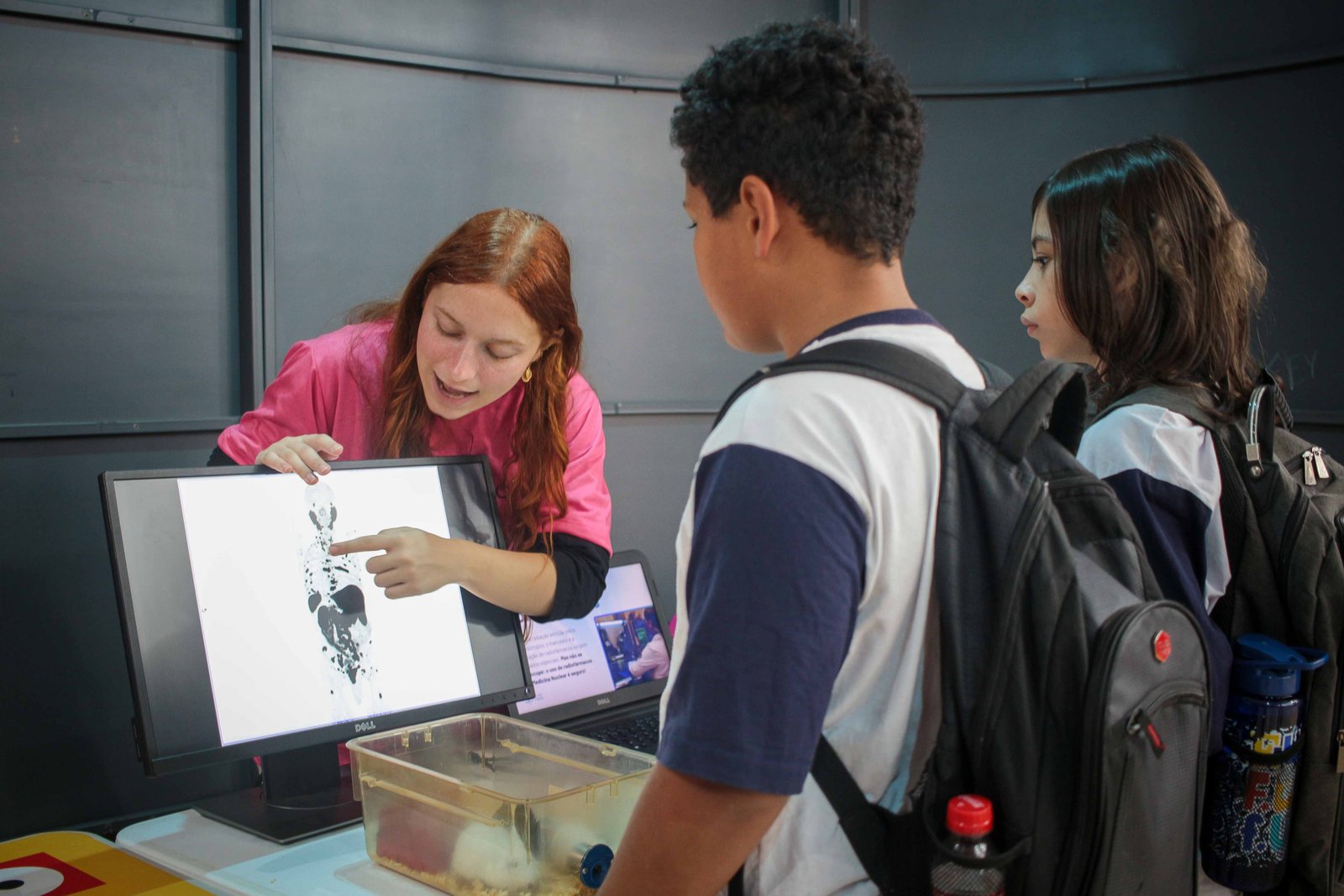

Between May 19 and 21, the Exploratory Science Museum of the State University of Campinas (MEC/Unicamp) became a vibrant hub of discoveries during the third edition of Viva Ciência. Organized by the museum in partnership with the Municipal Department of Education of Campinas (SME/Campinas), the event brought together around 2,000 sixth-grade students from the public school system.
Amid PET bottle rockets, live animals, and meteorite samples, CancerThera RIDC participated for the second consecutive year with the challenge of simplifying and demystifying the use of nuclear technology in healthcare, especially in the diagnosis and treatment of cancer using radiopharmaceuticals.
The event’s growth each year highlights its impact on the local community. Ma. Mariana Martins Volpato Mariutti, pedagogue and educational supervisor at SME/Campinas, positively evaluated the three-day immersion experience for allowing children to connect with the university, stating that the experience helps to “plant the seed of the importance of scientific knowledge.” She added: “Viva Ciência is pure life. There are so many students exploring scientific questions, establishing connections with knowledge and with everyday life.”
This integration is equally celebrated by the university. Dr. Guilherme Oliveira Barbosa, biologist, professor at the Institute of Biology at Unicamp, and deputy coordinator of MEC/Unicamp, emphasized the social value of opening the institution’s doors so students can recognize the university as more than just the place where the Clinical Hospital is located — a facility widely visited by the city’s population because of the healthcare services it provides. “It is a place of education, a place of research, a place they can be part of,” says the professor.

Science to touch and feel
The CancerThera booth, entitled “Theranostics: the good side of radiation in cancer diagnosis and treatment,” was organized into six interactive stations, creating a circuit that introduced concepts ranging from the lipid bilayer of cells and the radiopharmaceutical development process to the natural presence of radiation in monazite sands (such as those found on the beaches of Guarapari, Espírito Santo) and bananas.
For those who accompany students in their daily routine, the hands-on nature of the activities made all the difference. Claudia Souza de Melo, pedagogy student and caregiver at Escola Municipal Padre Domingos Zatti, highlighted this aspect: “I thought it was wonderful because of the playful approach, having everything there to touch and feel… and the professionals explaining each experiment to the students.” She said that before visiting the booth, she had little knowledge about the topic and radiopharmaceuticals, associating the use of radiation only with radiotherapy treatments.
The challenge and joy of communicating science
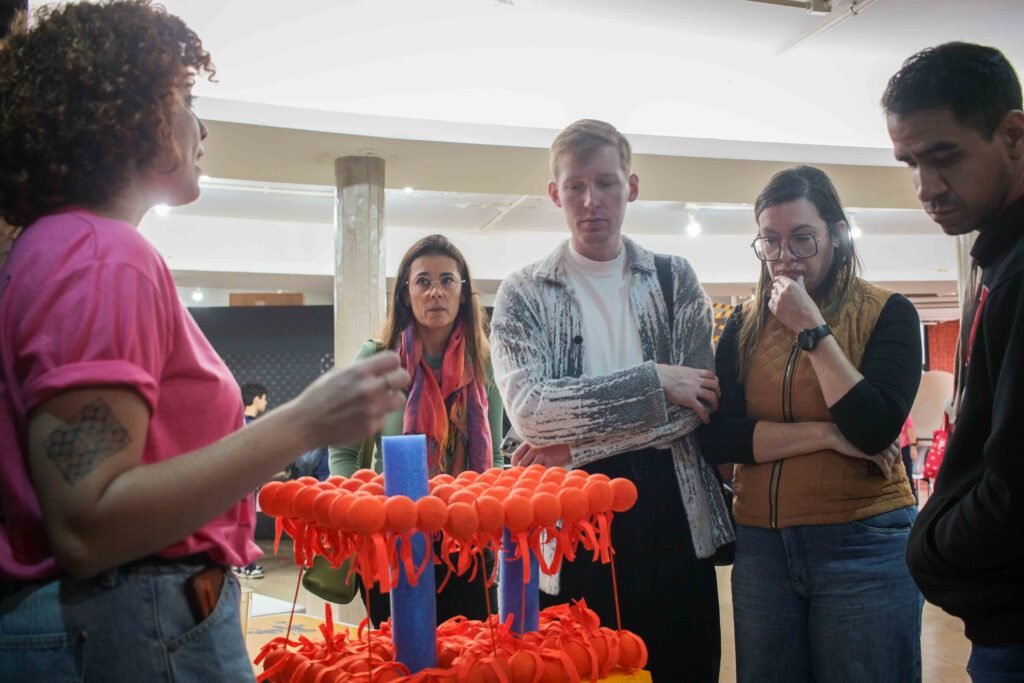
Bringing young audiences closer to complex concepts was made possible by the dedication of the center’s researchers, who adapted academic language to the knowledge level of sixth-grade students. Laura Barros Silva, chemist and PhD candidate at the Institute of Chemistry at Unicamp (IQ/Unicamp), worked as a mediator at CancerThera and highlighted this dynamic: “It was challenging to translate our laboratory routine into a format children could understand,” enabling students to relate the activities to topics already familiar to them.
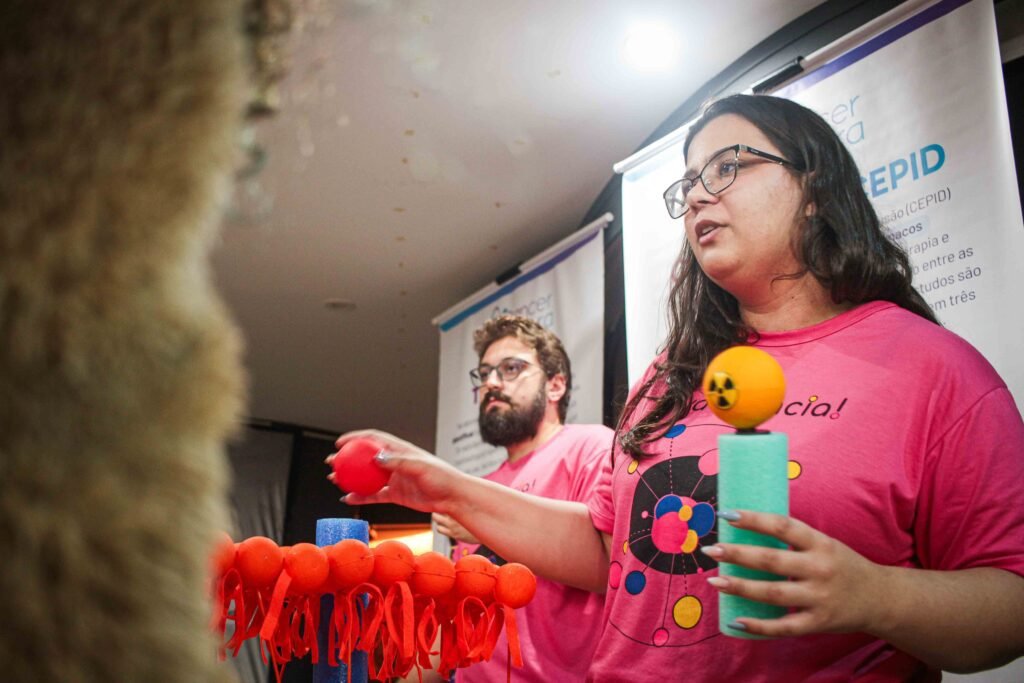
The response to this effort was contagious. Giovana Camargo Ribeiro, undergraduate chemistry student at IQ/Unicamp and CancerThera mediator, described the experience as “sensational” because it allowed her to broaden the scientific world of the children visiting the booth. “I love seeing the sparkle in their eyes when talking about science, discovering something new from what we research,” she says.
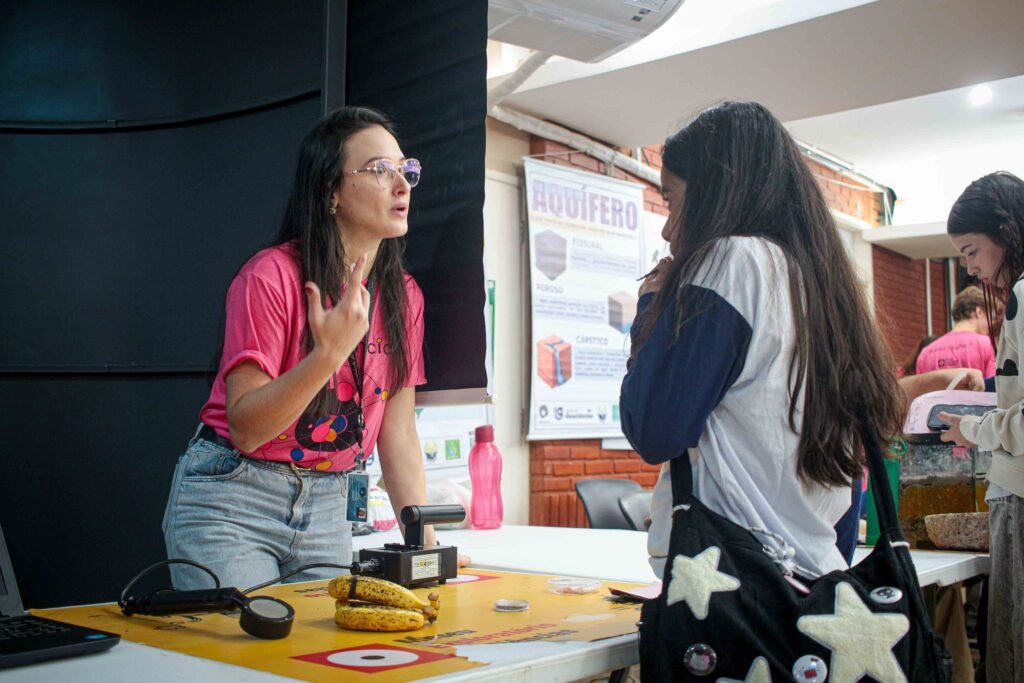
In this process of exchange, researchers themselves are transformed. Ma. Ana Carolini Cavallieri Zatta, biologist and PhD candidate at the School of Pharmaceutical Sciences at Unicamp, emphasized the importance of her role as a mediator: “Every student who visits our booth brings new learning experiences. It is very intense to know that we can contribute to their education.”
Inspiring future scientists
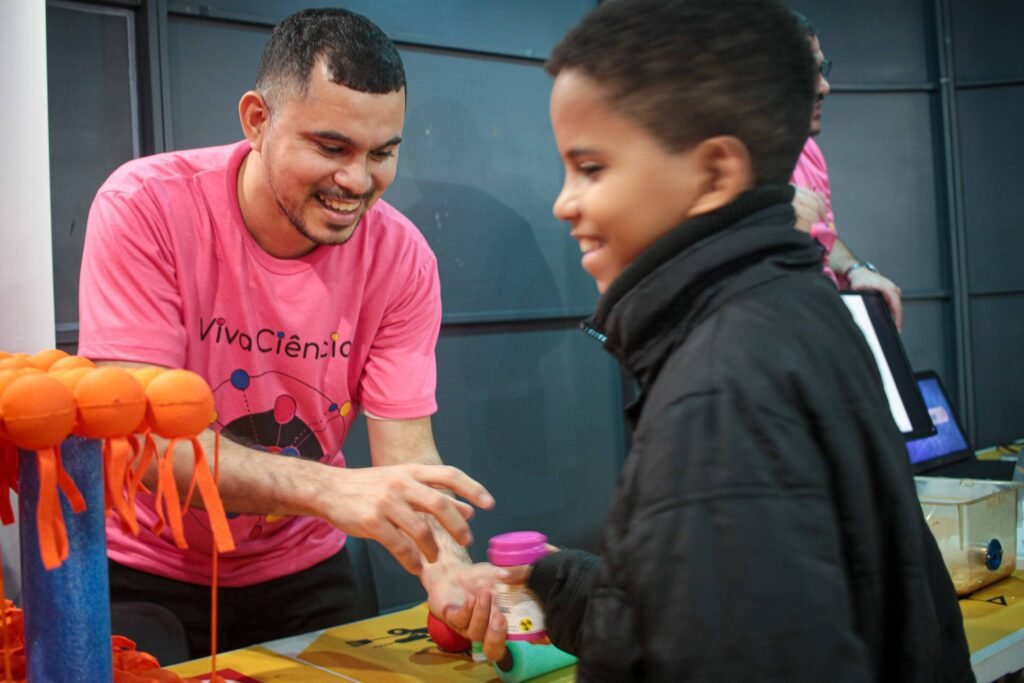
CancerThera’s activities not only demonstrated how medicines work but also highlighted the scientific investigation process involved before approval — including basic, preclinical, and clinical studies. Richard Silva de Sousa, nutritionist, master’s student at the School of Medical Sciences at Unicamp, and booth mediator, focused on sharing his daily experience. “What impacts me most is being able to contribute with my experience, my practice in clinical research, and how we carry things out step by step.” He also emphasized the desire to inspire future researchers to “do science within SUS [Brazil’s Unified Health System].”
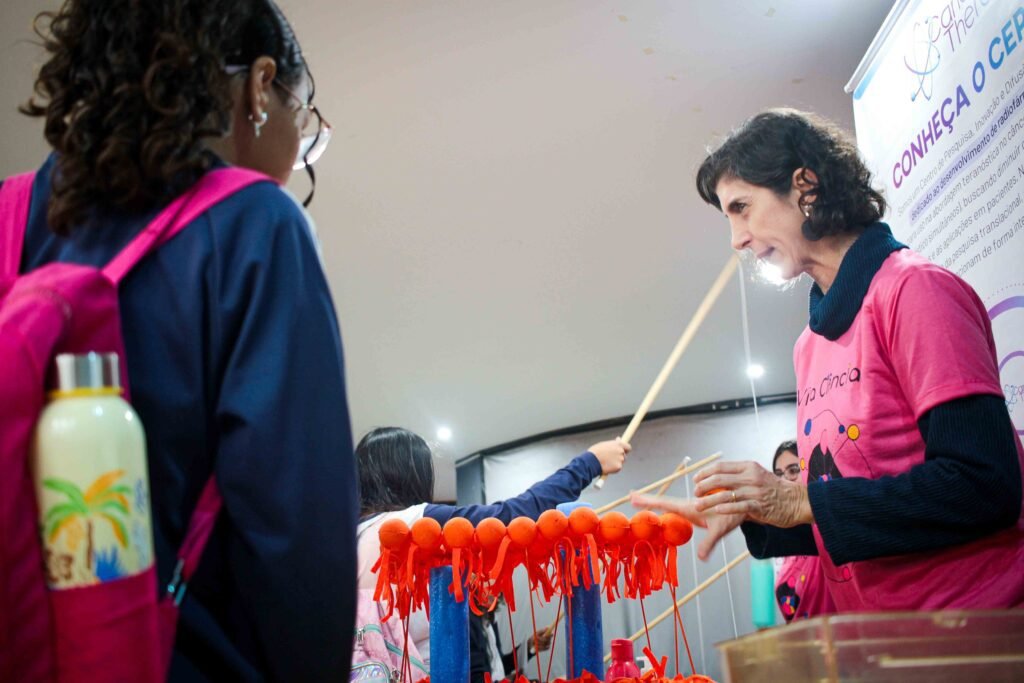
This scientific outreach effort strengthens the development of a more critical and well-informed society. “It is very interesting to see how interested the students are — attentive looks, shining eyes, asking questions, raising intelligent doubts — and that is beautiful,” says Dr. Bárbara Juarez Amorim, nuclear physician and executive manager of the Knowledge Dissemination area at CancerThera. In addition to highlighting the students’ enthusiastic participation, she described direct benefits of this dialogue experience: “This also helps prevent fake news. These are young people who will understand the importance of seeking accurate and truthful information, while also encouraging them to pursue their own paths as scientists.”
Text and photos: Romulo Santana Osthues